Treatment & care
The Truth About Hair Loss Treatments: What Studies Really Show
Discover effective hair loss treatments—from natural options to modern therapies. Learn what really helps for stronger, fuller hair.
Up to 70 percent of men and 40 percent of women will seek hair loss treatments at some point because of genetically driven hair loss. Although losing up to 100 hairs a day is normal, larger amounts quickly become worrying. We understand the frustration when new clumps keep showing up in the brush and patience runs thin.
The good news is that research keeps advancing. New studies suggest that the naturally occurring sugar 2dDR may be as effective as the chemical drug minoxidil. Between medical supplements, specialty shampoos, treatments, and dietary products, the choice is hard to navigate. According to Stiftung Warentest (Germany's consumer testing foundation), only two active ingredients can truly be recommended: minoxidil and finasteride. This article reviews different hair-growth options, how well they work for women and men, and how to find the solution that fits you.
What Causes Hair Loss?

Genetic Predisposition (Androgenetic Alopecia)
Androgenetic alopecia is by far the most common form of hair loss in both sexes—about 95% of cases. Up to 80% of all men and about 40% of all women are affected over a lifetime. The name already points to the link: "androgen" refers to male hormones, "genetic" to inheritance.
The problem is not hormone excess but a genetically driven hypersensitivity of hair follicles to dihydrotestosterone (DHT). DHT forms when testosterone is converted by the enzyme 5-alpha-reductase. That hypersensitivity leads to:
- A shortened hair growth phase
- Follicles that shrink and receive less blood flow
- Hair that becomes thinner and softer before it falls out
Hormonal Fluctuations and Life Stages
Hormonal changes can cause hair loss at various life stages. Women are especially affected:
- Pregnancy: Higher estrogen during pregnancy often means fuller hair. About 2–4 months after birth, increased shedding can begin (postpartum hair loss)
- Menopause: Falling estrogen production shortens the growth phases of hair
- Hormonal contraception: Starting or stopping the pill can cause hormone swings that favor hair loss
Polycystic ovary syndrome (PCOS) is also a common cause of hair loss in women of childbearing age, because it increases production of male sex hormones.
Stress, Diet, and Environmental Factors
Chronic stress can trigger hair loss through several mechanisms:
- Stress hormones such as cortisol disrupt the hair cycle and can promote inflammation
- Hairs enter the resting phase early (telogen effluvium)
- Shedding usually appears 2–3 months after the triggering event
Nutrient deficiency also plays an important role. Especially critical are:
- Iron deficiency (impairs oxygen supply to follicles)
- Zinc deficiency (important for collagen transport and hair anchoring)
- Vitamin D deficiency (especially in autumn)
- Lack of B vitamins
Medications and Illness as Triggers
Hair loss has been documented as a side effect of more than 400 medications. Frequent culprits include:
- Beta-blockers for high blood pressure (e.g. metoprolol)
- Blood thinners such as heparin
- Painkillers (regular ibuprofen use)
- Antidepressants (e.g. fluoxetine)
- Retinoids
- Chemotherapy agents
Conditions that can cause hair loss include:
- Thyroid disease (both over- and underactivity)
- Diabetes
- Autoimmune diseases such as lupus
- Anemia
- Scalp infections
While some forms of hair loss are temporary, hereditary hair loss can be treated but not cured.
What Hair Loss Treatments Are Available?
When looking for effective solutions, several options exist. There are evidence-based approaches that can stop hair loss.
Minoxidil: Effects, Use, and Side Effects
Minoxidil was originally developed as a blood-pressure drug and turned out by chance to help hair loss. It likely improves scalp blood flow and prolongs the hair growth phase. For women a 2% solution is recommended; men usually benefit from the 5% version. First visible results appear after about 3–6 months of regular use. Continuous use is essential—if minoxidil is stopped, hair loss returns. Side effects such as scalp irritation occur in about one in a hundred users.
Finasteride: Who Is It For?
Finasteride inhibits 5-alpha-reductase and blocks conversion of testosterone into hair-damaging DHT. At 1 mg daily, hair growth improved in 48% of study participants after one year and in 66% after two years. Caution is still needed: possible side effects include loss of libido, erectile dysfunction, and even depression. Finasteride is prescription-only and approved only for men—women, especially those who are pregnant, must not take it.
Home Remedies: Rosemary, Aloe Vera, Coconut Oil & Co.
Natural alternatives can play a supporting role. Rosemary oil showed similar efficacy to minoxidil in studies. Coconut oil's lauric acid supports circulation and strengthens hair from within. Aloe vera contains zinc and also boosts blood flow. Coffee can improve nutrient supply to the roots via caffeine. These home remedies work better as complements to medical treatment than as sole therapy.
Supplements: Biotin, Zinc, Priorin N
For temporary hair loss, supplements with sulfur-containing amino acids, iron, and B vitamins can be taken for about three months. For chronic hair loss, products with zinc, selenium, molybdenum, and vitamins B, C, and E may help. Biotin (vitamin B7) is heavily marketed, but the US FDA warns it can interfere with lab tests. For most supplements, solid studies are still lacking.
PRP, Laser, and Hair Transplantation at a Glance
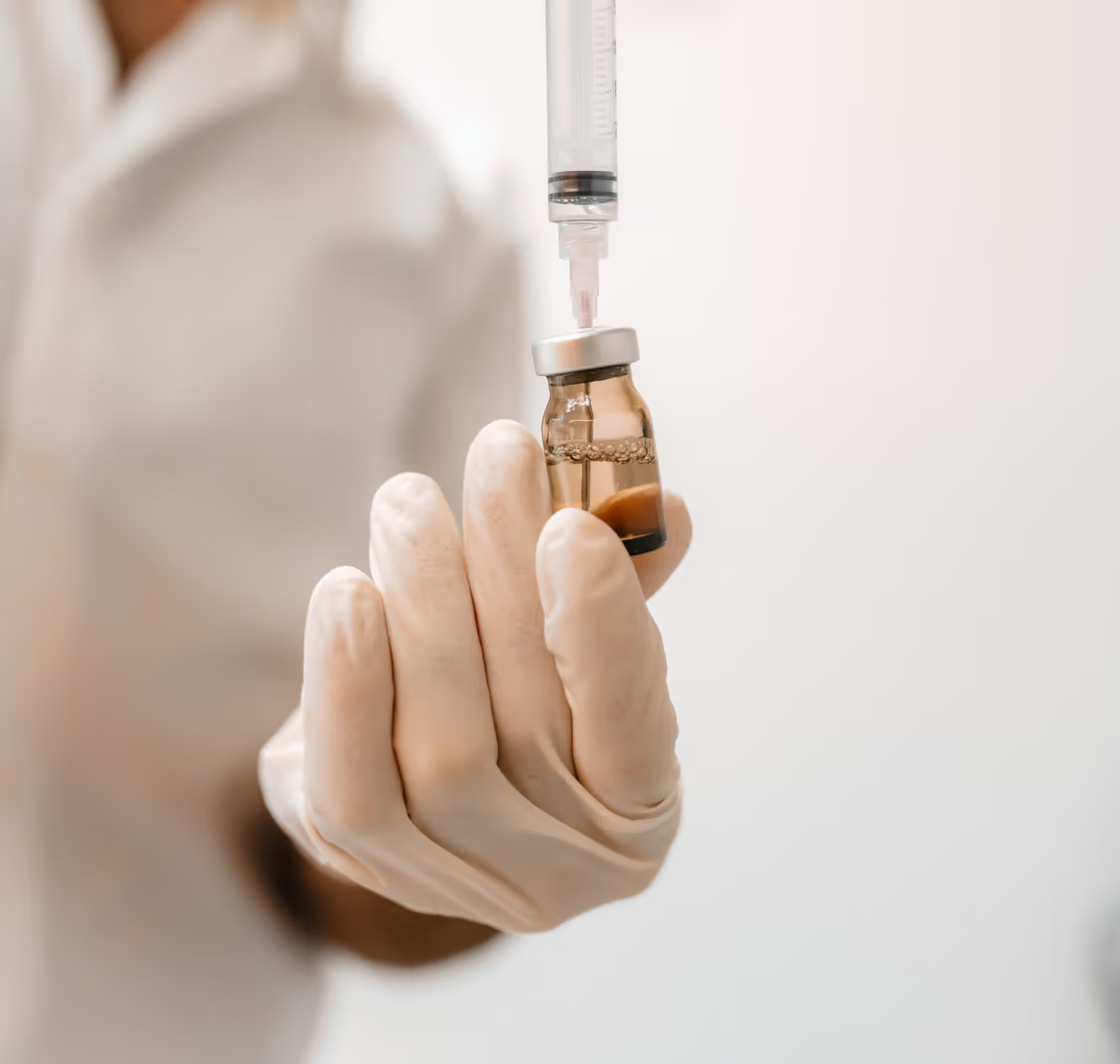
More advanced methods offer further options. In PRP treatment, the body's own blood plasma rich in growth factors is injected into the scalp. First improvements are visible after 2–3 months. Low-level laser therapy (LLLT) stimulates follicles with infrared light and can stop loss and encourage new growth. The most lasting solution is hair transplantation, in which follicles from unaffected areas are moved into thinning zones.
What Do Studies and Tests Say About Effectiveness?
The scientific picture of hair-loss treatments is clear: not everything advertised delivers.
Stiftung Warentest: Only Two Actives Convince
According to Stiftung Warentest's analysis, only two ingredients are scientifically well founded: minoxidil and finasteride. Both can stop hair loss in about 90% of those treated. Remarkably, roughly 50% of users also see visible thickening. Minoxidil reaches maximum effect after about six months, while finasteride often needs up to 24 months.
New Research: Deoxyribose as a Hopeful Candidate
A surprising breakthrough involves deoxyribose—a naturally occurring sugar. Researchers discovered by chance that it can stimulate hair growth. In animal studies, the DNA sugar showed efficacy comparable to minoxidil. Notably, deoxyribose improves blood supply to follicles and thereby promotes growth.
Long-Term Effect and Relapse After Stopping
A sobering fact remains: all known hair-loss treatments work only as long as they are continued. After stopping, loss returns unchanged. Comprehensive data on use beyond one year are still limited.
Differences Between Men and Women
In women, the 2% minoxidil solution works best. Finasteride is approved only for men. Interestingly, clinical studies suggest women generally respond better to minoxidil and need lower doses than men.
How Do I Find the Right Treatment for Me?
Choosing the right hair-loss treatment starts with a thorough evaluation. Only when therapy matches the individual case can results follow.
Diagnosis by a Dermatologist: Why It Matters
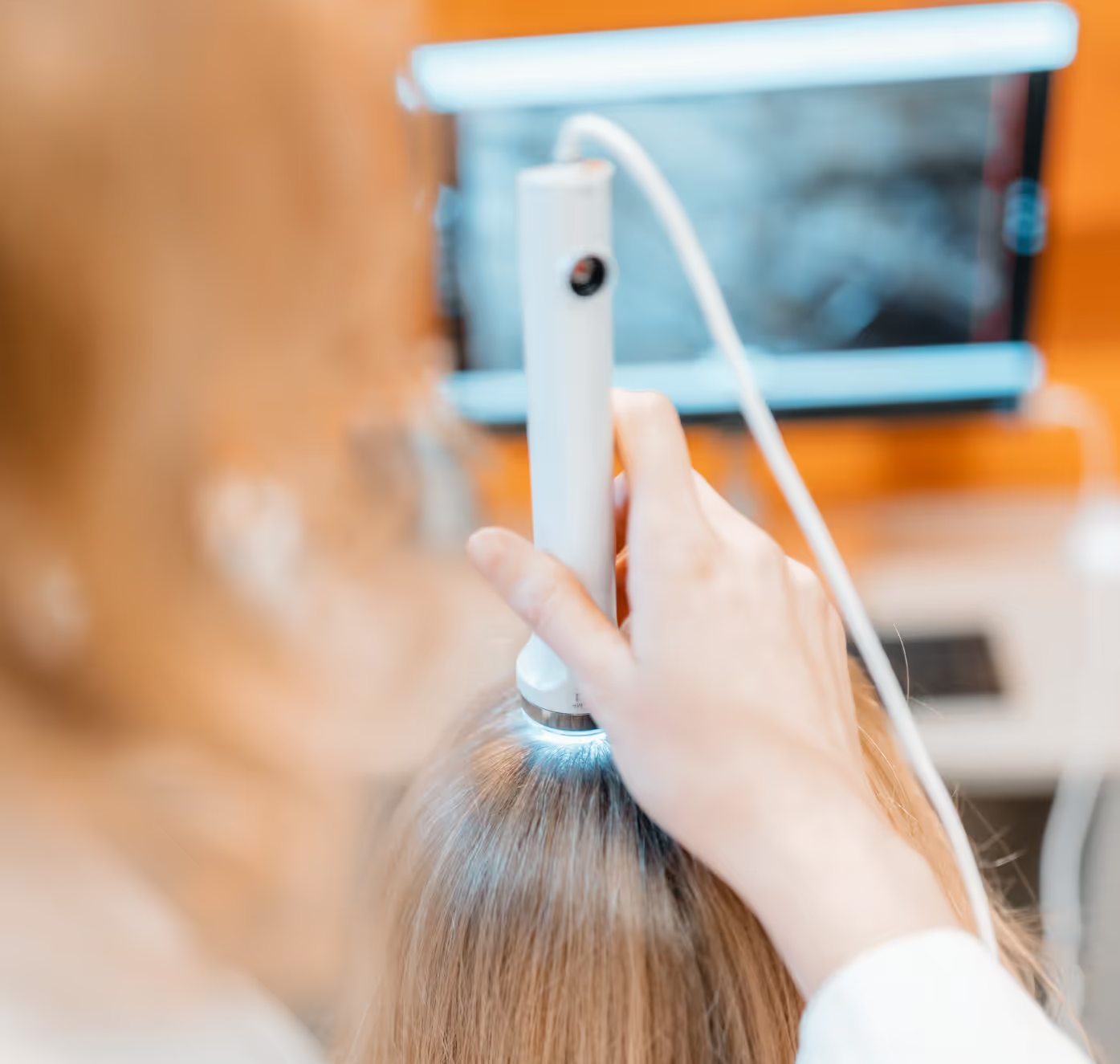
Seeing a dermatologist is essential, because hair loss is not all the same. Specialists can use methods such as dermatoscopy (trichoscopy), hair-root analysis (trichogram), and blood tests to find the exact cause. That clarifies whether loss is hereditary, patchy (alopecia areata), or diffuse—and each form needs a different treatment.
Individual Factors: Age, Sex, Cause
The right medication depends on several personal factors:
- Age: Younger people with recently onset hair loss tend to respond better
- Sex: Finasteride is approved only for men
- Cause: Genetic, hormonal, or stress-related loss needs different therapies
Combination Therapies: What Makes Sense
Combination treatments often outperform single therapies. Finasteride plus minoxidil, for example, reaches a success rate of 94%. PRP also combines well with minoxidil, finasteride, or supplements.
Tips for Use and Patience With Results
Hair-growth treatments take time. First improvements usually appear after 2–3 months, clearer results after 4–6 months. Also:
- Regular, continuous use is essential
- With minoxidil, shedding can paradoxically increase at first
- Photograph monthly to document progress
- Stay realistic—follicles need time to grow

Fighting hair loss is challenging but far from hopeless. Scientific studies show that both minoxidil and finasteride, used consistently, can stop hair loss in about 90 percent of cases. These treatments do not offer a permanent cure; they work only as long as use continues.
Promising research on deoxyribose opens new perspectives. At the same time, every case of hair loss is individual, so a specialist diagnosis before treatment remains essential. Depending on age, sex, and cause, different approaches may make sense.
Patience during treatment also matters. First results often appear only after several months of regular use. Documenting progress with monthly photos can help during that time.
Although hereditary hair loss cannot be fully cured, effective methods exist today to slow it or partly reverse it. If you are dealing with hair loss, it is worth developing a suitable strategy with a dermatologist. Whatever method you choose, continuity of use remains the key to success.