For men
Understanding Receding Hairlines: The Ultimate Guide for Those Affected
Learn everything about receding hairlines: causes, treatment options & prevention tips. The comprehensive guide for men and women with a receding hairline.
Receding hairlines — medically known as calvities frontalis — are more than a cosmetic phenomenon; they even have an interesting historical meaning. The German term "Geheimratsecken" dates to the 18th century and refers to the characteristic hairstyle of high-ranking officials, the so-called privy councillors. Although these bald patches at the temples are typically associated with middle age, they can appear at any age — even in young adults.
Receding hairlines are primarily a male phenomenon, because men, due to higher testosterone levels, are far more often affected by hereditary hair loss than women. There are also cases in which adolescents already develop temple recession and sometimes go bald before age 30. Remarkably, studies show that early receding hairlines can in rare cases indicate an increased risk of prostate cancer and coronary heart disease. But there is no need to panic — in this comprehensive guide we cover not only the causes but also effective treatment options, from affordable care products to hair transplants that can cost between CHF 3,000 and CHF 8,000.
What are receding hairlines and how do you recognize them?

Typical features at the temples
Receding hairlines first appear as individual hairs falling out at the temples, which then become progressively thinner. Over time the hairline at the affected sites continuously moves backward. Especially striking is the characteristic pattern: hair loss begins at the temple peaks and leads to a triangular-looking hairline at the forehead.
The reason lies in the nature of the hair follicles in this area — this is where most receptors for dihydrotestosterone (DHT) are found, a hormone that damages the hair roots. As the process advances, hair growth becomes ever sparser until the follicles can die off completely.
Differences in men and women
While in men the typical receding hairline is characterized by a hairline moving back at the temples and forehead, hereditary hair loss in women looks different. Women usually do not develop classic temple recession; instead they tend to experience diffuse hair loss that begins in the mid-part area.
Women also usually keep a several-centimeter-wide band of hair at the front hairline, while the hair on the crown gradually thins. Unlike men, complete baldness rarely occurs in women. Still, women can be affected by temple recession, though far less often and less pronounced than men.
Course and first signs
The course of a receding hairline is a gradual process that can stretch over many years. First signs can appear in young adulthood — already among people under 30, one in three shows early signs. In some people the process even begins in puberty.
Development often follows a certain pattern:
- First the namesake temple recession forms
- Then hair loss can extend past the ears
- In parallel, hair loss often appears on the crown (vertex)
- Later the frontal bald area and the crown can meet
Important to know: the individual course varies widely. Some people develop a half-bald pattern, while in others hair loss does not progress further. Receding temples are often an early sign of hereditary hair loss and should lead not to panic, but to action.
Main causes of a receding hairline
The development of a receding hairline can be traced to various factors that often interact and accelerate hair loss at the temples.
Genetic predisposition (androgenetic alopecia)
Androgenetic alopecia is responsible for about 95% of all cases of hair loss. This hereditary form is determined by genes that cause hypersensitivity of the hair follicles to certain hormones. Interestingly, the predisposition for temple recession in men is inherited via the X chromosome — so always from the maternal side. If your father or grandfather has a receding hairline, that does not automatically mean you will be affected too.
Hormonal changes
The body's own hormone dihydrotestosterone (DHT) plays a decisive role in the development of a receding hairline. DHT is a breakdown product of testosterone and causes the hair roots to shrink. Through this shrinkage the blood vessels regress, so the follicles are no longer adequately supplied with nutrients. In men with a genetic predisposition, the hair follicles react especially sensitively to DHT, which shortens the growth phases. In women, hair loss can be favored by hormonal changes in menopause or by hormonal contraceptives.
Stress and lifestyle
Ongoing stress leads to increased release of stress hormones such as cortisol, noradrenaline, and adrenaline, which can throw the hair cycle out of balance. A Korean study shows that men who work more than 40 hours per week have a significantly higher risk of hair loss. Unhealthy habits such as smoking, excessive alcohol use, and lack of sleep can also accelerate hair loss.
Nutrient deficiency and diet
The nutrient needs of hair follicle cells are especially high because of their high activity. A lack of important nutrients can disrupt the hair cycle and lead to increased shedding. Especially relevant are:
- Iron: important for oxygen supply to the hair follicles
- Zinc: crucial for protein production and follicle repair
- Vitamin B12: supports cell division and renewal
- Vitamin D: activates hair follicles and prevents prolonged resting phases
- Biotin: strengthens hair structure and promotes healthy growth
A balanced diet can therefore make an important contribution to hair health, especially when a genetic predisposition for a receding hairline already exists.
Treatment options and medical approaches
For people with a receding hairline, various medical treatment options now exist — from medication to surgical procedures. Success depends strongly on timing and individual factors.
Minoxidil: effect and use
Minoxidil was originally developed as a blood pressure medication and showed increased hair growth as a side effect. Today it is available as a hair growth product in solution or foam form. The active ingredient improves scalp blood flow and thereby reactivates dwindling hair follicles. In clinical studies, in 80–90% of those treated hair loss was stopped, while about 50% experienced visible densification of the hair.
For men a 5% solution or foam applied twice daily is recommended. Women use a 2% solution. First results appear after about 12 weeks. The effect is only temporary, however — after stopping, hair loss returns, often even more strongly.
Finasteride: benefits and risks
Finasteride inhibits the enzyme 5α-reductase, which converts testosterone into the hair-damaging dihydrotestosterone (DHT). At a daily dose of 1 mg it can stop hair loss in 80–90% of men and lead to visible densification in about 50%.
The risks are considerable, however. In about 2% of users, sexual dysfunction such as loss of libido and erectile dysfunction occurs. Especially concerning: these side effects can last over 10 years, even after stopping the medication. Further possible side effects include depression and anxiety. Because of possible malformations in male fetuses, finasteride is contraindicated for women of childbearing age.
When a hair transplant makes sense
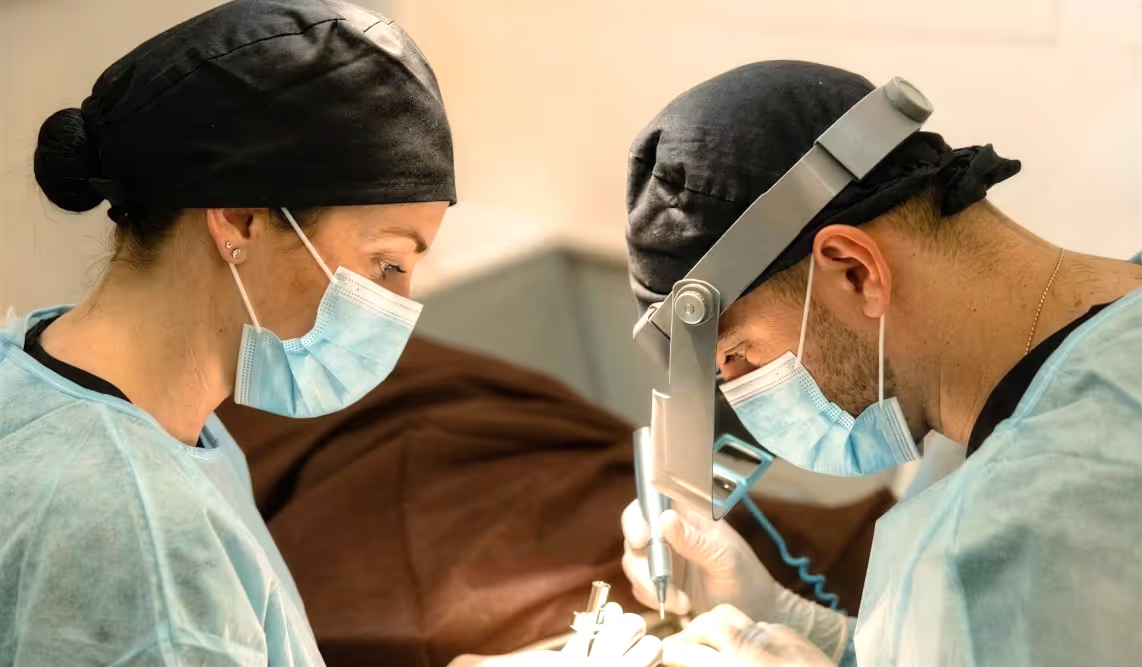
A hair transplant is generally only sensible when hair loss has been stopped and is no longer progressing. In this procedure, hair follicles are taken from the back of the head (the "safe zone") and transplanted into the bald areas.
The FUE method (follicular unit extraction) has proven especially useful for temple recession because it delivers scar-free results. The transplanted hair roots produce new hair permanently, which is why hair transplantation is considered a long-term solution.
Alternative therapies and the evidence base
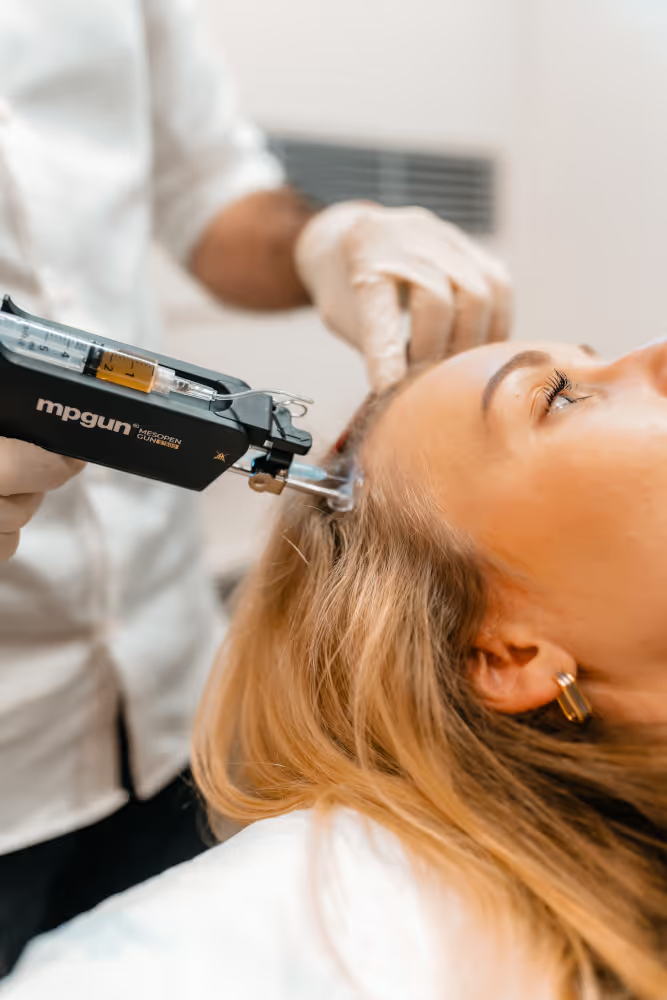
Among alternative treatments, PRP therapy (platelet-rich plasma) in particular shows promising results. The patient's own blood plasma, with concentrated platelets, growth factors, and proteins, is injected into the scalp to stimulate cell renewal.
LLLT (low-level laser therapy) is sometimes used as a complement; it improves blood flow and prolongs the hair growth phase. Stem cell therapy can also stimulate cell division at the hair roots.
Important to know: while the evidence for minoxidil and finasteride is strong (evidence level 1), meaningful long-term studies are still lacking for many alternative methods. Before any treatment, a detailed conversation with a hair specialist should take place.
Care, prevention, and everyday tips
Daily care and the right lifestyle play a decisive role in preventing and managing a receding hairline. With the right measures, progression can often be slowed or cleverly concealed.
Suitable care products for men and women
When choosing products, look for specific ingredients that support hair growth. Caffeine-containing shampoos have been shown to stimulate scalp blood flow and strengthen hair roots. In the lab, caffeine even showed a stronger effect on female hair cells than on male ones. It is important to choose sulfate-free products, because sulfates (SLS/SLES) can damage hair follicles.
For men, scalp and hair treatments have proven effective — they strengthen the hair, help prevent breakage, and increase hair diameter. Women benefit especially from volumizing and moisturizing products.
Hairstyles to conceal a receding hairline
For men the rule is: the shorter the hair, the less noticeable temple recession. Especially helpful are:
- Buzz cut: the very short style makes transitions less conspicuous
- Side part: with longer hair the bare spots can be covered
- Undercut: the contrast between short sides and longer top hair makes the hair look more voluminous
Women can cleverly hide thinning spots with bangs or a middle part. Soft color changes — gray streaks or soft face-framing highlights — can also visually reduce temple recession.
Diet and lifestyle for prevention
A nutrient-rich diet supports healthy hair growth. Especially important are biotin, zinc, selenium, copper, magnesium, iron, and vitamin A. These are found mainly in nuts, whole grains, eggs, fish, and green vegetables.
Stress reduction also plays a central role. Regular exercise, enough sleep, and avoiding alcohol and nicotine can slow the progression of a receding hairline.
When a doctor visit is advisable
A dermatologist should be consulted when hair suddenly falls out in clumps or hair loss is accompanied by itching. Medical advice is also important when clearly demarcated bald patches appear on the head. The earlier treatment begins, the better the chances of slowing or stopping the progression of temple recession.

A receding hairline is undoubtedly a challenge for many people, especially men. In fact, almost one in two men is affected at some point in life. We do not have to watch helplessly as our hair fades, however. Genetic predisposition plays a decisive role, yet by acting early we can slow or even stop the process.
Science now offers various treatment options such as minoxidil and finasteride, which show good results for many people. At the same time, every medical intervention must be weighed carefully — especially in light of possible side effects. A hair transplant often provides a lasting solution for people with advanced hair loss, but requires prior stabilization of the shedding.
Our daily hair care and lifestyle habits also significantly influence hair health. A nutrient-rich diet, stress-reducing measures, and suitable care products help strengthen the hair. Matching hairstyles also help cleverly conceal a receding hairline.
Ultimately: the earlier we act at the first signs, the better the chances of fighting hair loss effectively. With unusual symptoms or sudden shedding, we should definitely see a dermatologist. Although a receding hairline is primarily a cosmetic issue, it can certainly affect self-esteem. With the right knowledge and the right measures, we can deal with it confidently — whether we choose to treat it or accept it.