Hair transplant
After Hair Transplant: Process, Care and Hair Growth (0–12 Months)
After a hair transplant: what happens in the first 12 months? Care, shock loss, healing, and growth — explained step by step for Zurich patients.
Introduction: what happens after a hair transplant?

Immediately after the hair transplant (days 0–3)
The first 72 hours are decisive, because freshly transplanted grafts are very sensitive for the first 10 to 14 days and must first anchor in the scalp. In the first 3–5 days after a hair transplant, the transplanted areas should not be touched, scratched, or rubbed. Typical findings are redness, light blood scabs, a tight scalp, swelling at the forehead and eyes, and numbness in the donor area.
Important rules: do not bump the head, do not scratch, do not rub, no cap and no helmet in the first three days. For the first nights, sleep with the upper body slightly elevated and on your back; this sleep position reduces swelling and supports healing. At Māra, a dressing is often applied in the donor area for the first night. Take antibiotics, painkillers, or decongestant medication only as instructed by the clinic. After a hair transplant, do not wash the transplanted areas for the first 48 hours, to support healing; avoid washing your head in the first 48 hours after surgery so healing is not impaired.
The first week: swelling, scabs, first hair wash (days 3–7)
From day 3 many people notice the operation more: swelling often migrates over the forehead to the eyes. One of the most common side effects after a hair transplant is swelling in the forehead area and around the eyes — a natural body reaction to trauma. Cool the forehead and eye area 3–5 times daily for 10–15 minutes, but never directly on the grafts.
Hair washing should begin after 48 hours, using special sulphate-free shampoos recommended by the clinic. Do not wash your head for the first two days after a hair transplant, so healing is not impaired. After that: leave special lotion on for 30–45 minutes, rinse with lukewarm water without pressure, lather medical shampoo in your hands, and dab lightly with your fingertips. Using a special gentle shampoo is recommended to clean the transplanted areas without pressure, which supports healing. The shower head must not point directly at the recipient area. Itching in the transplanted area is a common side effect that can appear in the first weeks after a hair transplant.
Days 7–14: grafts settling & scabs falling off
After about seven days the hair follicles are usually clearly more stable, yet the first 10 to 14 days remain decisive for the take of freshly transplanted grafts. Between days 7 and 10, many scabs loosen through daily, very gentle care. Scabs should have fully resolved after about 10 to 20 days.
Do not pick scabs off actively. Soften them with lotion and loosen them only with a gentle fingertip massage. After a hair transplant, redness can appear in the transplanted area and is usually visible for the first 2–3 weeks. Swelling and redness in the donor and recipient areas usually resolve after a few days, but can remain visible longer individually. From day 10, photo documentation or an online follow-up at Māra is useful to assess healing course, wound healing, and scab resolution.
2–4 weeks after the hair transplant: shock loss & daily life
This is often the phase that causes the most worry: shock loss. In the first 1–3 months after a hair transplant, up to 90% of transplanted hairs can fall out — known as normal shock loss. The root usually remains; only the hair shaft falls out.
Office work is often possible after 5–7 days. Strenuous work, contact sport, and tight helmets should wait. Loose head coverings are often possible from week 2 if nothing rubs. No sport, sauna, solarium, or alcohol for at least 14 days after the procedure. Heavy physical strain, sport, and extreme sweating should also be avoided for at least 14 days. Ideally avoid nicotine and smoking for at least two, preferably four weeks.
Care and behaviour in the first month: what you must avoid
Following aftercare is the most important factor for the success of the procedure. Even when everything looks calm externally, the wrong actions can disrupt graft take. In the first weeks after a hair transplant it is important to avoid intense physical activity, sunbathing, and contact with water that would impair healing.
No-gos in the first month:
- no intense sport, no sauna, no steam bath
- no swimming pool, sea, or solarium
- no strong sun on the scalp
- no hair colour, permanent wave, gel, wax, or alcohol-based products
- no rubbing, scratching, or peeling in the transplant area
Direct sun can trigger hyperpigmentation and longer redness. Māra creates individual checklists depending on occupation, skin type, method, sports, and personal behaviour.
Hair washing and scalp care: step-by-step guide
Correct washing calms the scalp, loosens scabs, and lowers infection risk. Use a special gentle shampoo to clean the transplanted areas carefully, and avoid pressure on the scalp. It is recommended to wash the hair daily with lukewarm water and gentle movements to protect the sensitive scalp.
| Period | Approach |
|---|---|
| Days 3–10 | extremely gentle, lotion, little water pressure, dabbing |
| Days 10–30 | somewhat more intensive fingertip massage |
| From month 2 | relatively normal hair washing, continue mild cleansing |
Always dilute shampoo with water, apply foam to the head, do not rub. Then dab dry with a soft towel or kitchen paper. Avoid blow-drying, especially hot, for at least two weeks. Māra often provides medical shampoos and lotions with clear contact times.
Sport, sleep, sunlight: daily life after hair surgery
Sport can raise blood pressure, sweating, and friction. Light walks are usually allowed from day 3; light jogging and sex often after 7–10 days; intense weight training and contact sport only after 3–4 weeks. Sweat alone is not always dangerous, but with a helmet, headband, or friction it can promote inflammation.
When sleeping, back position and elevated upper body remain ideal for 7–10 days. A neck pillow prevents unconscious turning. Avoid direct sun on recipient and donor areas for four weeks. From week 4, short sun exposure with head covering is possible; SPF 50 only once the skin is closed and free of scabs.
Medication, minoxidil, PRP & supplements
Medical support can control infections, reduce swelling, and later promote growth. Common are antibiotics for 5–7 days, painkillers as needed, and in some cases cortisone as prescribed by a physician. Studies describe that steroids can reduce postoperative forehead swelling (Journal of Dermatological Treatment).
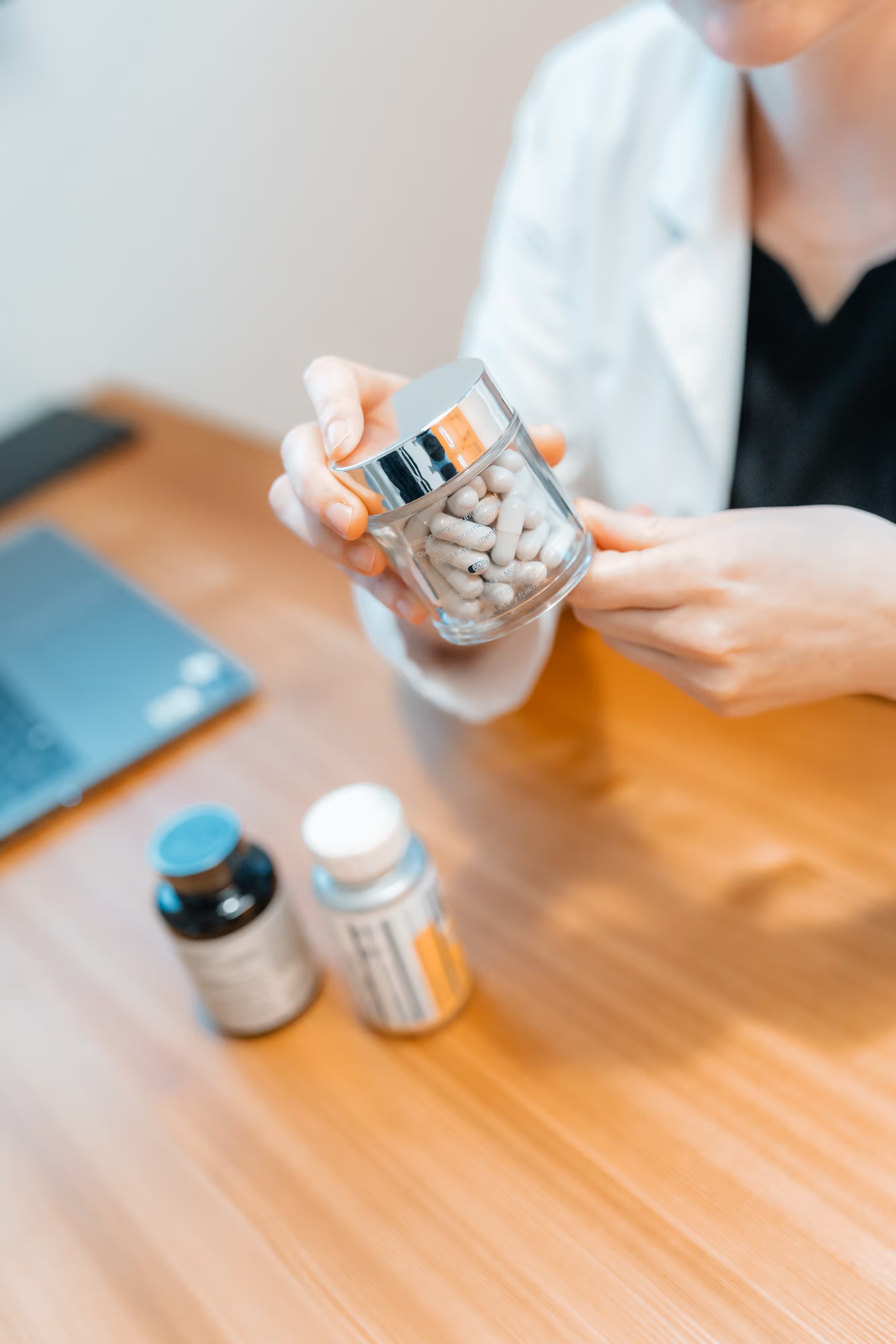
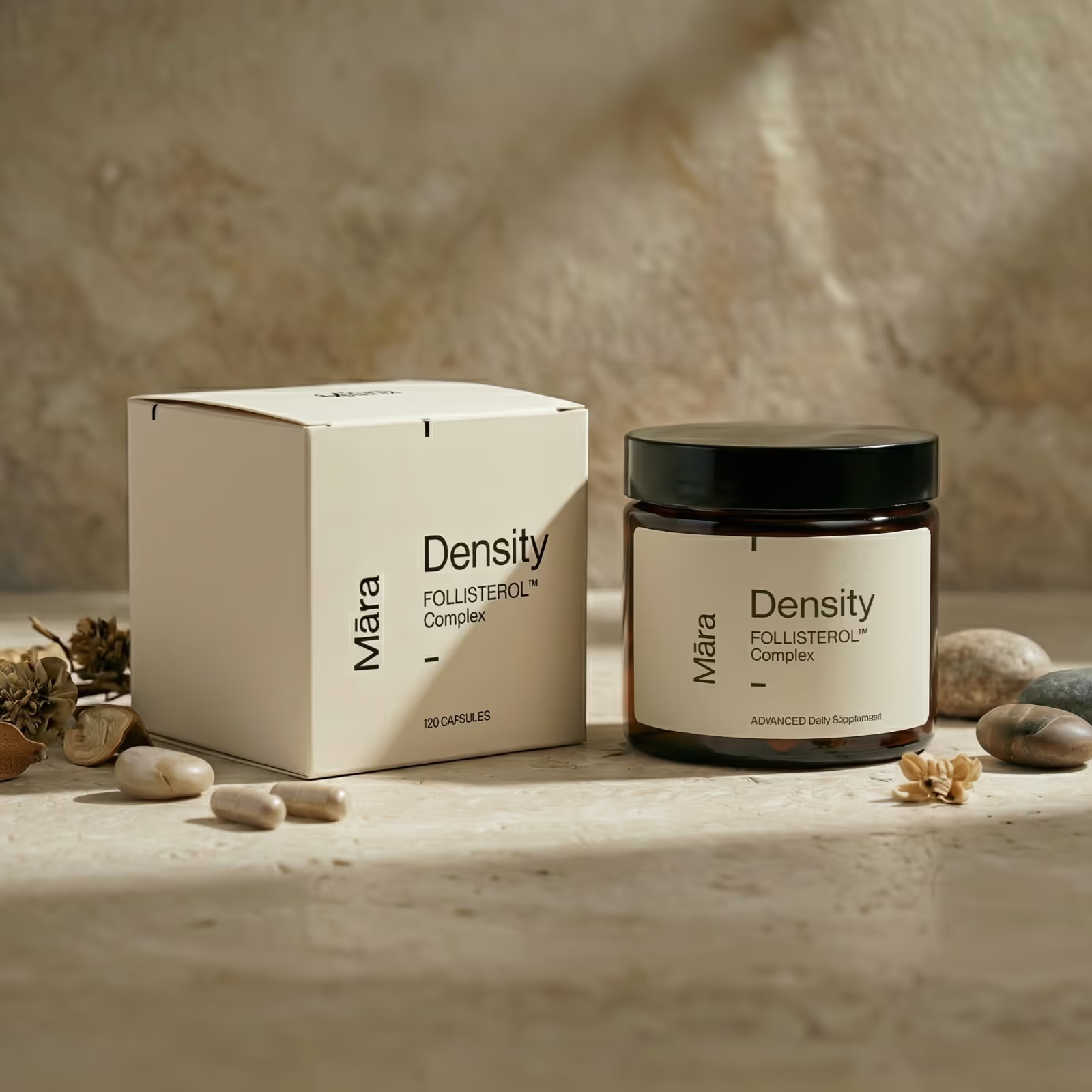
Minoxidil is usually restarted at the earliest from weeks 3–4, only after clearance from the team. PRP — autologous blood plasma — can support hair roots in the growth phase from about month 3; combinations with minoxidil are studied in androgenetic alopecia (Cureus). Biotin, zinc, iron, or vitamin D help especially in deficiency, but do not replace a properly performed hair transplant.
Development of transplanted hairs: timeline 0–12/14 months
Patience is the goal. Months 0–2: shock loss, healing; hair fullness can temporarily look worse than before surgery. After about 3–4 months, growth begins with about 5% new fine hairs, while in months 4–5 already 20–25% of transplanted hairs grow.
Months 5–6: hairs become stronger, darker, and easier to style. Between months 6 and 9 after a hair transplant, the majority of transplanted hairs (about 75%) grow and gain density and firmness. The final growth result is usually reached 12 months after the transplant, when hair can reach almost 90% of the desired density. In some cases the final result continues to mature until months 14–18.
Donor area vs. recipient area: healing and scars
The donor area at the back of the head or sides heals differently from the recipient area at the hairline, crown, or receding temples. With FUE, many small wounds form that scab in 7–10 days and are usually barely noticeable after 2–3 weeks. Scars are punctate and become less conspicuous over time.
In the recipient area, redness, fine new hairs, and sensitive skin can remain visible longer. Aggressive shampoos, peels, or camouflage directly on fresh skin are taboo. Follow-ups at Māra — for example after 10 days, 3 months, and 12 months — document density, scars, and results objectively.
After 6 months: interim review — visible progress
Many patients look in the mirror more calmly around month 6 for the first time. Depending on the starting point, large areas may already be covered, lengths of 5–7 cm are possible, and simple styling works again. Still, some spots can look thin while others are already denser.
That is normal. Light hair fibres can help as long as they do not irritate the skin. Chemical treatments should remain restrained. Anyone with genetic hair loss should consistently discuss and continue medically recommended therapies such as finasteride.
After 12 months: final result of the hair transplant
After 12 months the aesthetic result is reached in most cases. Transplanted hairs now behave like donor hairs: washing, cutting, styling, and later colouring are possible with usual precautions. Small changes in density, shine, or structure can occur until months 14/18; dramatic jumps usually not.
A final check at Māra with before-and-after comparison is worthwhile now. That also covers prevention, lifestyle, medication, or a possible second session. Transplanted hairs generally remain permanent because they keep their genetic resistance to hair loss.
FAQ after hair transplant
When can I go back to work?
Office work is often possible after 5–7 days. Physically heavy work usually needs longer and should be coordinated individually with the clinic.
Is it normal for hair to fall out after 10 days?
Yes. Shedding can begin from week 2 and is usually shock loss, not loss of the grafts.
From when may I wear a cap or helmet?
Loose head coverings usually from week 2. Tight helmets better only after 3–4 weeks.
How long does redness last?
Often 2–3 weeks, longer with sensitive skin. What matters is whether pain, pus, or fever accompany it.
Does my hair transplant last forever?
Transplanted hairs are usually considered permanent. Non-transplanted hairs can continue to thin, however.
What to do if unsure?
Māra patients can ask by email, phone, or video call. Better to report once too early than overlook a reaction.

The success of a hair transplant depends not only on the operation, but equally on aftercare, restraint, and patience through the whole healing process. Swelling, scabs, shock loss, and slow take are normal stages on the way to the result. Anyone who consistently follows tips on sport, hair washing, sun, alcohol, smoking, and medication protects the grafts and supports recovery. Māra accompanies patients long after hair surgery with information, check-ups, and a clear view of the best next steps.