Hair transplant
Hair Transplant for Men: Methods, Process, Costs & Results
Hair transplant for men in Zurich: FUE method, individual planning, and transparent costs. Get an informal consultation on what to expect.

Hair loss affects many men earlier than they expect: receding temples, a thinning crown, or an advancing bald patch change not only scalp hair, but often self-confidence and self-worth as well. A modern hair transplant can be a lasting solution when cause, donor area, and expectations fit together realistically. On this page you learn when a hair transplant makes sense, which method may apply, how the procedure works, and which costs to plan for.
Hair transplant for men at a glance

- A hair transplant for men is often useful for receding temples, a high forehead, a thinning crown, thin hair on the top of the head, or scars after operations and accidents.
- Typical age ranges start around 25–30 when hair loss is stable or well assessable.
- Timeline: days 0–14 redness and scabs, weeks 2–6 shedding, months 3–6 new growth, months 9–12 visible densification, months 12–18 final result.
- Māra focuses on minimally invasive procedures, especially the FUE method (follicular unit extraction); artificial hair and outdated large-graft techniques are not offered.
- The three most important advantages: lasting growth of transplanted hairs, a natural hairline, and barely visible scars with modern technique.
- Modern techniques allow transplanted hairs to grow naturally and blend seamlessly into existing hair.
- Transplanted hairs are generally resistant to the effects of dihydrotestosterone (DHT), which means they can keep growing for a lifetime.
Causes of hair loss in men
Before a hair transplant is planned, it must be clear why the hair is falling out. Not every hair loss is permanent, and not every loss should be treated surgically.
The most common form of hair loss in men is androgenetic alopecia, also known as male pattern baldness, which is genetic and caused by sensitivity of hair follicles to the hormone dihydrotestosterone (DHT). DHT shortens the growth phase of the hair roots, follicles miniaturise, and strong hair becomes fine fluff. This usually becomes visible first at the temples, crown, or hairline; studies show that visible hair loss becomes very common in men from about age 40, with rising rates with age (NCBI).
Further causes that should be clarified before treatment:
- Stress can disrupt the normal hair growth cycle and cause a type of hair loss known as telogen effluvium, in which a large number of hairs enter the shedding phase and fall out.
- Nutritional deficits, especially a lack of vitamins and minerals such as iron and zinc, can impair hair growth and cause hair loss.
- Medical conditions such as thyroid problems, autoimmune diseases, and scalp infections can also contribute to hair loss.
- Inflammatory scalp diseases, fungal infections, or diffuse patterns must first be assessed diagnostically.
- With diffuse hair loss, medication, PRP, mesotherapy, or treating the underlying condition is often the better first option.
The goal is always: understand the cause first, then decide whether a transplant is medically and aesthetically sensible.
When is a hair transplant for men useful?
A hair transplant should never be the first step. At Māra, physician, team, and specialists first check conservative options, general health, the scalp, and how hair loss is developing.
Yes, when …
- hair loss is hereditary, stable, or only slowly progressive;
- sufficiently dense donor hair is available in the back of the head and nape area;
- the hair fringe at the back of the head has limited capacity; overharvesting leaves no material for later procedures;
- visible hair loss exists in circumscribed areas, such as temples, crown, high forehead, or scar areas;
- expectations for hair density, styling, and overall look are realistic.
Rather no, when …
- hair loss is diffuse, acute, or inflammatory;
- thyroid problems, deficiencies, or autoimmune processes are not yet treated;
- very young patients show a rapid course and strong family history;
- the wish for “full hair like at 18” does not match the limited donor reserve.
The best prospects for a hair transplant exist in patients with realistic expectations and visible loss in circumscribed areas. For men it is often wiser to plan several smaller sessions over years rather than use up all reserves in a single procedure. Transplanted hair remains; non-transplanted original hair can continue to fall out.
Hair transplant methods: FUE, FUT & modern variants
Modern hair transplant techniques differ in how grafts are harvested at the back of the head and placed in the target area. The most important terms are FUE, FUT, DHI, Choi implanter, sapphire FUE, and I-FUE. Hair transplants require craft skill and aesthetic judgement, because growth direction, angle, density, and facial proportions must fit together.
- FUE / Follicular Unit Extraction: The FUE technique is a minimally invasive method in which individual hair follicles are harvested directly from the donor area, leading to less pain and barely visible scars. Follicular units are taken with fine punches of about 0.7–0.9 mm. The FUE method is especially suitable for men with short hairstyles.
- FUT / Follicular Unit Transplantation: The FUT technique is the oldest hair transplant method and is still used in Germany for over 90 percent of transplants, but has the disadvantage of leaving a large scar at the back of the head. With FUT, a skin strip is removed, divided under the microscope, and implanted.
- FUE vs. FUT: FUT can be an option for very large graft demand and long hair. Many men choose FUE, however, because pinpoint scars are less noticeable day to day and recovery is usually more comfortable.
- Choi implanter / DHI: With the Choi implanter method, grafts are injected directly into the scalp, enabling precise decisions on growth direction and angle.
- Sapphire FUE: The sapphire FUE method enables smaller cuts and leads to less tissue trauma.
- I-FUE: The I-FUE technique (Intermittent Follicular Unit Extraction) is a further development of FUE aimed at making harvesting and implantation of follicles even gentler and more effective.
- Complementary procedures: PRP can in selected cases support wound healing and the take phase; studies suggest benefits for density and early growth (PubMed).
Māra decides individually which approach fits hair structure, area, scalp, and target look. Body hair can rarely be considered as a supplement, but does not replace the quality of good donor hair from the back of the head.
How a hair transplant works at Māra
The process at Māra is outpatient, plannable, and structured step by step. From the first consultation to follow-up, patients know what happens and why.
- Preparation & consultation: In the first appointment we take about 45–60 minutes for history, family history, hair status, scalp examination, photo documentation, and trichoscopy if needed. The hairline is planned with age, face shape, and later development in mind.
- Planning graft number: From surface area, desired density, and donor quality, the number of grafts is estimated. Sessions often involve 1,500–3,000 grafts; temples often need fewer, crown and top of the head more.
- Limited resource: Only redistribution of hair takes place; the total number of hairs stays the same. Every harvest must therefore be planned long-term.
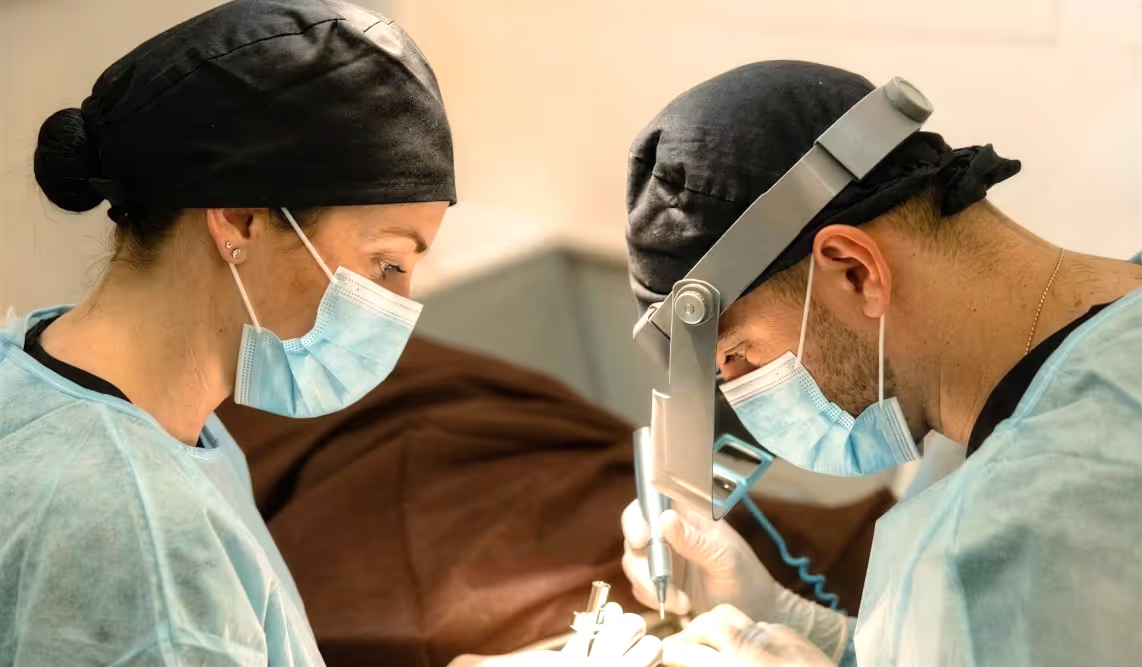
- Treatment day: Depending on shaving, scope, and technique, treatment usually lasts 4–8 hours. After local anaesthesia, grafts are harvested, stored in nutrient solution, and placed in the target area.
- Implantation: Angle, direction, and spacing decide whether the new growth blends naturally into existing scalp hair.
- After the procedure: A rest phase in the clinic follows, checking the donor area, a dressing if needed, and clear information for the first night.
Other areas such as eyebrows follow their own rules; for hair transplants in men, reconstruction of hairline, crown, or top of the head is usually the focus.
Healing, aftercare & what men should expect over time
Redness, scabs, and initial shedding of implanted hairs are normal. After the procedure, implanted hairs often fall out temporarily at first (shedding effect); that is not a sign of failure, but part of the hair cycle.
- First days: In the first days after the procedure, patients should avoid strenuous activity and take care not to traumatise the head area. No sport, no alcohol, no smoking, no direct sun, no rubbing or scratching.
- Washing: At first the scalp is only carefully moistened. Gentle hair washing with special shampoo begins as instructed, often after a few days.
- First weeks: Scabs usually loosen after 7–10 days. Caps, helmets, and pressure on the recipient area should be avoided at first.
- Weeks 2–6: The shedding phase begins. The hair roots remain in the scalp even if the visible shafts fall out.
- Months 3–6: New growth starts, initially fine and irregular. Small asymmetries are normal in this phase.
- Months 9–12 to 18: The final, visible effect of a hair transplant shows only after 12 to 18 months. Healing can take weeks to months; the final result is often visible only after several months.
- Aftercare at Māra: Check-ups after 1, 3, 6, and 12 months help document progress and hair density. Aftercare after a hair transplant is decisive for the success of the procedure and achieving the desired results.
- Medication: After a hair transplant, many physicians recommend medications such as finasteride or minoxidil to stabilise non-transplanted hair.
Risks, side effects & realistic results
Hair transplants in men are considered safe procedures today when planned and performed professionally. Honest risk information still belongs to modern hair surgery.
- Common side effects: mild pain in the donor area, a feeling of tightness, swelling at the forehead or eyes, scabbing, and temporary numbness. These usually resolve after days to a few weeks.
- Possible complications: wound healing problems and mild infections are possible complications of hair transplants. Stronger scarring, uneven growth direction, or shock loss of existing hair can also occur.
- Risk reduction: An experienced physician, sterile standards, precise technique, and consistent aftercare clearly lower these risks.
- Realistic density: A hair transplant does not create a new total amount of hair. Donor hair is redistributed to create more density at first glance.
- Graft examples: For temples, 1,500–2,500 grafts are often planned; for top of the head or crown often 2,500–4,000 grafts. With very advanced hair loss, optical densification rather than full restoration may be achievable.
- Photo examples: Before-and-after images are helpful, but always only indicative. Hair colour, hair thickness, curl, skin contrast, and health status influence the result.
At Māra, therefore, not only the current baldness is considered, but also the likely development over the next years.
Costs of a hair transplant for men
Hair transplant costs depend on several factors: method, number of grafts, desired density, OR time, team experience, and aftercare effort. Transparent cost planning before the procedure is standard at Māra.
- Costs vary by method and number of transplants needed; prices can be around CHF 5 to 6 per follicular unit.
- Costs can range from several thousand to over ten thousand francs, depending on method and number of grafts needed.
- Smaller procedures, such as temples with about 1,500 grafts, cost correspondingly less than large sessions with 3,000–4,000 grafts.
- The price should include pre-examination, surgery, anaesthesia, medical care, aftercare, photo documentation, and clear information for the time afterwards.
- Patients usually pay for a hair transplant themselves, because it is a cosmetic procedure not covered by health insurers.
- Exceptions can include accident-related hair loss, burns, or medically justified reconstructions.
- Offers abroad often look cheaper. Language, legal protection, hygiene, follow-up visits, and who is reachable if complications arise should also be considered.
- Whether in Zurich, Germany, or another region: price alone should never decide. Quality, planning, and long-term care are decisive.
Dumping prices can become expensive for a lasting change to the body if corrections are needed.
Why Māra for your hair transplant
Māra combines modern hair transplantation for men with careful diagnostics, aesthetic planning, and structured aftercare. The goal is not an artificial hairline, but a result that fits face, age, and wish.
- Medical competence: The team specialises in FUE, follicular unit extraction, and modern variants of follicular unit transplantation. Continuing education, loupe or microscope technique, and precise instruments are foundational.
- Individual hairline: Planning considers face shape, age, existing hair, future hair loss, and styling habits.
- Careful handling of the donor area: The medical lead and treatment team ensure the donor hair resource is not overloaded.
- Transparent communication: You learn in advance what is realistic, which risks exist, which costs arise, and which alternatives there are.
- Holistic approach: Medical stabilisation, PRP, or further options are recommended only when they make sense in the individual case.
- Service: Personal contacts, structured check-ups, and clear aftercare documents provide security after the procedure.
- Case examples: In the consultation, concrete cases and before-and-after photos can be discussed within legal frameworks.
This creates not a quick standard solution, but a treatment plan that works long-term.

Here you find short answers to questions men ask particularly often before a hair transplant.
- From what age does a hair transplant make sense?
Often from the mid or late 20s when the pattern is stable. With very early, aggressive hair loss, waiting can be wiser. - How long am I unable to work?
Office work is often possible after a few days. Physically heavy work should pause for about 1–2 weeks depending on healing. - When may I exercise again?
Light activity after consultation usually after a few days; intense sport often only after 2–4 weeks. - Can I cut or colour the transplanted hairs?
Yes, once everything has healed safely. Chemical treatments should wait for clearance, not in the early healing phase. - When do I see first results?
First new hairs often show from months 3–4. A clear difference usually appears from month 6. - When is the final result visible?
The final result usually shows after 12 months; with crown or slower growth, sometimes only after 18 months. - Do transplanted hairs last a lifetime?
Usually yes, because they come from more DHT-resistant areas at the back of the head. Non-transplanted hairs can continue to fall out. - Is a second session possible?
Yes, if enough donor reserve remains. Especially with progressive hair loss, later densification can make sense. - Does treatment differ for women?
Yes, in women the pattern is more often diffuse, so diagnostics are especially important. The principles of transplantation are similar, but planning often differs.
If you want to know whether a hair transplant makes sense for you, book an informal consultation at Māra. Together we review cause, donor area, target look, and a personal treatment plan.