Hair transplant
FUE vs DHI: Which Method Suits You?
How FUE and DHI work, when each technique makes sense, and what matters for planning and aftercare — without clinic rankings.
The technique should not be chosen from internet buzzwords, but according to your hair-loss pattern, donor area, desired hairline, and how much shaving you accept. FUE and DHI are both modern autologous hair transplants — the main difference is how the grafts are implanted.
For a neutral method and clinic comparison across many providers, see HaarVergleich. Here we explain the procedures and what matters in practice.
What FUE and DHI have in common

Success depends less on the “FUE” or “DHI” label than on:
- realistic graft planning and a dense, natural hairline
- careful harvesting and a short time outside the body for the grafts
- clean implantation (angle, direction, depth)
- aftercare and long-term clinic follow-up
FUE — when it is used at Māra
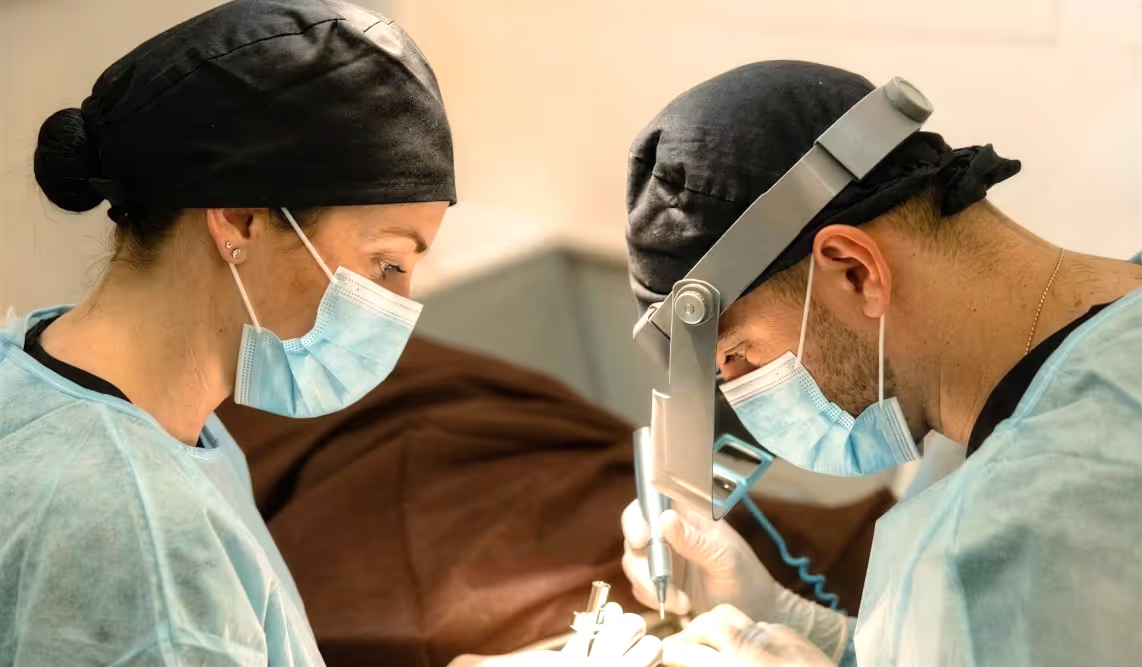
With the FUE method (Follicular Unit Extraction), follicles are harvested with a fine punch, prepared, and placed into channels prepared in the recipient area.
Typically useful when:
- larger areas (crown, vertex, front) need many grafts
- an efficient, well-controlled session is the priority
- (partial) shaving in the donor area is acceptable
Healing: often 7–14 days with scabs and mild swelling; pinpoint scars in the donor area usually stay inconspicuous under enough hair.
DHI — when it is recommended
With DHI (Direct Hair Implantation), implantation is often done with a Choi pen: opening the skin and placing the graft in one step. That allows very precise control of angle and density — especially at the hairline and temples.
Typically useful when:
- smaller zones or a fine hairline are the focus
- targeted densification matters more than maximum graft count per session
- as little visible shaving as possible is desired (often for women)
The early recovery phase can look cosmetically more discreet; long-term, the same rules apply for sport, sun, and follow-up visits.
Costs — orientation at Māra, not a market ranking
DHI can be more labour-intensive and therefore more expensive than a comparable FUE session, because precision and instruments take more time. At Māra, costs depend on graft number, technique, and package scope — not on a comparison with dozens of clinics.
Current pricing logic and what is included: mara.care/preis and Hair transplant.
Process and aftercare with us
- Hair analysis — pattern, donor reserve, blood values when useful
- Plan — method, graft target, hairline
- Procedure in Zurich with clear OR organisation
- Aftercare — washing, rest, check-ups; growth over 12–18 months
Typical guidance (adapted individually): first wash after medical clearance, no scratching, sun protection, no intense sport in the first weeks.

There is no universally better technique. At Māra we choose FUE, DHI, or a combination based on your findings — not on trend terms.
If you need a broad market comparison (Switzerland, Turkey, prices from multiple clinics), use HaarVergleich. If you want to know what makes sense for you in Zurich, start with the free hair analysis.