Hair transplant
After Hair Transplant: Process, Care & Hair Growth Timeline
Aftercare after a hair transplant: tips on washing, sleeping, and healing in the first weeks — what to expect from day 7 through month 12.
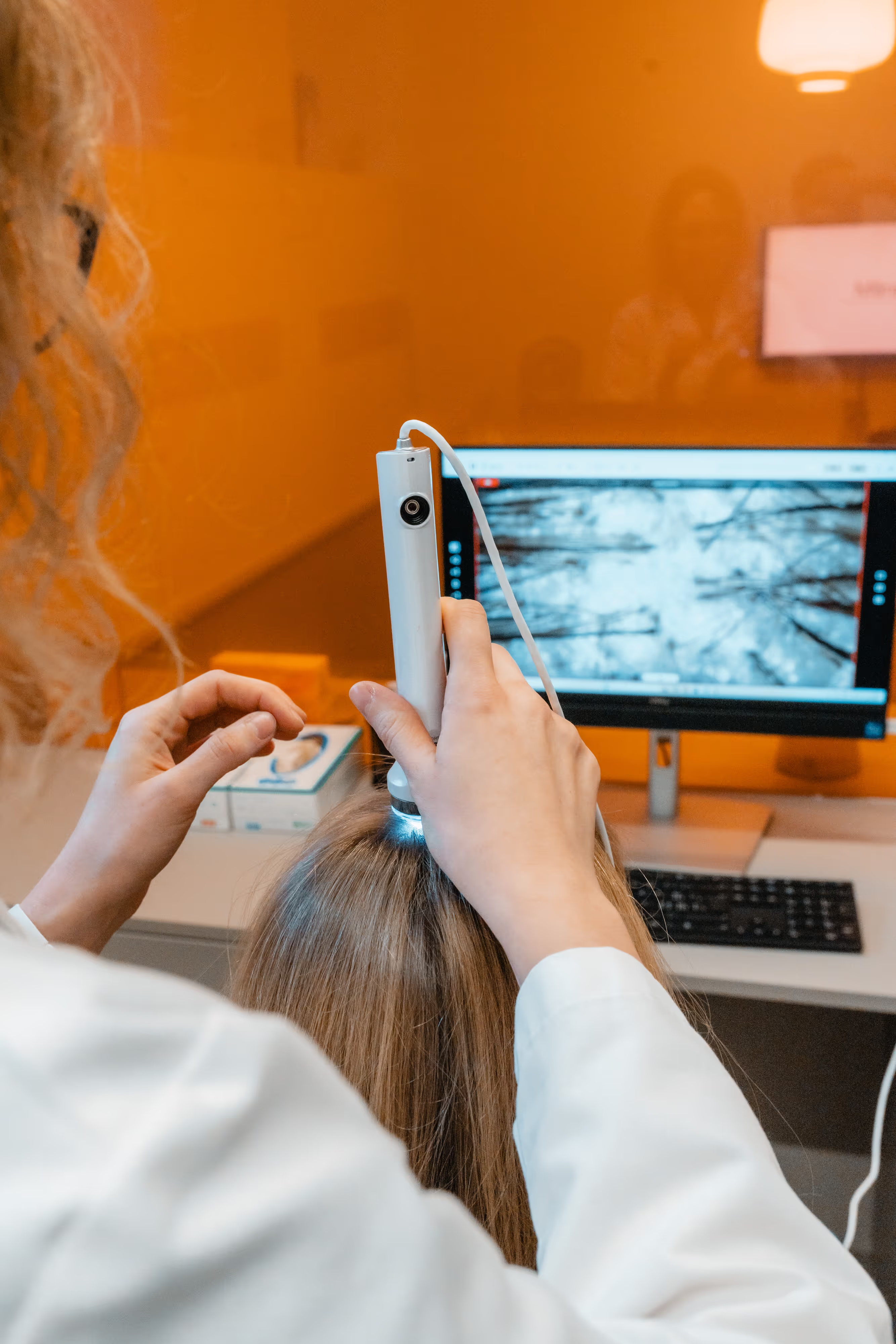
A hair transplant — for example with the FUE method — is far more than a single procedure. Real success is decided in the weeks and months afterwards. After a hair transplant, proper aftercare is decisive for the best result. At Māra we accompany patients not only on surgery day, but for at least 12–14 months with check-ups, recommendations, and personal advice.
Swelling, redness, itching, and temporary hair loss after the operation are normal findings that can be placed clearly in time. In this article you learn chronologically what to expect after 7 days, 10 days, 1 month, 3, 6, and 12 months — and how to behave concretely to protect your new hair optimally.
The first 7 days after the hair transplant

Day 0 (surgery day):
- Dressing in the donor area (back of the head)
- Pain usually mild, controllable with paracetamol
- First night sleeping with elevated upper body (45–60° angle)
- Light bleeding or seepage is normal
Day 1:
- Dressing removal in the clinic
- First medical check of the grafts
- Team demonstration of the hair-washing technique
From days 2–3:
- Careful hair washing with lukewarm water (maximum 37°C)
- In the first days after a hair transplant, hair should be washed carefully with a mild shampoo recommended by the physician, so sensitive follicles are not damaged
- Do not rub — only dab gently and rinse
Swelling:
- Mild swelling in the forehead and eye area peaks around days 3–4
- One of the most common side effects after a hair transplant is swelling in the forehead area and around the eyes — a natural body reaction to trauma
- Then resolves quickly
Behaviour rules:
- No sport, no sauna, no solarium
- Do not sleep on your stomach
- Do not scratch the head or remove scabs
- Tight-fitting head coverings should be avoided for the first 14 days
- In the first weeks after a hair transplant, avoid physical strain and excessive heat to minimise swelling and bleeding
Tips to reduce swelling:
- Place cool compresses on the forehead (never directly on the grafts)
- Keep the elevated sleep position
At Māra: if you have unusual pain, fever above 38°C, or strong redness, contact the clinic immediately — by phone, email, or telemedicine appointment.
Swelling and wound healing: 7–10 days after the hair transplant
In this phase swelling normally resolves and the grafts increasingly anchor in the scalp. Healing progresses visibly.
- Swelling usually begins 24–48 hours after surgery, peaks around days 3–4, and shows clear improvement by day 7
- Scab formation in the recipient area: small blood and fibrin crusts form
- Scabs form in the recipient area and usually fall off after 10 to 14 days
- The donor area often already looks largely calm after 7–10 days, but can still be red
- From day 7, somewhat more pressure can be used when washing hair to loosen scabs — still without scratching
- In the first weeks after a hair transplant, itching and minor bleeding in the transplant area can occur, which is also considered a normal reaction
- Sport and heavy physical work should be avoided during the first 14 days
- No tight head coverings in the first 3 days; from day 4 only loose hats until all scabs are gone
Medication: Antibiotics are usually prescribed for 5–7 days; painkillers only as needed. Always take as instructed by a physician.
Shock loss and first weeks: 10 days to 1 month after the hair transplant
Between day 10 and the end of the first month, many patients experience so-called shock loss. This is a normal process and part of healing. In the first 10 days after a hair transplant, shock loss can occur in which transplanted hairs fall out — a normal part of healing.
- After about 7–10 days the grafts have settled
- The hair cycle changes — follicles enter the resting phase (telogen phase)
- After a hair transplant, about 80–90% of transplanted hairs fall out in the first 1–3 months — known as shock loss
- Shock loss, in which transplanted hairs fall out in the first weeks after surgery, is a normal and temporary process caused by surgical trauma
- The hair roots remain in the skin and later form new hairs — shedding is not a sign of failure
Typical findings:
- Itching and mild redness
- Occasional small spots in the recipient area (usually harmless)
Care in this phase:
- Continue using mild shampoos
- No aggressive styling products
- No colouring or bleaching new hair in the first month
Activities:
- After about 10–14 days, careful return to light activities (walks, office work)
- Intense sport only after medical clearance (often from weeks 3–4)
- Continue physical strain with caution
Psychology: Many patients feel unsettled in this phase because hair falls out and visible changes are limited. Comparison photos help assess progress objectively.
At Māra we recommend regular photo documentation — for example every 4 weeks — to record the healing course and strengthen your confidence.
New hair growth: 2–3 months after the hair transplant
In months 2–3 the first new fine hairs usually become visible while shock loss slowly ends. From the third month after a hair transplant, new growth begins to show, and it can take up to 12 months until the final result is reached.
- New hairs initially look thin, light, and irregular
- From the third month after a hair transplant, new growth begins, with usually 20–25% of transplanted hairs starting to grow
- First visible growth results are usually expected after about 3 to 4 months, while growth is fastest between months 6 and 9
- The donor area is largely healed after about 3 months; redness fades
- Short hairstyles are wearable again
Possible skin issues:
- Sensitive scalp
- Occasional pustules or ingrown hairs possible
- With pain or pus formation: arrange a medical check
Sport and daily life:
- From about weeks 4–6 most activities including sport, swimming, and moderate weight training are possible (after clearance)
- Sex and light physical activity are usually unproblematic
UV protection: Direct sun on the recipient area should be avoided for at least 2–3 months. Use a hat or UV protection spray after medical clearance.
Visible densification: 6 months after the hair transplant
After about 6 months patients usually see clear progress. The final result is not yet reached — patience remains important.
- In months 5–6 about 40–60% of final hair volume may be reached (depending on person, area, and graft count)
- Between six and nine months after a hair transplant, about 75% of transplanted hairs grow, and hair becomes thicker and denser
- Strands become stronger and darker
- Hairstyles can gradually be styled more flexibly
- A haircut (scissors and clipper in the donor area) is unproblematic
- The recipient area should still be treated somewhat carefully
Styling tips:
- Blow-dry on medium temperature
- Avoid extremely hot straighteners or curling irons
- Light products (gel, paste) possible after medical approval
At Māra we recommend a check-up around month 6 to discuss density, growth direction, and possible complementary measures such as PRP or topical minoxidil.
Final result: 12–14 months after the hair transplant
The full result of a hair transplant is usually only assessable after 12–14 months. In many cases the final density of your new hair only shows then.
- The final result of a hair transplant is usually reached after 12 months, when hair has the desired length and density
- After 12 months, often 80–90% of the final hair picture is visible
- Further slight densification until about month 14 is possible
- The parting area often needs somewhat longer (up to 14–18 months) for maximum density
- From this point transplanted hairs can be treated like natural hair: cutting, colouring, blow-drying, shaving, styling without restriction
- Donor and recipient areas are optically largely inconspicuous
- Scars with the FUE method (pinpoint scars under 1 mm) are not noticeable day to day
At Māra we recommend a final appointment after 12–14 months for outcome review, professional photo documentation, and discussion of further steps such as maintenance therapy against further hair loss.
Frequently asked questions after hair transplant
How long does swelling last after a hair transplant? Swelling typically appears 24–48 hours after surgery and peaks around days 3–4. It usually resolves within 3–7 days. Cooling and an elevated sleep position speed the process.
When may hair be washed again? The first hair wash usually takes place from days 2–4 after surgery, depending on clinic instructions. Use lukewarm water and a mild sulphate-free shampoo. Do not rub — only dab gently.
When do transplanted hairs fall out and when do they grow again? Shock loss occurs between weeks 2 and 8 — the hairs (not the roots) fall out. New growth begins from month 3; visible density develops between months 6 and 12. This is the normal path to the final result.
When can I exercise, drink alcohol, smoke again? Light sport is possible from about week 2; intense sport from weeks 3–4 after medical clearance. Alcohol and smoking should be minimised around surgery because they impair circulation. Afterwards, moderate consumption is acceptable.
How long does a hair transplant last? Transplanted follicles come from a genetically more stable donor area and are largely resistant to hormone-related hair loss. With a stabilised course, lasting success is expected.
At Māra: individual recommendations are always coordinated in a personal consultation. This article offers orientation — exact information for your situation comes in aftercare.

Quality of life with new hair can rise clearly. Proper hair care after a transplant is decisive for the health and growth of new hairs, because follicles are especially sensitive.
Nutrition:
- A balanced diet rich in proteins, vitamins, and minerals plays an essential role in hair regeneration after a transplant
- Vitamins such as biotin, vitamin C, and vitamin E are important for hair growth because they support keratin formation and improve scalp circulation
- Minerals such as zinc and iron are decisive for healthy hair growth because they support repair and growth of hair cells
- No exaggerated “miracle remedies” needed — scientifically sensible supplements are enough
Stress management:
- Chronic stress can worsen hair loss
- Relaxation techniques such as yoga, sport, and meditation support your wellbeing
Lifestyle:
- A healthy diet and avoiding nicotine and alcohol can support healing
- Smoking and excessive alcohol impair circulation and thus the hair roots
Long-term hair care:
- Use mild shampoos
- Do not blow-dry too hot
- UV protection in intense sun
- Occasional scalp massage to promote circulation
At Māra we encourage you to seek advice early, document photos of your own progress, and see regular medical aftercare as a fixed part of your treatment. With proper care and patience you can enjoy your new confidence long-term — we accompany you on this path from the first consultation to the final result.