For women
Hair Loss in Women: What You Need to Know
Hair loss in women: causes, symptoms, diagnosis, and treatments—plus practical tips, home remedies, and when seeing a doctor makes sense.
Almost 50 percent of all women experience hair loss—more often than many think. Especially concerning: even among those under 40, up to one in four women is affected. We understand that this topic often comes with shame and falling self-esteem.
Causes of female hair loss are varied, from genetic factors to hormonal swings. About one third of women experience menopause-related hair loss, while others struggle with iron deficiency—the world’s most common nutrient shortfall and one of the most frequent drivers of female hair loss. Conditions such as polycystic ovary syndrome (PCOS), which affects up to 12 percent of women of reproductive age in Germany, can also increase shedding.
In this article you will learn what experts in 2025 really recommend for diagnosis and treatment, which innovative therapies are available, and how preventive measures can improve your hair health.
Common causes of hair loss in women

Genetic predisposition and androgenetic alopecia
In about 95% of all hair-loss cases, androgenetic alopecia (AGA) is the main cause [1]. This genetic form rests on follicle oversensitivity to dihydrotestosterone (DHT) [1]. In women, hair typically thins along the center parting, making the scalp increasingly visible [2]. Loss begins gradually, usually between ages 30 and 40, and worsens markedly during menopause [3]. Up to 42% of women are affected by this hereditary form [4].
Hormonal fluctuations (e.g. pill, pregnancy, menopause)
Hormones strongly shape hair growth. Estrogens promote growth; a rise in male hormones can lead to loss [5]. In menopause, falling estrogen confronts up to one third of women with hair loss [4]. After pregnancy, increased shedding often starts around week 8 postpartum as estrogen drops suddenly [4]. Stopping the contraceptive pill can also trigger shedding through hormone swings [6]. PCOS, one of the most common hormone disorders in women of childbearing age, often causes hair loss as well [5].
Stress and psychological strain
Ongoing stress can lead to significant hair loss. The body releases more stress hormones such as cortisol, which inhibit growth [7]. Nerve fibers around the follicles also increase, which can trigger neurogenic inflammation [7]. That inflammation may feel like itching and can lead to follicle death [8]. Stress-related shedding typically appears 2–3 months after the stressful period [8]. If stress is only temporary, the hair cycle usually normalizes within six months [8].
Nutrient deficiency: iron, vitamin D, biotin
Certain nutrients are essential for healthy growth:
Iron: Essential for oxygen transport to the follicles; deficiency is one of the most common causes of female hair loss [9]
Vitamin D: Activates follicles and prevents a prolonged resting phase [10]
Biotin and B vitamins: Support keratin formation and healthy growth [11]
Zinc: Important for protein synthesis and hair structure [9]
Sulfur-containing amino acids: Form keratin, the main component of the hair fiber [9]
Especially at risk of deficiency are pregnant and breastfeeding people, older adults, and those with gastrointestinal disease [10].
How doctors diagnose hair loss in 2025
Correct diagnosis is the foundation of every successful hair-loss therapy. Modern diagnostic methods have advanced markedly since 2025 and deliver more precise results than ever.
History and physical examination
Diagnosis always begins with a detailed conversation. Doctors ask about onset and duration of shedding, whether it is diffuse or localized, and whether symptoms such as itching or scaling are present. Questions about medications matter—few truly cause relevant hair loss—as do hormonal factors such as the contraceptive pill or pregnancy. Temporary shedding 2–4 months after birth is physiologically normal in women [12].
On physical exam the doctor checks the scalp for inflammatory redness and scaling, because psoriasis and eczema can also cause hair loss [12]. Especially informative is the pull test: at least three sites are gently tugged on about 40 hairs. Normally fewer than three should come out; more than four to six makes the test positive and suggests telogen effluvium [13].
Trichogram and TrichoScan
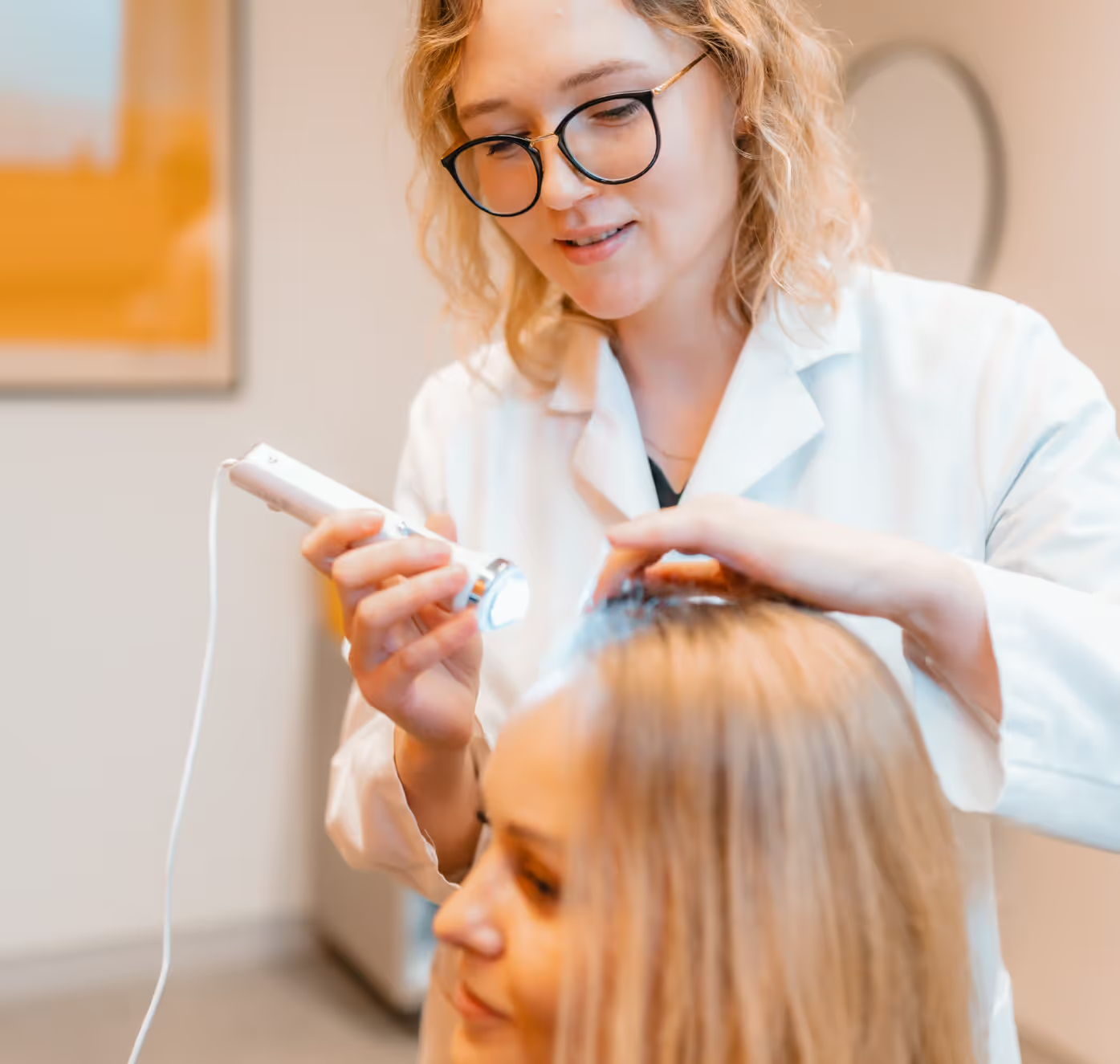
The trichogram is a microscopic exam of 20–50 plucked hairs taken with a rubber-coated clamp. A telogen (resting) share above 20% indicates increased shedding [12]. The method also allows assessment of root abnormalities such as dystrophic hairs.
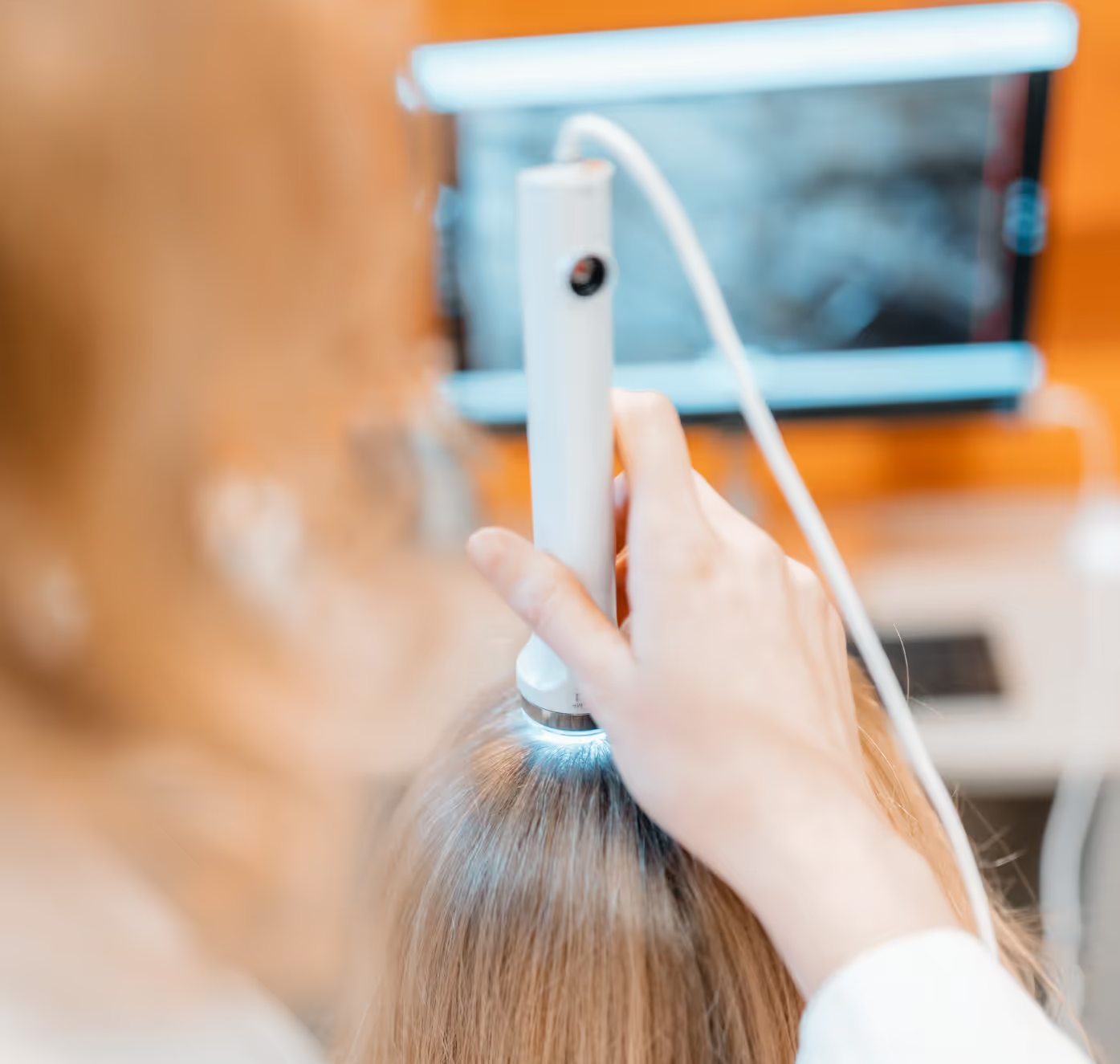
TrichoScan has almost completely replaced the painful trichogram [14]. In this computer-assisted analysis a small scalp area is shaved, dyed, and photographed [15]. The latest version, TrichoScan 5.0, has used deep-learning technology since 2025 that makes the previous hair dyeing unnecessary while still delivering precise results [16].
Blood tests for hormone and nutrient values
Lab tests are crucial to identify systemic causes. Standard checks include:
Iron stores (ferritin)—iron deficiency is one of the most common causes of female hair loss [12]
Thyroid function (TSH, T3, T4) [12]
Hormone levels—especially in women with irregular periods, acne, or hirsutism [13]
Modern blood panels in 2025 also cover vitamin D, zinc, and specific biomarkers for oxidative stress and inflammation [17]. These extended analyses look not only at absolute hormone values but also at their ratios—often more informative for diagnosis [17].
Early, thorough diagnosis clarifies the causes of hair loss and is the key to targeted, individualized treatment.
What experts recommend for treatment in 2025
For female hair loss in 2025, experts favor a combined approach of several methods. Deeper scientific insight has enabled more effective strategies.
Minoxidil: effect and use
Minoxidil remains first-line for androgenetic hair loss. It widens blood vessels and improves nutrient supply to the follicles. For women, experts recommend 2% solution twice daily or 5% foam once daily. Studies show about half of users experience gradually increasing density. Note the “shedding phenomenon”—increased loss 4–8 weeks after starting therapy, which can indicate a good response.
Antiandrogens and hormonal therapies
Antiandrogens such as cyproterone acetate and spironolactone are effective in hormone-related hair loss. Certain contraceptive pills with antiandrogenic effect (such as Diane-35 or Valette) can also help. For women after menopause, cyproterone acetate may be an option. Reliable contraception is essential, because these substances can harm male embryos.
Regenerative methods: PRP, laser, mesotherapy
PRP therapy (platelet-rich plasma) has become an established option. The patient’s own blood is centrifuged and platelet-rich plasma injected into the scalp. First improvements appear after 2–3 months; maximum results after 6–12 months. About 70–80% of those treated respond positively.
Dietary changes and supplementation
Targeted nutrition can support growth. Especially important are iron, zinc, vitamin D, and B vitamins. Supplements should only be taken when deficiency is confirmed. Iron deficiency—one of the most common triggers of female hair loss—should always be checked.
Home remedies: what can actually help
Some home remedies can be used alongside care: rosemary oil has evidence for promoting growth, while coconut and argan oil improve hair structure. No home remedy is proven as a sole cure, but they can support treatment.
When a hair transplant makes sense
A hair transplant is suitable for about 10% of those affected. A prerequisite is that the causes of hair loss have been treated first. It is especially suitable for localized issues such as a high forehead. Prospects are good when enough donor hair is available from the back of the head.
Tips for prevention and care
Alongside medical treatment, daily care routines play a decisive role in preventing female hair loss and improving hair health.
Gentle hairstyles and avoiding harsh styling
The right style can make a big difference. Prefer shorter, layered cuts that add volume. Avoid strict, tight styles such as ponytails or tightly braided plaits, which can cause breakage and loss [18]. For everyday life:
Use high-quality, smooth hair ties without metal parts
Avoid perms and frequent coloring or tinting
Protect hair from heat (dryer, straightener, curling iron)
Do not comb wet hair with fine-toothed combs
Tight headwear worn too often—hats, bike helmets, or swim caps—can also cause mechanical damage [1].
Stress reduction through yoga, sleep, and mindfulness
Stress and female hair loss are closely linked. Yoga has proven positive effects on anxiety and stress scores [2]. Enough sleep (7–8 hours) is also essential for regeneration. Create a sleep-friendly environment: a dark, cool bedroom and no screens before bed [3].
Daily mindfulness practices—even for only a few minutes—help lower stress long term [19]. Make conscious time for yourself, whether through meditation, breathing techniques, or progressive muscle relaxation.
Mild care products and scalp massage
Use gentle shampoos without aggressive ingredients such as sulfates, parabens, or silicones [19]. Do not wash with water that is too hot, and avoid washing every day [18].
Regular scalp massage is especially effective. It improves blood flow, supplies follicles with oxygen and nutrients, and has a relaxing anti-stress effect [20]. For best results:
Massage with the fingertips in small circles
Start at the nape and work toward the parting and forehead
Practice the massage daily for a few minutes [20]
These measures support care and also help prevent female hair loss.
Conclusion
Female hair loss is a complex problem affecting many women of every age. Early diagnosis and an individualized treatment approach are decisive. With modern methods such as TrichoScan and targeted blood tests, true causes can be identified more effectively than ever.
Treatment options have advanced markedly by 2025. Combination therapies of proven actives such as minoxidil and innovative methods such as PRP look especially promising. Still, every successful therapy must address root causes—hormone swings, nutrient deficiency, or stress.
Daily habits matter just as much. Gentle care, enough sleep, and regular relaxation can be as important long term as medical intervention. A balanced diet rich in iron, B vitamins, and zinc also supports hair health from within.
Although hair loss can be distressing, there is more hope than ever. Combining early diagnosis, targeted treatment, and prevention helps many women regain confidence and healthier hair. At the first signs of increased shedding, see an expert to find the best individual strategy.

[6] - https://www.haar-ausfall.com/haargesundheit/haarausfall-bei-frauen/
[7] - https://www.aok.de/pk/magazin/koerper-psyche/haut-und-allergie/haarausfall-bei-stress/
[11] - https://www.zentrum-der-gesundheit.de/krankheiten/haare/haarausfall-uebersicht/haarausfall-vitaminmangel
[12] - https://www.aerzteblatt.de/archiv/diagnostik-und-therapie-von-haar-und-kopfhauterkrankungen-e704695d-17d2-4b9b-a781-a7d9ff89fd8b
[13] - https://www.msdmanuals.com/de/profi/erkrankungen-der-haut/erkrankungen-der-haare/alopezie
[14] - https://www.universimed.com/ch/article/dermatologie/trichoskopie-in-der-nicht-invasiven-diagnostik-von-haar-und-kopfhauterkrankungen-2119233
[15] - https://www.meinmed.at/untersuchung/haarwurzelstatus/1924
[16] - https://www.haarerkrankungen.de/aktuelles/haarsinglenewsmeldung.php?newsid=20250606
[17] - https://www.lofficiel.de/beauty-pflege/haut-haare/haarausfall-stoppen/
[18] - https://www.hautinfo.at/25-tipps-zu-pflege-und-styling-bei-haarausfall
[19] - https://www.corius.de/corporate-blog/gesundheit/haarausfall-durch-stress/
[20] - https://www.ducray.com/de-ch/haarausfall/natuerliche-pflege/kopfhautmassage