For women
Why More Women Have Alopecia: The Scientific Explanation
More women are affected by alopecia. Learn the scientific causes of female hair loss and which factors play a role—plus evidence-based treatment options.
Alopecia in women is a widespread problem—much more common than many expect. Almost one in three women will deal with hair loss at some point. Especially surprising: androgenetic alopecia—hereditary hair loss—affects about 40% of all women and is the most common cause of hair loss, even though we often associate the problem only with men.
In Switzerland and the rest of Europe, about every second man is affected by hormone-related hair loss by age 60, while only about one in five women experiences this form. Still, the psychological burden for affected women is often enormous. In fact, about 95% of all hair-loss cases in both men and women are caused by androgenetic alopecia. This article digs into why pronounced hair loss in women is increasing, how it differs from male pattern loss, and which evidence-based treatment options are available.
What is alopecia and how does it show in women?

The term alopecia means an acquired state of visible hair reduction on sites that are normally hairy. Commonly known as hair loss, it covers forms from mild thinning to complete baldness.
Definition of alopecia
Medically we distinguish several forms: diffuse alopecias, hormone-related hair loss, patchy non-scarring alopecias, and scarring alopecias. In women, androgenetic alopecia is especially common; unlike the male variant, it is considered pathological. Scientists call excessive loss of more than 100 hairs a day “effluvium,” which does not necessarily lead to visible baldness.
Difference between normal shedding and alopecia
Daily loss of up to 80 hairs belongs to the normal cycle and is no cause for concern. Only when clearly more hairs fall out over a longer period, or bald or thinned areas form, do we speak of alopecia.
The normal hair cycle has several phases:
- The anagen (growth) phase of scalp hair can last three to eight years
- The catagen phase lasts about 2 weeks
- The telogen (resting) phase takes about 2 months
Overall there are between 90,000 and 150,000 hairs on the head—depending on hair color. If increased shedding persists, worsens, or comes with symptoms such as itching or pain, those affected should act promptly.
Typical symptoms in women
Female hair loss differs clearly from male pattern loss—especially in appearance. While men often develop temple recession or a frontal bald patch, alopecia in women usually presents as diffuse thinning: hair becomes lighter across the whole head while the hairline is preserved.
In female androgenetic alopecia there is typically diffuse thinning starting between ages 20 and 40. A widening center parting is especially characteristic. The Ludwig classification distinguishes stages—from mild thinning (stage I) to balding in the frontoparietal area (stage III), with the frontal hair fringe always remaining.
Progression from increased shedding to the first thinned areas is often gradual. Many women notice the problem late—yet the earlier treatment begins, the better the outlook.
The most common causes of alopecia in women
"In fact, about one third of all women experience menopause-related hair loss, while others struggle with iron deficiency—the world’s most common form of nutrient under-supply and one of the most frequent causes of female hair loss." — Dr. med. Anja Thiel, Specialist in dermatology, hair-loss specialist
Female hair loss is triggered by various factors that can act together or alone. Understanding these causes is decisive for successful treatment.
Genetic predisposition (female androgenetic alopecia)
Androgenetic alopecia is about 95% the most common form of hair loss in women. Follicles overreact to dihydrotestosterone (DHT), a derivative of the male hormone testosterone. About 25–30% of women are affected. Interestingly, many of these women have stronger hair on certain body sites such as the lower legs, toes, and face.
Hormonal fluctuations (e.g. menopause, pill)
After menopause the frequency of alopecia in women rises markedly. Falling estrogen lets male hormones (androgens) come to the fore. Both taking and stopping the contraceptive pill can also cause hormone-related hair loss. Polycystic ovary syndrome (PCOS), which affects up to 10% of women of childbearing age, is another common cause.
Autoimmune diseases such as alopecia areata
Alopecia areata is an autoimmune disease in which the immune system attacks the hair follicles. About 0.2% of the world population is affected, with a lifetime risk of 1.7%. Characteristic are round bald patches that can appear suddenly. This form is often seen in patients with other autoimmune diseases such as lupus, vitiligo, or psoriasis.
Stress and psychological strain
Under stress, hormones such as adrenaline and noradrenaline are released in greater amounts. These can trigger inflammatory processes at the follicle. The stress hormone cortisol also inhibits growth. The good news: after the stress source is resolved, hair usually grows back—often thicker than before.
Malnutrition and diets
Iron deficiency is one of the most common causes of female hair loss. Ferritin values below 40 ng/ml demonstrably lead to telogen effluvium. Stricter diets under 1,000 kcal per day can also cause shedding. In one documented case, telogen effluvium appeared months after starting a strict 300-kcal diet.
Medications and environmental factors
Hair loss has been noted as a side effect of more than 400 medications. Chemotherapeutics, antidepressants, blood thinners, and certain antibiotics are especially common culprits. Drug-related shedding usually appears only after several months and is reversible after stopping the medication. Environmental toxins such as heavy metals can also trigger acute alopecias.
How is alopecia diagnosed?
Correct diagnosis of hair loss requires several examination steps. Thorough evaluation helps identify the exact cause of alopecia.
History and physical examination
The diagnostic process begins with a detailed medical history. Doctors ask about onset and duration of shedding, whether it is generalized or localized, and accompanying symptoms such as itching or scaling. Information on hair-care practices, medications, recent stressors, and possible underlying disease also matters. For women, a hormonal and gynecological history is especially important. During the physical exam, the distribution of loss, skin lesions, and possible scarring are assessed.
Trichogram and trichoscopy
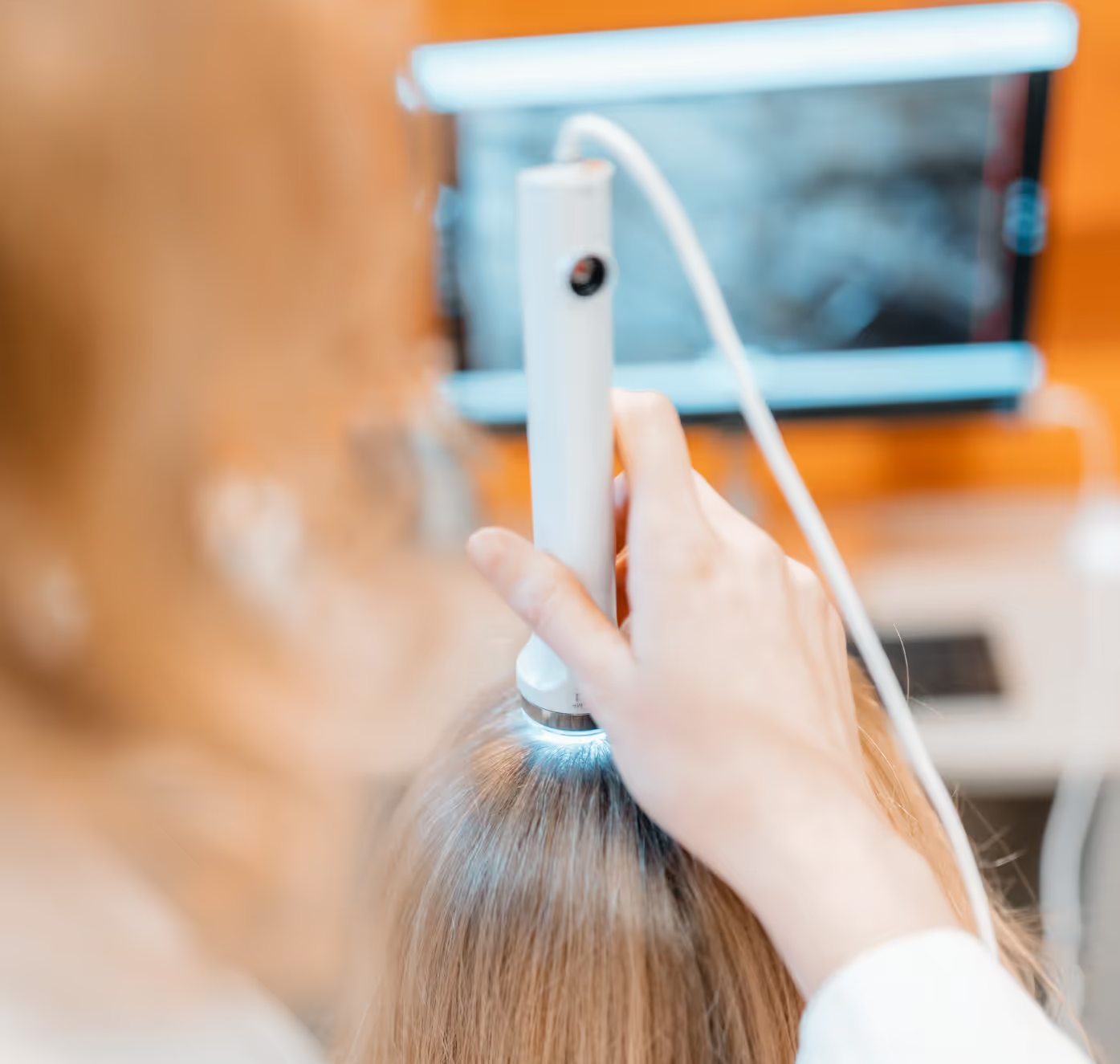
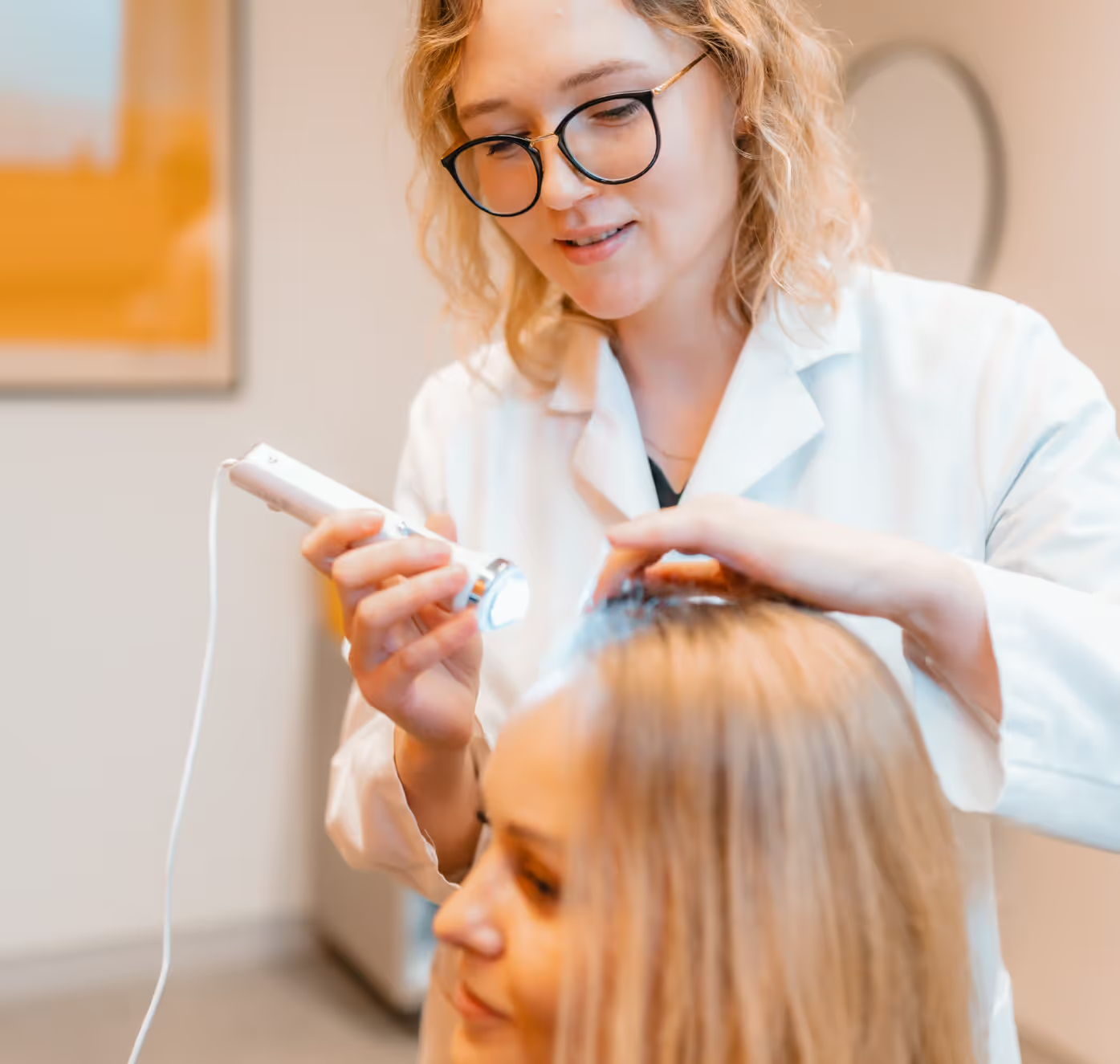
Trichoscopy (epiluminescence microscopy) enables painless, non-invasive diagnosis. With a dermatoscope, hair shafts, follicle openings, and the scalp are magnified. This method has largely replaced the more laborious trichogram, in which 50–70 hairs are removed and examined under the microscope. Modern video dermatoscopy also allows documentation and follow-up under therapy.
Blood tests for hormone and nutrient deficiencies
In women with significant hair loss, blood tests are often essential. Especially with signs of virilization (hirsutism, acne), hormone levels such as testosterone and DHEAS are measured. Other important parameters are iron (ferritin), vitamin D, thyroid values, zinc, and—if autoimmune disease is suspected—relevant antibodies.
Skin biopsy when scarring alopecia is suspected
A scalp biopsy is done when the diagnosis remains unclear or scarring alopecia is suspected. The preferred method is a 4 mm punch biopsy with horizontal sectioning. In scarring alopecia, samples are taken from areas of active inflammation, typically at the edge of a bald spot. Histopathology shows characteristic changes such as lymphocytic inflammation and follicle destruction.
Which therapies are scientifically supported?
For alopecia, evidence-based therapies are available that can stop or slow hair loss.
Minoxidil: effect and use
Minoxidil is considered the most effective topical agent against androgenetic alopecia in women. The two-percent solution (Regaine® for women) demonstrably improves microcirculation at the root. With twice-daily use, progression is stopped in about 80–90% of those affected, while roughly 50% see a visible increase in density. Important: after four to eight weeks a temporary shedding phenomenon can occur—paradoxically a sign of good response.
Antiandrogens and hormonal treatments
For women with hormonal dysregulation, antiandrogens such as cyproterone acetate or spironolactone are suitable. They block the androgen receptor and partly inhibit the enzyme 5α-reductase. In Germany, antiandrogenic contraceptives such as Diane-35® are approved for female hair loss. Treatment must last at least six months, because androgen production quickly resumes after short pauses.
PRP (platelet-rich plasma)
In PRP therapy, the patient’s own platelets are concentrated and injected into the scalp. First improvements show after about 2–3 months; clearer results after 4–6 months. For optimal outcomes, several sessions at intervals of 1–4 months are needed. The treatment has almost no side effects but is usually self-pay.
Hair transplant: when does it make sense?
A hair transplant is an option when other therapies fail or loss is already advanced. Healthy follicles from the back of the head are transplanted into bald areas. Modern techniques such as FUE (follicular unit extraction) are minimally invasive and leave barely visible scars. In women with diffuse loss, however, this procedure is less promising than in men.
Limits of over-the-counter products
OTC products such as caffeine shampoos, hair tonics with alfatradiol, or supplements promise help with hair loss, but their effectiveness is not sufficiently proven scientifically. According to Stiftung Warentest, no OTC preparation can be recommended without reservation—products with minoxidil come closest. Extra caution with supplements: overdosing certain vitamins can even be counterproductive.

Female alopecia is a complex medical problem—far more widespread than commonly assumed. In fact, almost 40% of all women experience androgenetic alopecia at some point, with an appearance clearly different from male pattern loss. Instead of temple recession, women typically show diffuse thinning with a widening center parting.
Causes of female hair loss are varied. Genetic predisposition plays a role, as do hormonal changes during menopause or after stopping the pill. Autoimmune disease, chronic stress, nutrient deficiencies, and certain medications can also trigger or worsen loss.
Affected women should seek medical advice, because early diagnosis greatly improves treatment chances. Targeted investigations such as trichoscopy and blood tests can identify the exact causes.
The good news: scientifically supported options exist. Minoxidil slows shedding in 80–90% of patients, while antiandrogenic treatments can work for hormone-related loss. Newer procedures such as PRP offer additional options, with hair transplantation as a last resort for suitable candidates.
Caution is still warranted with OTC products. Despite tempting promises, many lack scientific proof. A holistic approach is wiser: specialist care, evidence-based treatments, and—where needed—lifestyle adjustments around nutrition and stress management.
Although female hair loss remains partly taboo, those affected are by no means alone. Growing understanding of the underlying mechanisms and steady advances in treatment give reason for hope. The earlier therapy begins, the better the chances of stopping loss and stimulating new growth.