Regenerative therapies
PRP Treatment Process: Step by Step to Natural Healing Results
Learn the PRP treatment process step by step – gentle, natural, and effective. Everything about preparation, procedure, and healing for lasting results.
The PRP treatment process has transformed hair-loss therapy in recent years. In daily practice we see how this natural method gives many people new hope.
First, we want to explain why the PRP treatment process can be so effective. Autologous blood therapy uses the body’s own growth factors to reactivate hair follicles and thereby stimulate new hair growth. Especially in androgenetic alopecia, this method shows promising results.
In this article we guide you step by step through the entire process – from the blood draw through centrifugation to injection into the scalp. We also explain important factors that influence treatment success and show how therapy can be tailored individually.
That is why it matters not only to describe the pure process, but also to cover combination options with other agents such as finasteride or minoxidil. For optimal success against hair loss, a holistic approach is often essential.
Basics of PRP therapy for hair loss

What is PRP and how does it act on hair follicles?
PRP (Platelet-Rich Plasma) is a concentrate from the patient’s own blood that is especially rich in platelets (thrombocytes). These platelets contain numerous growth factors such as PDGF and VEGF that act directly on hair follicles. After injection into the scalp, these factors release biological signals that:
- reactivate resting hair follicles
- promote cell proliferation in the hair matrix
- improve microcirculation
- stimulate the switch into the growth phase (anagen phase)
The effectiveness of PRP is strongly dose-dependent. Scientific studies show a therapeutic window between 1.0 and 1.5 million platelets per microliter. Below this concentration the effect is minimal, while concentrations that are too high can paradoxically inhibit angiogenesis.
Difference between PRP and exosomes
While PRP delivers a cocktail of various growth factors, exosomes go a step further. These tiny cell vesicles contain precise “instructions” in the form of miRNAs and proteins that are transported directly into target cells. Exosomes therefore offer even more targeted signal transmission than PRP alone.
Why PRP is used in androgenetic alopecia
Androgenetic alopecia is a complex problem with several causes:
- Hormonal factors: DHT shortens the growth phase and leads to follicle miniaturization
- Impaired blood supply: restricted nutrient delivery to the follicles
- Chronic micro-inflammation: damage to the follicle environment
PRP addresses several of these factors at once by delivering growth signals and supporting regeneration. For optimal treatment success, however, not only concentration matters, but also the total number of injected platelets – the so-called platelet load. Research suggests that between 1.5 and 2.5 billion platelets are required for an effective treatment of the crown area.
PRP treatment process: explained step by step
The practical delivery of PRP therapy requires precision and scientific know-how. Success depends heavily on every single step – from the blood draw to aftercare. Below we explain the full PRP treatment process in detail.
1. Blood draw and preparation
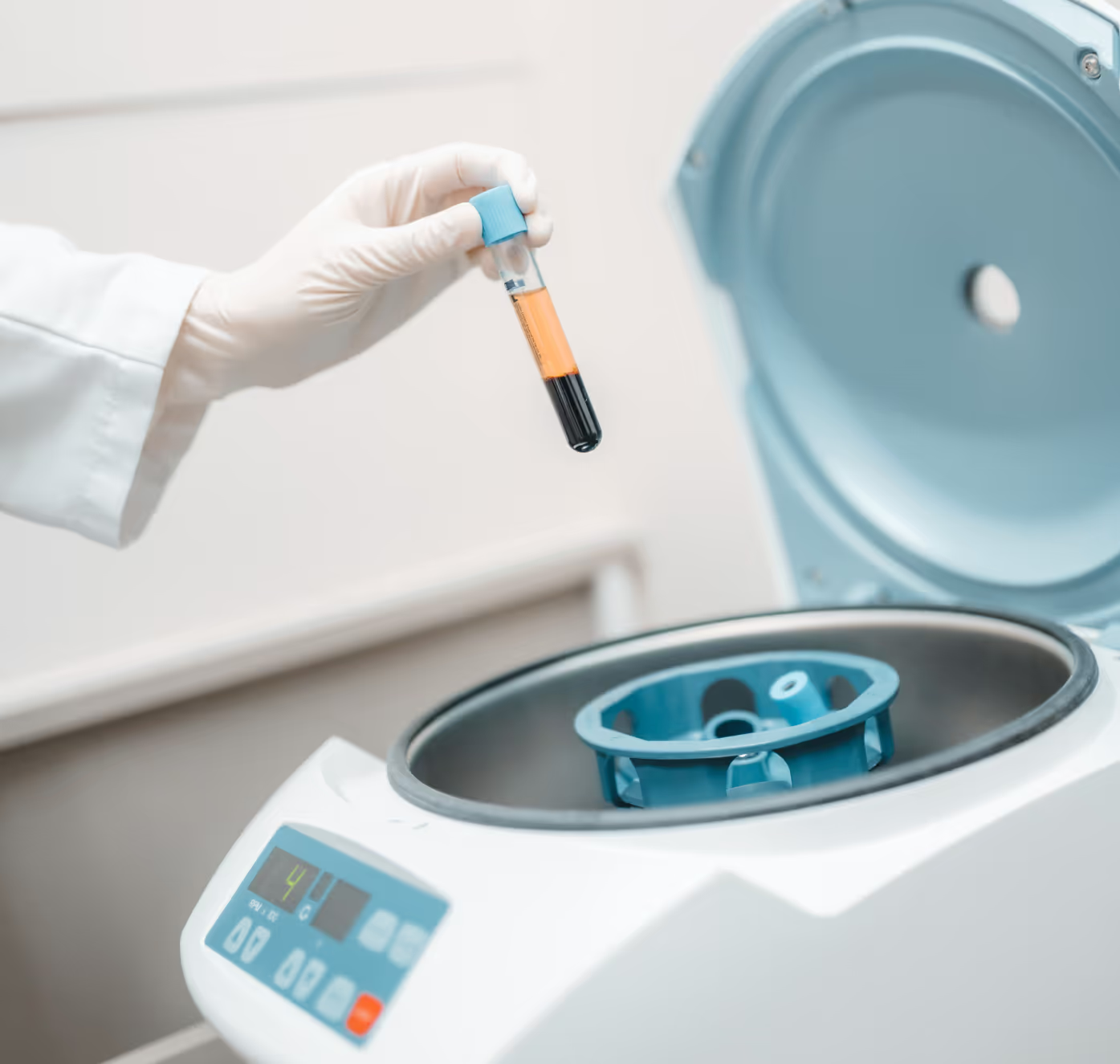
The basis of every PRP treatment is a careful blood draw. A defined amount of autologous blood is taken from the patient, typically between 15–30 ml. This is done with special tubes that already contain an anticoagulant to prevent premature clotting.
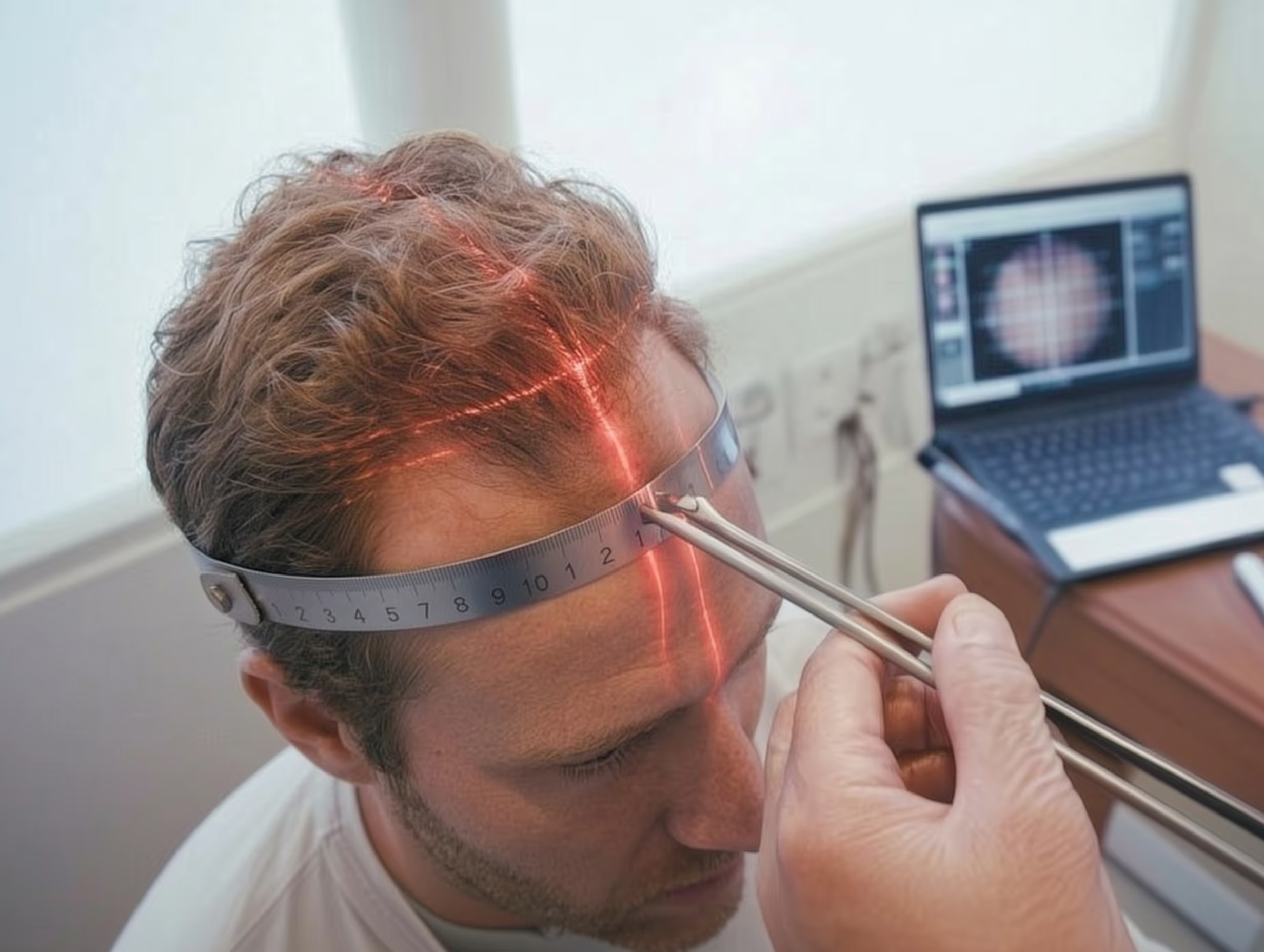
A decisive aspect that is often overlooked: a comprehensive blood test before treatment is useful. It provides important information about the patient’s individual platelet concentration – a value that makes later personalization of the protocol possible in the first place.
2. Centrifugation: soft spin vs. hard spin
At the heart of the procedure is centrifugation. Two basic techniques are distinguished:
Soft spin: At lower g-force and longer centrifugation time, red blood cells are pelleted while most platelets remain suspended in the plasma. The result: high platelet yield at lower concentration.
Hard spin: With high g-force and shorter time, both erythrocytes and platelets are pelleted, producing platelet-poor plasma.
However, centrifugal force that is too high risks over-centrifugation, which can damage the platelets. The goal is therefore to find a precise balance.
3. Injection into the scalp: technique and target areas
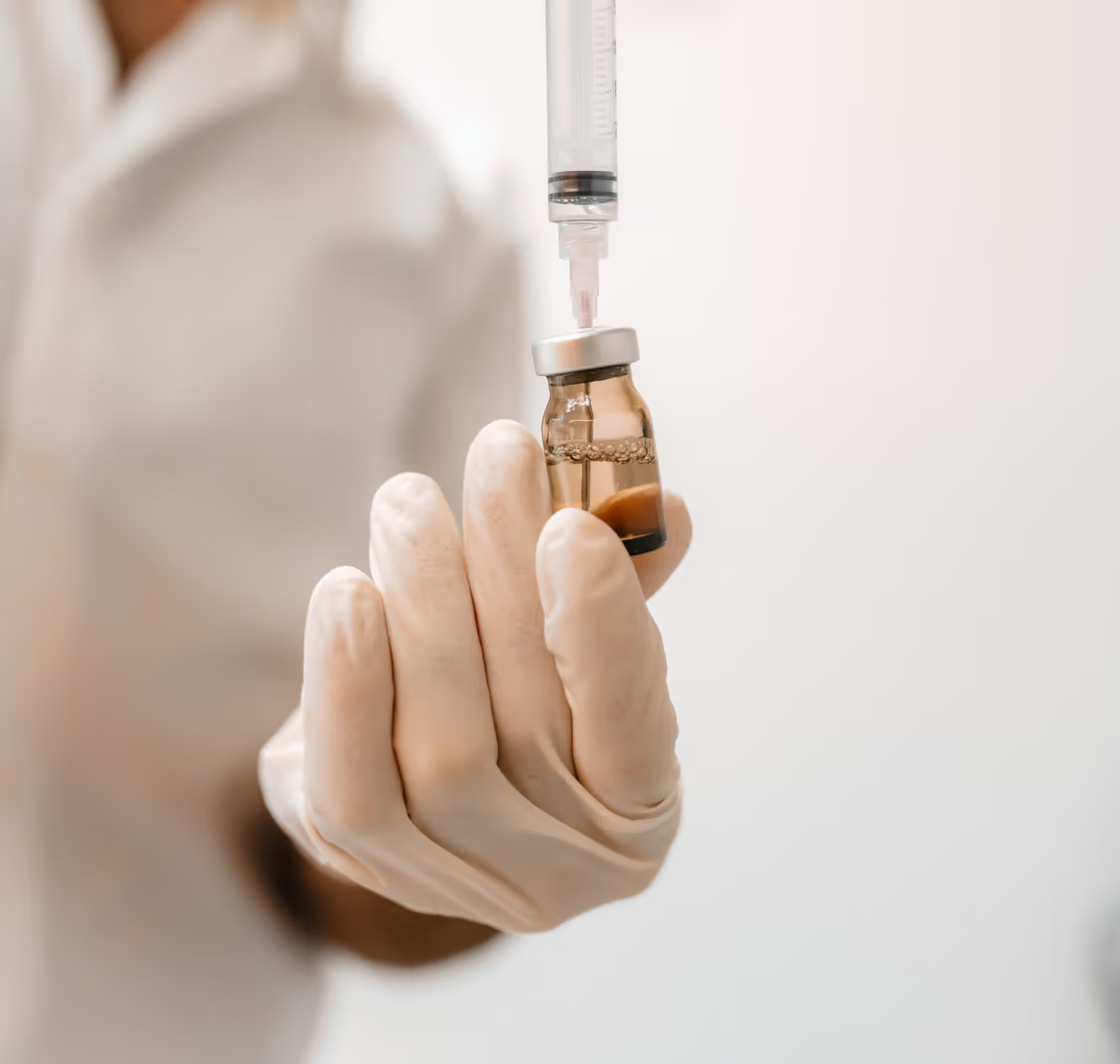
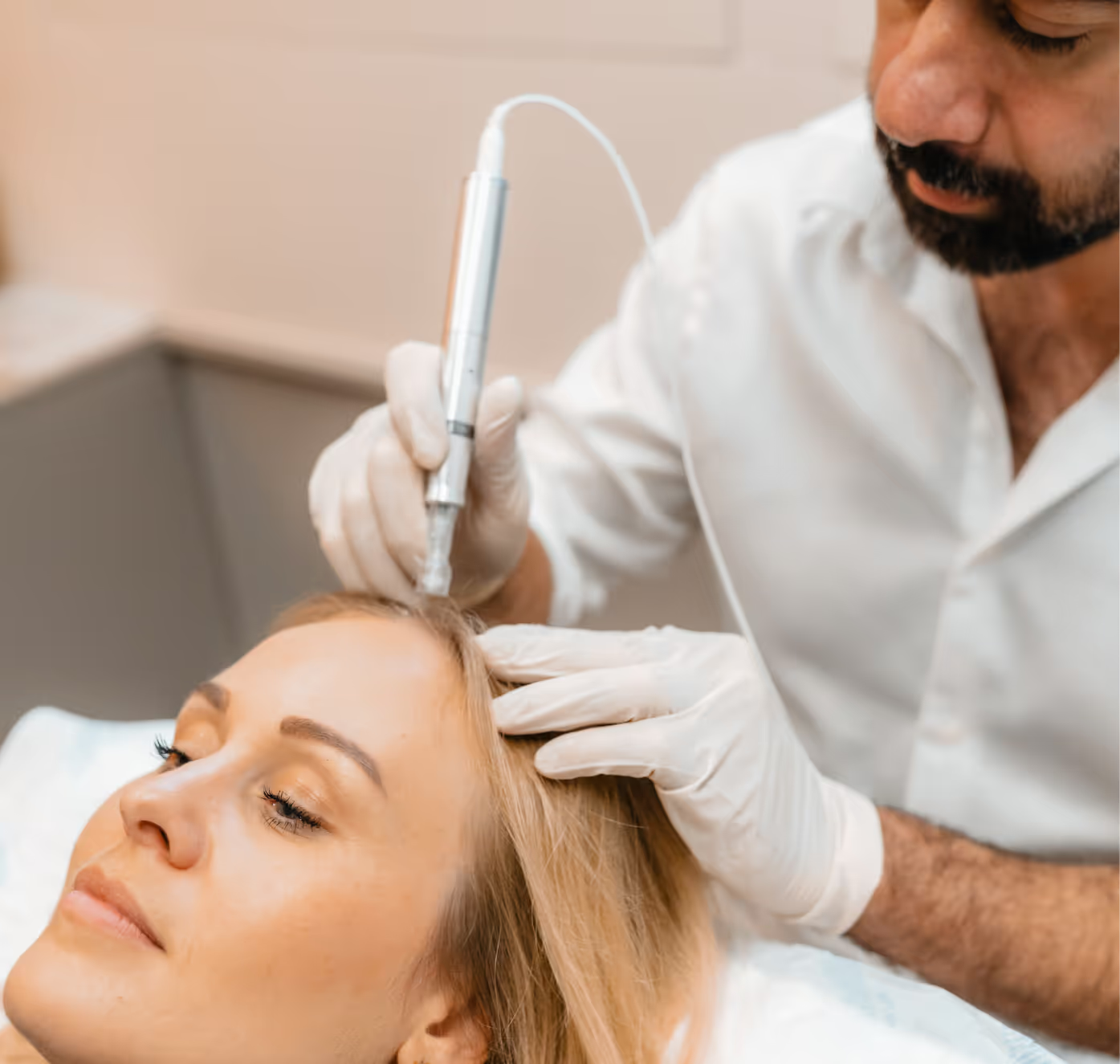
After processing, PRP is injected into the scalp in a targeted way. Optimal therapeutic effect is reached at a concentration between 1.0 and 1.5 million platelets/μL. In addition, total platelet load plays a decisive role – for the crown area about 1.5–2.5 billion platelets are required.
Injections are distributed at regular intervals across the areas to be treated, with particular attention to even distribution.
4. Aftercare and recommended rest
After treatment, we recommend that patients do not wash their hair for at least 4 hours. Intensive physical activity should also be avoided for 24 hours to ensure the optimal effect of the growth factors.
Incidentally, many patients complement PRP therapy with minoxidil applications, because as a potassium-channel opener it improves microcirculation and thus the transport of released growth factors to target cells.
Important factors influencing treatment success
The scientific success of PRP therapy is not left to chance; it depends on precise, measurable factors. These factors largely determine the treatment outcome.
Platelet concentration and load in PRP
PRP unfolds its optimal effect only within a precise therapeutic window of 1.0 to 1.5 million platelets/μL. Lower concentrations remain ineffective because too few growth factors are released. Surprisingly, concentrations that are too high (above 1.5 million/μL) can also be counterproductive and even inhibit angiogenesis. In addition, total platelet load plays a decisive role – for the crown area about 1.5–2.5 billion platelets are required.
Role of microcirculation and minoxidil
Minoxidil acts as a potassium-channel opener and promotes vasodilation of the arterioles that supply the follicle. This creates a synergistic effect: improved blood flow serves as a “logistics and delivery system” for the growth factors provided by PRP. Minoxidil also prolongs the anagen phase and complements the anabolic processes initiated by PRP.
Systemic support through supplementation
Even the best local PRP treatment remains ineffective without the right systemic conditions. In particular:
- Zinc as an essential cofactor for keratin synthesis
- Iron for cell proliferation in the hair matrix
- Antioxidants such as curcumin and vitamin E for protection against oxidative stress
Inflammation markers: CRP and ferritin in the blood panel
A comprehensive blood test before treatment is essential. Elevated CRP values point to systemic inflammation that can negatively affect the follicle environment. Ferritin levels are equally important, because iron is a critical factor for DNA synthesis and cell division – processes that are fundamental for hair growth.
Combination therapies and personalization
Hair loss is a multifactorial problem that can rarely be fully solved by a single treatment method. A synergistic approach with different therapies, by contrast, shows clearly better results.
Finasteride as hormonal protection
Finasteride acts as a “protector” of hair follicles by blocking, as a 5-alpha-reductase inhibitor, the conversion of testosterone into harmful DHT. By lowering DHT concentration in the scalp by up to 60%, it stops the progressive miniaturization process. In combination with PRP a notable synergy arises: while finasteride stabilizes the hormonal environment, PRP’s growth factors can unfold their regenerative effect without interference.
Minoxidil to improve blood flow
As a potassium-channel opener, minoxidil causes vasodilation of the arterioles that supply the hair follicle. This improved blood flow serves as an optimized “logistics system” for the growth factors released by PRP. Minoxidil also prolongs the anagen phase and thereby complements the regeneration processes initiated by PRP.
Individual adaptation through blood tests
A comprehensive blood test before PRP treatment is essential. It enables personalization of the centrifugation protocol based on the patient’s individual platelet concentration. At the same time, systemic factors such as ferritin, zinc, or inflammation markers are identified that can influence treatment success.
Therapeutic window: why dosing is decisive
The optimal effect of PRP unfolds only within the narrow therapeutic window of 1.0 to 1.5 million platelets/μL. Lower values remain ineffective, while concentrations that are too high can paradoxically inhibit angiogenesis. That is why precise, personalized dosing is essential for treatment success.

In summary, PRP therapy offers a science-based, natural approach to treating hair loss. The effectiveness of this method rests on the precise interplay of several factors. First, the optimal platelet concentration between 1.0 and 1.5 million per microliter plays a decisive role. In addition, the total platelet load of 1.5–2.5 billion for the crown area is equally important for therapy success.
The careful process from blood draw through centrifugation to targeted injection requires medical expertise and precision. Especially notable is the therapeutic window – concentrations that are too low remain ineffective, while concentrations that are too high can paradoxically be counterproductive.
PRP treatment unfolds its full effect, however, only through individual adaptation and combination with other therapy approaches. Finasteride as hormonal protection and minoxidil to improve blood flow complement the regenerative effects of PRP excellently. At the same time, systemic support through adequate supply of zinc, iron, and antioxidants must not be underestimated.
In daily practice we see that a holistic, personalized approach delivers the best results. Prior blood analysis allows us to tailor the treatment protocol exactly to each patient’s individual needs. This science-based approach makes PRP therapy a promising option for people with androgenetic alopecia who are looking for a natural treatment method.
In conclusion, the success of PRP treatment depends on the precision of every single step – from the correct blood draw to careful aftercare. This natural method uses the body’s own regenerative forces and is thus a valuable addition in the fight against hair loss.