Understanding hair loss
Stopping Hair Loss: What Experts Really Recommend
Expert-recommended means and methods against hair loss. What really helps—science-backed and currently assessed.
Stopping hair loss concerns more people than many realize. Up to 70% of all men and 40% of all women experience androgenetic alopecia, the most common form of hair loss. While losing up to 100 hairs a day is still considered normal, experts speak of treatment-worthy hair loss when that number is exceeded.
This article looks at the most effective options against hair loss that specialists recommend. First it helps to understand that genetically driven hair loss accounts for about 90% of cases. In more than half of men over 50, clear hair loss up to baldness is already visible. With an average of 80,000 to 120,000 hairs on the head, losing 100 hairs daily seems minor—but various factors can accelerate the process into a noticeable problem.
We cover all aspects—from modern diagnostic methods through medication to regenerative therapies and everyday self-help measures. Although hair loss is a sensitive topic for many, there are more science-backed approaches than ever.
What Is Hair Loss and When Does It Become a Problem?

Normal vs. Pathological Shedding Rate
Our scalp hair renews continuously. This natural process means hairs grow, fall out, and form again. For most people it is completely normal to lose between 50 and 100 hairs daily [1][2][3]. These fall out in the shower, when combing, or simply during the day.
Only when this value is exceeded do doctors speak of pathological hair loss. Concretely: alopecia is discussed when more than 100 hairs fall out daily over a longer period [4][2][3]. Not every increase in shedding is automatically problematic. What matters is the balance between shed and regrowing hairs.
A diagnosis of pathological hair loss is made when more than 20 percent of hairs are in the end phase at the same time [2]. More hairs then fall out than can grow back—an imbalance arises.
Although many people worry when they find numerous hairs in the sink after washing, this is not always cause for concern. A few long hairs can already look like a whole clump. Someone who washes only once a week naturally loses more hairs at that moment than someone who washes daily [5].
A doctor visit is indicated when:
- Hairs suddenly fall out in large numbers ("in clumps")
- Loss is accompanied by scalp itching
- Clearly defined bald patches appear on the head, beard, or eyebrows [1]
Difference Between Effluvium and Alopecia
Technical terms can be confusing, but they help distinguish forms of hair loss precisely. The two main terms are effluvium and alopecia.
Effluvium means shedding increased above the norm [5]. It is the phase in which more hairs than usual fall out, but this need not yet lead to visible bald spots. In telogen effluvium, more than 100 hairs per day enter the resting phase and then fall out [6].
Alopecia, by contrast, already describes visible thinning without hair or with abnormally sparse scalp hair [5]. Alopecia is the advanced stage when increased shedding has already led to recognizable bald spots or clear thinning.
Especially important is the difference between telogen effluvium and androgenetic alopecia:
Telogen effluvium is usually sudden, diffuse shedding affecting the whole head. It is reactive hair loss that appears about 3–4 months after a triggering event [5]. This type is usually temporary and often lasts less than six months [5]. In telogen effluvium, up to 300 hairs daily can fall out [5].
By contrast, androgenetic alopecia develops slowly and progressively [5]. It is the most common form of hair loss and accounts for about 95% of all cases [5]. In men it typically begins at the temples and crown; in women more often in the middle of the head [5].
Prognosis differs clearly: telogen effluvium is usually reversible. Once the cause (such as iron deficiency, stress, medication, or pregnancy) is removed, hair generally grows back [2]. Androgenetic alopecia without treatment is chronic and long term leads to death of follicles [5].
Correct distinction between these forms is decisive for choosing suitable treatments. For temporary effluvium, removing the cause is often enough to stop shedding; advanced alopecia usually needs more specific medical intervention.
Common Causes of Hair Loss in 2025
Causes of hair loss are varied and have changed little in recent years. To stop hair loss effectively, understanding the underlying cause is essential. In 2025 experts focus on five main factors that can lead to loss.
Genetic Predisposition
Androgenetic alopecia, also called hereditary hair loss, is the most common form with a lifetime incidence of 10–20% [6]. In men, up to 70% over a lifetime are affected by genetic hair loss [7], while in women the rate is about 40% [7]. This predisposition is inherited from both maternal and paternal sides [1].
The decisive mechanism is not hormone excess but genetically driven hypersensitivity of follicles to dihydrotestosterone (DHT) [8]. This hormone, a derivative of testosterone, shrinks hair roots and their blood vessels so follicles are no longer adequately supplied with nutrients [8]. The result is always miniaturization of follicles [6].
Researchers have identified a series of genes involved in pattern hair loss; the androgen receptor gene is considered one of the main drivers [8].
Hormonal Changes
Hormonal fluctuations play an especially significant role in women. Because hormones influence the hair cycle and follicle cell division [6], changes in hormone balance can have immediate effects on hair.
In women, hair loss clusters during puberty, after pregnancy, and in menopause [6]. During pregnancy estrogen rises and stimulates growth. After birth, from about week 8, hormonal shifts can increase shedding [6].
Polycystic ovary syndrome (PCOS) affects up to one in ten women in Germany and is the most common hormone disorder in women of childbearing age [6]. Through increased production of male sex hormones it leads to hair loss [6].
The contraceptive pill also influences the hair cycle. In some women increased shedding occurs after stopping; in others during use—in both cases through changes in hormone balance [6].
Nutrient Deficiency and Metabolic Disorders
Because our follicles are among the most division-active cells in the body, they react especially sensitively to nutrient deficiency [5]. Vitamin and nutrient deficiencies are among the common reasons for diffuse hair loss [9], with various vitamins and minerals playing a decisive role:
- Iron deficiency: Impairs oxygen supply to follicles and is frequently linked to hair loss [5]
- Zinc deficiency: Weakens hair structure and leads to thinning, because zinc is important for keratin production [5]
- Vitamin B12 deficiency: Disrupts regeneration of follicle cells [5]
- Vitamin D deficiency: Can put follicles into a prolonged resting phase [5]
Especially at risk are people with one-sided diets, gastrointestinal disease, and pregnant or breastfeeding people due to increased nutrient need [9]. Metabolic diseases such as thyroid dysfunction can also lead to hair loss [5].
Stress and Psychological Strain
The link between hair loss and stress is well documented scientifically and ranks among the most common triggers [10]. In stress-related hair loss, neurons near the follicles are activated, leading to inflammation [11].
When the body is under ongoing stress, it releases more stress hormones such as cortisol, which impair follicle growth and disrupt the natural hair cycle [10]. In this mechanism called telogen effluvium, many hairs can enter the resting phase at once and eventually fall out [10].
The good news: once the stress or burdening situation is overcome, hair often grows back—frequently even stronger and more pigmented than before [10]. Those affected usually notice the loss only when about ten to twenty percent of hairs are already gone [10].
Mechanical Stress and Wrong Care
External forces and wrong hair care can also lead to hair loss. Traction alopecia is hair loss caused by braids, rollers, or ponytails that constantly pull on hair [1].
Overly intense brushing, tight braids and buns, or heat styling can trigger mechanical hair loss [2]. The rule of thumb for hair care: as much as necessary, as little as possible [3].
Most products or styling techniques that clearly change fullness, color, or quality of hair risk damaging it [3]. Especially problematic:
- Washing too often
- Excess heat from dryer, curling iron, or straightener
- Aggressive chemicals in styling products
- Mechanical strain from pulling and tugging when brushing or styling [3]
Important distinction: while mechanical stress damages hair structure, certain ingredients in hair products such as mineral oils, parabens, and silicones can cause true hair loss by interrupting oxygen and nutrient supply to the roots [3].
How Experts Diagnose Hair Loss Today
When pathological hair loss is suspected, a systematic diagnostic process begins. Before treatments can be used, experts must determine the exact cause. Modern diagnostics include several steps that are becoming increasingly precise.
History and Clinical Examination
The basis of every hair-loss diagnosis is a thorough history. Doctors ask targeted questions about onset and course: Was it sudden or gradual? How long has it lasted? Is it increasing? Is the whole head or only certain areas affected? [4]
Dermatologists also ask about:
- Medication use (especially heparin can cause hair loss 2–4 months after use) [12]
- Hormonal factors such as pregnancy or contraceptives [12]
- Eating habits and weight changes [4]
- Stress situations and psychological strain [4]
In the clinical exam the doctor inspects the scalp for inflammation, scaling, or scarring [13]. A hair-pull test (epilation test) is also performed: the doctor lightly pulls a small tuft. If more than three to six hairs come out without force, that points to increased shedding [1].
Blood Count and Hormone Status
Lab tests can provide important clues to causes of hair loss. For unclear effluvium experts first recommend checking:
- Iron values (ferritin)—a common reason for hair loss in women [12]
- Thyroid function (TSH, T3, T4) [12]
- Syphilis test (TPPA test) [13]
When hormonal disorders are suspected, sex hormones are also examined. Especially in younger women with pronounced androgenetic alopecia, cycle irregularities, and hirsutism, a gynecological exam with determination of estrogens and androgens makes sense [12]. Without these cofactors, sex hormones are almost always normal, because the cause is not necessarily high androgen levels but genetic hypersensitivity of follicles to androgens [12].
Trichogram and Phototrichogram
The classic trichogram offers a snapshot of growth status. About 50–70 hairs are pulled from the scalp with a rubber-tipped clamp and analyzed under the microscope [7]. The roots reveal which growth phase the hairs are in.
A normal finding shows:
- Anagen hairs (growth phase): up to 95%
- Catagen hairs (transition phase): up to 3%
- Telogen hairs (resting phase): up to 18%
- Dystrophic hairs: up to 4% [14]
If the share of telogen hairs is higher than 20%, that points to increased shedding [13]. For meaningful results, the last wash should be at least five days prior [7].
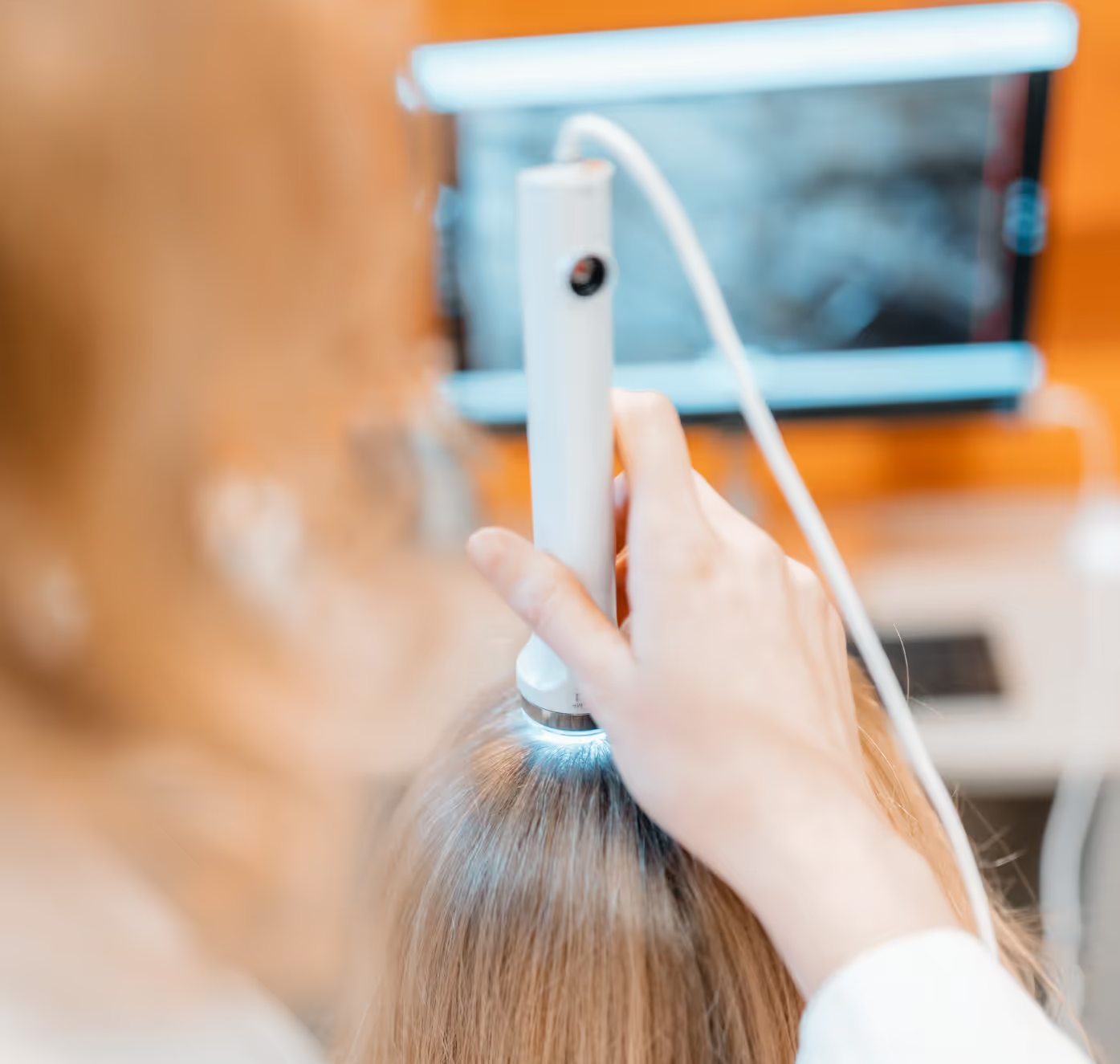
The more modern phototrichogram (TrichoScan) offers a painless alternative. A small area of scalp (about 1.5 × 1.5 cm) is shaved. After three days the regrown stubble is dyed and photographed with a special camera [15]. Computer-assisted analysis delivers precise data on density, thickness, growth rate, and the ratio of anagen to telogen hairs [16].
When a Scalp Biopsy Makes Sense
A scalp biopsy is the most invasive diagnostic method and is done only in certain cases. Under local anesthesia the dermatologist removes an about 4 mm piece of scalp including hair roots [1].
This exam is especially useful when:
- Diagnosis remains unclear despite other tests [4]
- Scarring alopecia is suspected [17]
- Inflammatory scalp disease is suspected [15]
- Distinction is needed between scarring and non-scarring alopecia [4]
The biopsy shows whether follicles are normal and enables identification of inflammation, scarring, or other pathological changes [17]. Based on this comprehensive diagnostics the doctor can finally create an individual treatment plan to stop hair loss in a targeted way.
What Really Helps: Medications and Medical Treatments
After successful diagnosis the question is: which options against hair loss are truly effective? Medical research today offers several science-backed options that promise success with consistent use.
Minoxidil: Effects, Use, Side Effects
Minoxidil was originally developed as a blood-pressure drug but showed an interesting side effect: increased hair growth [6]. The active ingredient promotes scalp blood flow so roots are better supplied with nutrients [8].
Use is external as solution or foam. Men are recommended a 5% concentration twice daily; women can use either a 2% solution twice daily or a 5% foam once daily [6]. Important: at the start of treatment shedding can increase. This so-called "shedding effect" is over after 8–10 weeks and shows that therapy is working [8].
First results are visible after 3–6 months [18]. Minoxidil works only as long as it is used—after stopping, hairs fall out again [6].
Finasteride: Who Is It For?
Finasteride is a 5-alpha-reductase inhibitor that blocks conversion of testosterone to dihydrotestosterone (DHT) [19]. It is taken at 1 mg daily and is approved for men aged 18 to 41 [5].
Caution: Finasteride is contraindicated for women, especially during pregnancy and breastfeeding [19]. Pregnant people should not even touch crushed tablets, because the drug can be absorbed through the skin and could cause birth defects [9].
Treatment lasts at least 3–6 months to stabilize hair loss [20]. Common side effects include reduced libido, erectile dysfunction, and depression [20]. In rare cases post-finasteride syndrome can occur, in which side effects persist after stopping [21].
Alfatradiol and Other Over-the-Counter Options
Alfatradiol is another 5-alpha-reductase inhibitor, applied topically [22]. Unlike finasteride it is available without prescription and suitable for both sexes. Use is once daily and can be reduced to every second or third day after improvement [22].
Mild side effects include skin irritation, dryness, and flaking [23]. Efficacy of alfatradiol is not as well documented as that of minoxidil or finasteride [23].
Limits of Effect and Risks
For all treatments: they work only as long as they are used. After stopping, hair loss progresses again [10]. These medicines also cannot grow new hair on already bald areas [5].
Treatment should therefore begin while hair is still present [5]. Continuous use is decisive for success [5]. Before starting, a thorough benefit–risk assessment should always take place, especially with finasteride given possible serious side effects [21].
Ultimately the individual case decides which option is best—depending on sex, age, type of hair loss, and personal risk profile.
Regenerative Therapies: The Modern Answer to Hair Loss
Regenerative treatments are gaining importance in fighting hair loss. These innovative procedures aim to stimulate follicles and activate the body's natural regeneration processes.
PRP (Autologous Blood Therapy)
PRP therapy (platelet-rich plasma) uses the body's own material to encourage hair regeneration. A small amount of blood is drawn and processed in a centrifuge to concentrate platelets [11]. These contain important growth factors that stimulate collagen production and activate follicles [11]. The processed plasma is then injected into the scalp with fine needles [24].
First improvements show after about 2–3 months; clearer results after 4–6 months [24]. For optimal results experts recommend 3–4 treatments about one month apart [24]. PRP is especially suitable for early hair loss and for improving hair structure [11].
Stem-Cell and Mesotherapy
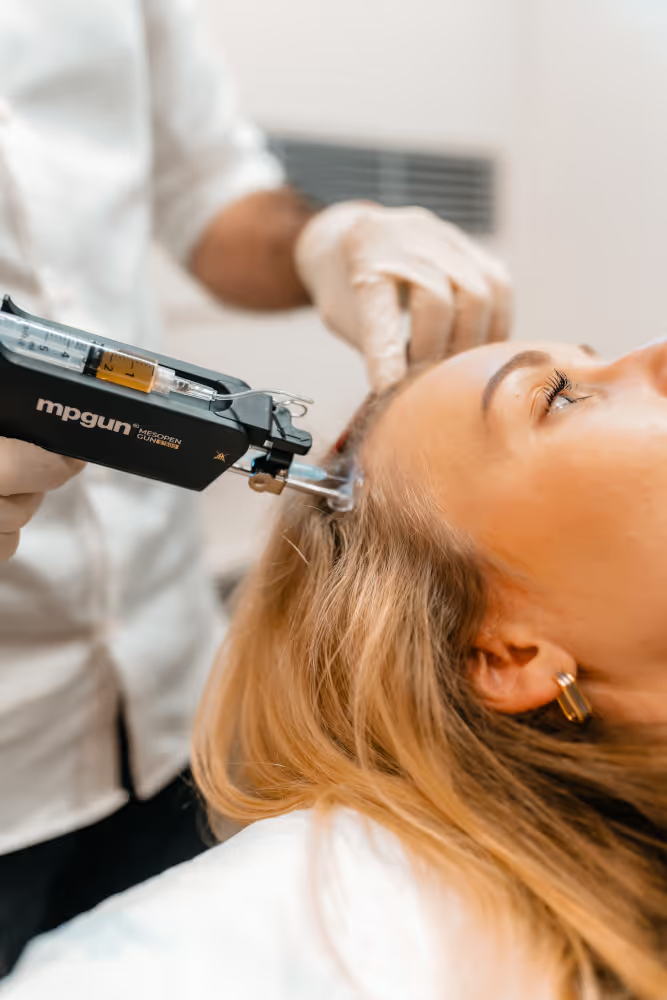
In mesotherapy, special actives such as vitamins, minerals, and amino acids are injected directly into the middle skin layer [3]. Plant stem cells are also increasingly used; they promote cell regeneration and act like a "booster" [3]. This treatment supplies roots with growth factors and important nutrients [2].
Hair mesotherapy is typically done once weekly and should be repeated 4–12 times depending on the problem [2]. After several sessions shedding drops clearly and restoration begins [25].
Laser and Light Therapy
Low-level laser therapy (LLLT) is a non-invasive method in which red light of a specific wavelength stimulates follicles [26]. This treatment improves microcirculation, activates mitochondria in hair cells, and stimulates resting follicles [27].
Unlike procedures such as PRP or microneedling, laser therapy is painless and requires no needles [26]. Bundled light penetrates the scalp and stimulates metabolism of the roots, similar to "recharging a battery" [27].
When These Therapies Make Sense
Regenerative therapies are especially suitable when:
- conventional treatments do not work enough [28]
- a natural, non-surgical solution is desired [24]
- no scarring forms of hair loss are present [29]
Notably, these therapies often work most effectively in combination. Linking PRP, stem-cell treatment, and laser therapy can extend the therapeutic effect against hair loss for years [3]. With strong autoimmune activity or long-standing baldness, success prospects should be discussed individually with a specialist [25].
Lifestyle, Diet, and Care: What You Can Do Yourself
Besides medical treatments, you can do a lot yourself to stop or slow hair loss. Daily decisions around diet, exercise, and hair care strongly influence hair health.
Nutrient-Rich Diet Against Hair Loss
Our hair roots function like small organs with high metabolic activity and need certain nutrients to work optimally. With malnutrition, root function can be disturbed, leading to brittle hair or loss. Especially important:
- Iron: Supports DNA synthesis and oxygen supply to follicles. Iron deficiency is one of the most common nutrient deficiencies in our latitudes.
- Zinc: Acts anti-inflammatory and supports collagen formation that anchors hair in the scalp.
- Biotin: Important metabolic helper for using proteins well.
- Proteins: Hair consists of more than 90 percent keratin—a special protein.
Especially nutrient-rich foods include eggs, pumpkin seeds, nuts, oats, spinach, and oily fish. Also avoid harmful substances—especially alcohol, cigarettes, and a high-fat diet can favor hair loss.
Exercise and Stress Reduction as Prevention
Regular physical activity improves scalp blood flow and thus nutrient supply to the roots. Exercise also helps break down stress hormones that can cause hair loss. Movement in fresh air is especially recommended, because roots are additionally supplied with oxygen.
Gentle Care Products and Smart Styling Choices
Washing too often strips moisture and oils. Washing every two to three days is usually enough. Avoid aggressive ingredients such as silicones and parabens that can interrupt oxygen and nutrient supply to the roots.
With styling you can optically densify hair through clever coloring and cutting. Avoid overly tight styles, which place high mechanical load and can favor hair loss.
Home Remedies: What Is Myth, What Can Help?
Some natural home remedies can actually strengthen hair. Coconut oil contains saturated fatty acids and antioxidants that strengthen hair from within and promote blood flow. Rosemary oil has also been shown in scientific studies to promote growth and reduce shedding.
Fenugreek was shown as early as 2006 in a study to be effective against hair loss. The seeds contain proteins and vital substances such as vitamins B and C plus iron that strengthen growth.
Important to know: no home remedy has proven benefit as a sole cure for hair loss. These options should therefore only complement medical treatment.
Conclusion: Stopping Hair Loss Starts With the Right Strategy
Hair loss is a burdensome challenge for many, but modern medicine now offers numerous effective approaches. First the exact cause should be clarified by a specialist, because different factors—from genetic predisposition through hormone swings to nutrient deficiency—can trigger loss.
Medication approaches such as minoxidil and finasteride show proven good results, but these actives must be used continuously. Hair loss resumes after treatment is stopped. Regenerative therapies such as PRP, mesotherapy, and laser therapy offer promising alternatives, especially when conventional methods are not enough.
Daily habits also play a decisive role. A nutrient-rich diet with enough iron, zinc, and biotin fundamentally supports follicle health. Regular exercise additionally improves scalp blood flow and helps with stress reduction—both important for healthy growth.
Gentle hair care without aggressive ingredients protects sensitive roots from further damage. Although natural home remedies such as rosemary oil or coconut oil can support, they do not replace professional treatment for serious hair loss.
Ultimately every case of hair loss is individual and needs a tailored approach. The earlier suitable therapy begins, the better the chances of stopping loss effectively or at least clearly slowing it. Combining medical treatment, a healthy lifestyle, and the right care, the fight against hair loss can be more successful today than ever.

[1] - https://www.haar-ausfall.com/diffuser-haarausfall/diagnose-bei-haarausfall/
[2] - https://www.medicomclinic.de/behandlung/mesotherapie-haare
[3] - https://www.ifue-haartransplantation.de/stammzellen-therapie/
[4] - https://www.msdmanuals.com/de/heim/hauterkrankungen/erkrankungen-der-haarfollikel/alopezie-haarausfall
[5] - https://deximed.de/home/klinische-themen/haut/patienteninformationen/haarerkrankungen/haarausfall-anlagebedingter/
[6] - https://www.regaine.de/haarausfall/minoxidil-bei-haarausfall-info
[7] - https://de.wikipedia.org/wiki/Trichogramm
[8] - https://www.menshealth.de/haare/darum-ist-minoxidil-das-beste-mittel-gegen-haarausfall/
[9] - https://www.zavamed.com/de/finasterid.html
[10] - https://www.gesundheit.gv.at/krankheiten/haut-haare-naegel/haarausfall.html
[11] - https://www.dermatologikum.swiss/behandlungen/needling-und-peeling
[12] - https://www.akdae.de/arzneimitteltherapie/arzneiverordnung-in-der-praxis/ausgaben-archiv/ausgaben-ab-2015/ausgabe/artikel?tx_lnsissuearchive_articleshow%5Baction%5D=show&tx_lnsissuearchive_articleshow%5Barticle%5D=4388&tx_lnsissuearchive_articleshow%5Bcontroller%5D=Article&tx_lnsissuearchive_articleshow%5Bissue%5D=5&tx_lnsissuearchive_articleshow%5Byear%5D=2015&cHash=d49fac9ab38e5d3f844bdc5f4addccc4
[13] - https://www.aerzteblatt.de/archiv/diagnostik-und-therapie-von-haar-und-kopfhauterkrankungen-e704695d-17d2-4b9b-a781-a7d9ff89fd8b
[14] - https://www.uniklinik-ulm.de/fileadmin/default/Kliniken/Dermatologie-Allergologie/Dokumente/10_LVZ-Trichogramm_Version_2.pdf
[15] - https://www.lexikon.haar-zentrum.com/haarlexikon/diagnose-haarverlust/
[16] - https://derma-neuerwall.de/dermatologie/haarausfall-haarerkrankungen/diagnostik-von-haarausfall/
[17] - https://skilp.de/die-rolle-der-kopfhautbiopsie-bei-der-genauen-diagnosestellung-von-haarausfall/
[18] - https://elithairtransplant.com/german/haarausfall-durch-medikamente/
[19] - https://dermanostic.com/wirkstoffe/finasterid
[20] - https://www.gelbe-liste.de/wirkstoffe/Finasterid_21381
[21] - https://www.ndr.de/ratgeber/gesundheit/Haarausfall-Finasterid-Nebenwirkungen-unterschaetzt,haare212.html
[22] - https://www.pharmazeutische-zeitung.de/rezeptfreies-bei-haarausfall-131975/
[23] - https://www.gelbe-liste.de/wirkstoffe/Alfatradiol_45056
[24] - https://www.usz.ch/fachbereich/dermatologie/angebot/prp-behandlung-eigenbluttherapie-haarausfall/
[25] - https://www.koerperaesthetik.ch/angebot/meso-hair/
[26] - https://www.haar-klinik.ch/blog/haarausfall-bekampfen---warum-die-lasertherapie-die-beste-wahl-ist
[27] - https://firsthairclinic.com/blog/lasertherapie-gegen-haarausfall/
[28] - https://derma-neuerwall.de/dermatologie/haarausfall-haarerkrankungen/laser-gegen-haarausfall/
[29] - https://www.ifue-haartransplantation.de/low-level-laser-therapie/