Understanding hair loss
Understanding Alopecia Areata: From Diagnosis to Successful Treatment
Alopecia areata? Learn how to recognize the causes, get the right diagnosis, and which treatments really help — clear and direct.

Alopecia areata (circular hair loss) affects about one to two percent of the population and can appear at any age regardless of sex. When we suddenly discover bald, round patches on our scalp, this often triggers uncertainty and worry. Especially concerning is the usually acute onset of the condition, medically known as alopecia areata.
The causes of alopecia areata are varied and complex. Mainstream medicine classifies this condition among the autoimmune diseases. Psychological burdens such as the loss of a loved one or a job can also act as triggers. Although the course is unpredictable, there is also reason for hope: in more than half of those affected, the hair loss resolves on its own after six to twelve months. Still, about one third of patients retain lasting hair loss.
In this comprehensive guide we explain everything you need to know about alopecia areata — from the first signs through diagnosis to the various treatment options.
What is alopecia areata?

Typical features and appearance
The characteristic feature of alopecia areata is sharply demarcated, round or oval bald patches. Hair loss often begins suddenly with one or a few roughly coin-sized bald spots [1] that can enlarge within a few weeks. The affected skin looks neither changed nor inflamed [1] and remains smooth, sunken, and non-scaling [2].
At the edge of the bald patches one often finds so-called "exclamation mark hairs" — short broken hairs that become ever thinner toward the scalp [2][3]. These are a typical diagnostic sign.
Although in over 80% of cases the hair loss starts on the head [2], other hairy body sites can also be affected:
Eyebrows and eyelashes
Beard area in men
Body hair
Alopecia areata appears in different degrees of severity:
Alopecia areata reticularis: the mildest form with demarcated, round areas [1]
Alopecia universalis: complete loss of scalp and body hair [1][2]
Alopecia ophiasis: hair loss at the nape or back of the head [2]
In addition, about 25% of those affected suffer nail changes such as pitting, ridges, or sandpaper-like roughening [2][2].
Difference from other forms of hair loss
Androgenetic alopecia, as the most common form of hair loss, differs fundamentally from alopecia areata. While androgenetic alopecia is triggered by male sex hormones (androgens) and is hereditary [1], alopecia areata involves an autoimmune reaction.
In men, androgenetic alopecia leads to continuous hair loss that begins with a receding hairline and ends with a fringe of hair [4]. By contrast, women are less affected by this form — they usually experience only thinning at the part rather than complete hair loss [1].
Diffuse hair loss, in turn, is distributed evenly over the whole head or in individual places [4], but rarely leads to completely bald patches.
Decisive differences of alopecia areata:
Sudden onset as opposed to the gradual course of other forms
Circular, sharply demarcated bald patches instead of even thinning
Preserved hair follicles enable regrowth of the hair
Autoimmune cause instead of hormonal or hereditary factors
In more than half of those affected the hair grows back spontaneously within twelve months [1] — an important difference from other forms of hair loss, in which regrowth without treatment is less likely.
Alopecia areata: causes and risk factors
Science views alopecia areata as a multifactorial condition in which various influences interact. Although not all mechanisms are fully understood, researchers have gained important insights into the underlying processes.
Autoimmune reaction as the main cause
Alopecia areata is an autoimmune disease in which the immune system mistakenly attacks the body's own cells. Specific defense cells (T lymphocytes) target the hair roots and cause inflammatory reactions. Thereby the hairs fall out without the follicles being permanently destroyed. The immune cells only attack hairs in the active growth phase, which is why follicles with hairs in other cycle phases remain intact [5]. That explains why regeneration is fundamentally possible.
Genetic predisposition
Family clustering in about 15–25% of those affected points to a hereditary component [5][6]. The disease risk for first-degree relatives is about 7% for siblings and just under 6% for children [2][3], while the risk for second-degree relatives matches that of the general population (1–2%) [7]. Researchers suspect genetically complex inheritance with numerous involved genes [2][3], especially in the HLA region on chromosome 6 and in immune-regulatory genes [2].
Psychological stress and environmental factors
Although a direct link between stress and alopecia areata is not scientifically clearly proven [8], ongoing psychological or physical stress can influence the immune system and possibly favor the condition. Alopecia areata sometimes appears after burdening events such as trauma, accidents, or bereavement [6][9]. Viral infections, allergic reactions, and environmental influences can also act as potential triggers [5][9].
Secondary diseases and comorbidities
Alopecia areata notably often appears together with other conditions. More than half of those affected suffer from additional chronic inflammatory diseases [10][11]. Especially frequent are:
Atopic diseases such as asthma (13.4%), atopic dermatitis (26.7%), and rhinitis (26.7%) [11]
Autoimmune diseases such as Hashimoto's thyroiditis (6.1%), vitiligo (4.6%), and psoriasis (2.7%) [11]
Mental illnesses such as depression and anxiety disorders [12][13]
The more comorbidities are present, the earlier alopecia areata appears and the more severe it usually runs [10]. Patients with three atopic diseases fall ill on average ten years earlier than those without comorbidities [11].
Diagnosis and course of the condition
Alopecia areata is often identified at first glance from the characteristic bald patches. Still, a thorough examination is needed to confirm the diagnosis and assess the course.
How is alopecia areata recognized?
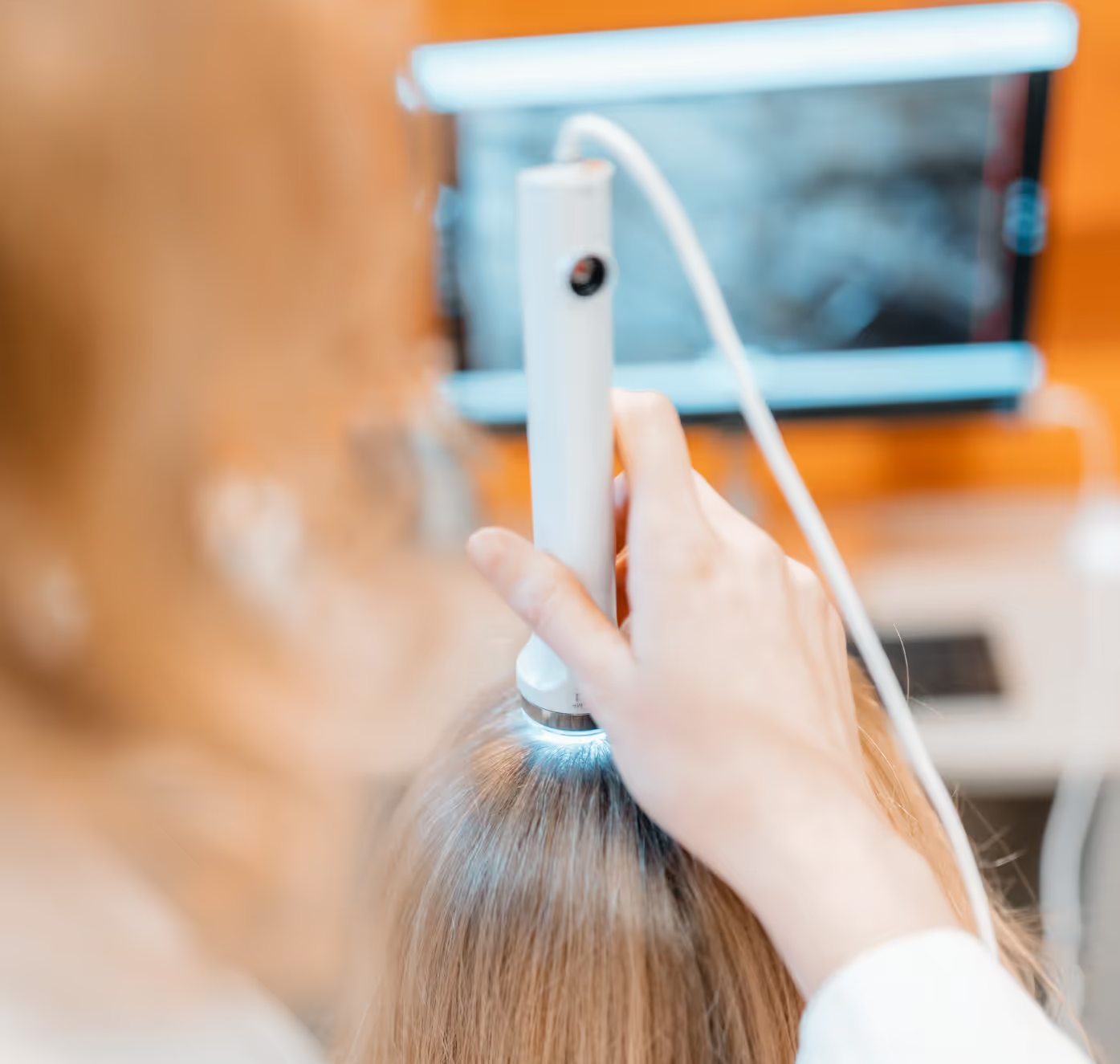
The dermatologist is the right contact when alopecia areata is suspected. Often the typical clinical picture alone is enough for a diagnosis [14]. The medical examination includes a thorough assessment of the scalp, the whole body, and the nails [15]. Especially helpful is dermoscopy, a microscopic examination of the scalp in which characteristic features such as "yellow dots," "black dots," and the typical exclamation mark hairs become visible [1].
In addition a hair pull test is often performed, in which a tuft of 50–60 hairs at the edge of the bald patches is gently pulled. A positive test with shedding of more than 10% of the pulled hairs points to active disease [1]. In unclear cases further examinations such as a trichogram or a skin biopsy may be necessary [9].
Course: spontaneous healing or chronic?
The course of alopecia areata is unpredictable and individually very different. In more than half of those affected the hair grows back spontaneously within twelve months [3]. The regrowing hairs are at first very fine and colorless, but later usually regain their normal structure and color [14].
The hair loss can also take a chronic course, however. About 20–30% of those affected suffer lasting hair loss [16]. The prognosis is especially unfavorable when hair loss begins before puberty, lasts longer than one year, or spreads strongly [3].
Relapse risk and long-term prognosis
After spontaneous or treatment-related healing, about 30–50% of those affected experience a relapse [3]. Relapse risk remains lifelong, with most recurrences (79%) appearing within the first four years [17].
Decisive factors for the long-term prognosis are:
Age at first manifestation: the later the condition appears, the better the prognosis [17]
Severity of involvement: total or universal alopecia areata have a less favorable prognosis [1]
Comorbidities: asthma, atopic dermatitis, and Hashimoto's thyroiditis raise the risk of a severe and prolonged course [11]
Although alopecia areata has no effect on life expectancy, it can significantly impair emotional well-being [16]. Early psychological support is therefore often just as important as medical treatment.
Treatment options at a glance
In treating alopecia areata the therapies aim to regulate the immune system and stimulate new hair growth. Because the exact causes are not fully clarified, most approaches mainly treat the symptoms and not the underlying condition itself.
Cortisone therapy: local, systemic, injected
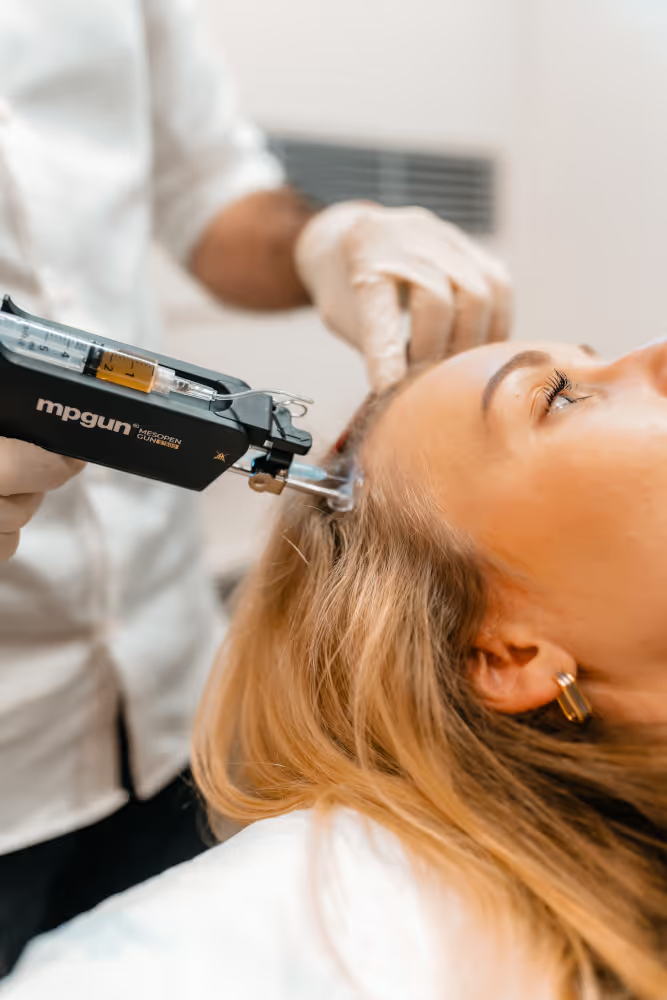
Cortisone is the most frequently used treatment option and acts anti-inflammatory. For mild to moderate hair loss, cortisone-containing creams or solutions are used. Even more effective are cortisone injections directly into the scalp, placed with a thin needle about one centimeter apart. This local treatment at concentrations of 5 mg/ml shows a response rate of up to 80% [4]. At higher concentrations, however, the risk of skin atrophy (thinning of the skin) rises from 3% to 20% [4].
In severe cases systemic cortisone therapy in tablet form can be used. The recommended starting dose is 0.4–0.6 mg/kg body weight of prednisolone for at least 12 weeks [4]. Alternatively there are pulse therapies with weekly intake that cause fewer side effects.
Minoxidil and other follicle stimulants
Minoxidil strengthens blood flow around the hair follicles and thereby promotes hair growth [14]. The active ingredient is applied as a solution directly to the affected sites, often as support to other therapy methods. In alopecia areata the results are rated as moderate, which is why minoxidil is often combined with cortisone [18].
JAK inhibitors: new hope in severe courses
A groundbreaking development are the Janus kinase inhibitors (JAK inhibitors), first approved in 2022 for treating severe alopecia areata. These medications block inflammation signaling pathways and enable hair regrowth in tablet form. Baricitinib, the first approved JAK inhibitor, showed in studies that about 40% of patients after three months experience 80 percent hair regrowth [19].
Further JAK inhibitors such as ritlecitinib and deuruxolitinib are in clinical testing with promising results. Long-term use of these medications is necessary for lasting success, however [20]. Possible side effects such as elevated cholesterol, infections, and headaches must be noted [5].
Light therapy and immune modulation
PUVA therapy combines psoralen with UV-A light to modulate the immune system [14]. An alternative immunotherapy uses diphenylcyclopropenone (DPCP), which is applied to the scalp to provoke a controlled allergic reaction. This "distraction" of the immune system leads to new hair growth in about 50% of patients [4].
Cosmetic solutions and wigs
Wigs and hairpieces offer a practical solution when medical treatments are not sufficiently effective. Modern wigs are barely distinguishable from natural hair and enable a normal life during treatment. As a medical aid, the costs for wigs for women are partly covered by health insurers, with subsidies between €165 and €600 per year [21].
Self-help groups and psychological support
The psychological burden of alopecia areata should not be underestimated. Exchange with other affected people in self-help groups can offer valuable support and is sometimes even more successful than medication treatments [14]. Professional psychological counseling also helps develop coping strategies and strengthen self-confidence [7].
Conclusion
Alopecia areata is undoubtedly a burdensome experience that brings both physical and psychological challenges. There is still reason for hope for those affected, however. Science has made significant progress in recent years, especially through the development of JAK inhibitors that show promising results.
Diagnosis of alopecia areata is usually based on the characteristic appearance with sharply demarcated bald patches. In fact, in more than half of those affected the hair grows back spontaneously within a year. Unfavorable prognoses appear especially with early onset before puberty or when several comorbidities are present.
Regarding treatment options, various choices are available. Cortisone still forms the basis of many therapies, while the novel JAK inhibitors open new perspectives especially in severe courses. Cosmetic solutions such as wigs also offer immediate help for everyday life.
Coping with alopecia areata requires patience and sometimes also psychological support. Self-help groups can provide valuable help. Regular check-ups with the dermatologist are also worthwhile, because the condition runs unpredictably and relapses can occur.
Ultimately: alopecia areata may change outward appearance, but it does not define a person's worth. With the right treatment approach, patience, and psychological support, those affected can lead a fulfilling life — whether or not the hair grows back.

[1] - https://onlinelibrary.wiley.com/doi/10.1111/ddg.14689_g
[2] - https://www.humangenetics-bonn.de/forschung/forschungsthemen/haarlosigkeit-haarausfall/kreisrunder-haarausfall/
[3] - https://www.aok.de/pk/magazin/koerper-psyche/haut-und-allergie/kreisrunder-haarausfall-was-sind-die-ursachen/
[4] - https://www.springermedizin.at/neue-therapiemoeglichkeiten-der-alopecia-areata/25247848
[5] - https://derma.de/presse/uebersicht/detail/alopecia-areata-neues-medikament-bei-kreisrundem-haarausfall-jak-hemmer-baricitinib-erhaelt-zulassungserweiterung-in-der-eu
[6] - https://www.ifue-haartransplantation.de/haarausfall/kreisrunder-haarausfall/
[7] - https://www.sonnenstrahl-training.de/haarausfall/psychologische-betreuung-von-haarausfall-betroffenen
[8] - https://www.my-health.ch/kreisrunder-haarausfall-und-stress-beeinflussen-sich-gegenseitig/
[9] - https://flexikon.doccheck.com/de/Alopecia_areata
[10] - https://www.uni-bonn.de/de/neues/006-2025
[11] - https://www.gelbe-liste.de/dermatologie/alopecia-areata-prognose-komorbiditaet
[12] - https://derma.charite.de/leistungen/haarerkrankungen/informationen_zur_alopecia_areata
[13] - https://www.netdoktor.ch/news/neue-studie-kreisrunder-haarausfall-erhoeht-das-risiko-fuer-begleiterkrankungen/
[14] - https://www.netdoktor.ch/symptome/kreisrunder-haarausfall/
[15] - https://www.msdmanuals.com/de/heim/hauterkrankungen/erkrankungen-der-haarfollikel/alopecia-areata
[16] - https://www.usz.ch/krankheit/kreisrunder-haarausfall/
[17] - https://link.springer.com/article/10.1007/s15012-019-3121-6
[18] - https://hairskin.com/de/blog/kreisrunder-haarausfall/
[19] - https://www.unispital-basel.ch/newscenter/gesundheitheute/Kreisrunder-Haarausfall
[20] - https://www.aerzteblatt.de/archiv/alopecia-areata-jak-inhibitoren-sollten-lange-angewendet-werden-5bfbc52d-f406-4c1a-a7c6-793fd694e448
[21] - https://kreisrunderhaarausfall.de/info-krankenkassen/