Regenerative therapies
The Truth About PRP Treatment: Success Prospects for Hair Loss
How effective is PRP treatment really for hair loss? Learn what studies show, who it is suitable for – and where its limits lie.
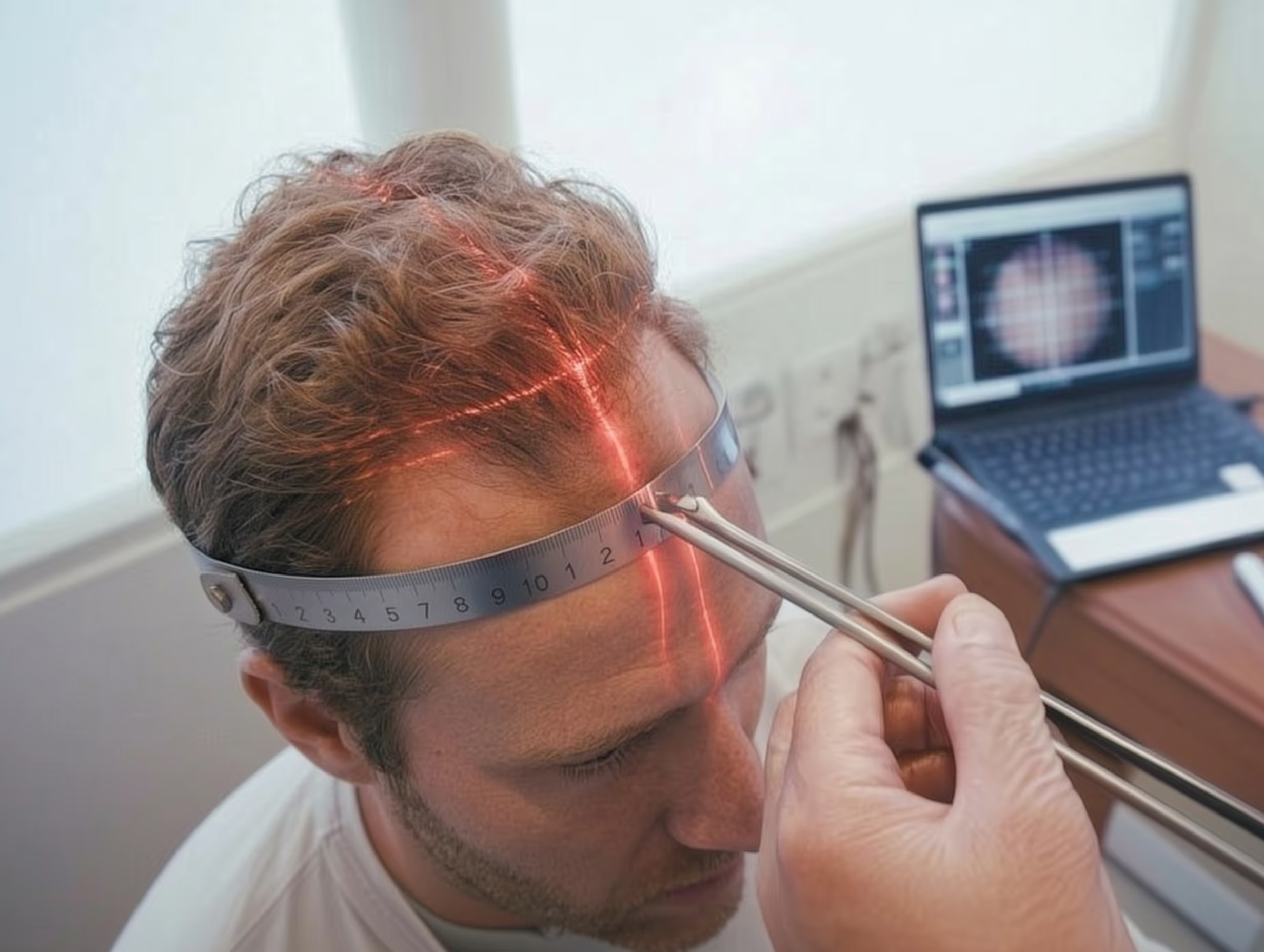
PRP treatment has been booming for years as a method against hair loss. In this form of autologous blood therapy, the body’s own blood is drawn, processed as plasma, and then returned to the body. What sounds especially fascinating: over 300 messengers and growth factors can be released from activated platelets.
Today we look at PRP treatment for hair and examine what lies behind this modern method. Autologous blood therapy for hair loss is meant to support the body’s own regenerative and healing forces and increase cell growth of remaining hair follicles. Despite weak evidence, autologous blood therapy for hair loss has made it into university hospitals. However, the actual effect of PRP remains unclear, and there are hardly any independent clinical studies that would prove efficacy. In this article we shed light on the truth behind the success prospects of this treatment method.
What is PRP and how does autologous blood therapy work?

"PRP therapy offers a promising and less invasive alternative to conventional drug treatments for hair loss." — Forschung-und-Wissen.de editorial team, medical editors specializing in scientific reporting
The abbreviation PRP stands for “Platelet-Rich Plasma.” In this special form of autologous blood therapy, a blood preparation is used that is characterized by a high concentration of platelets (thrombocytes), growth factors, and proteins.
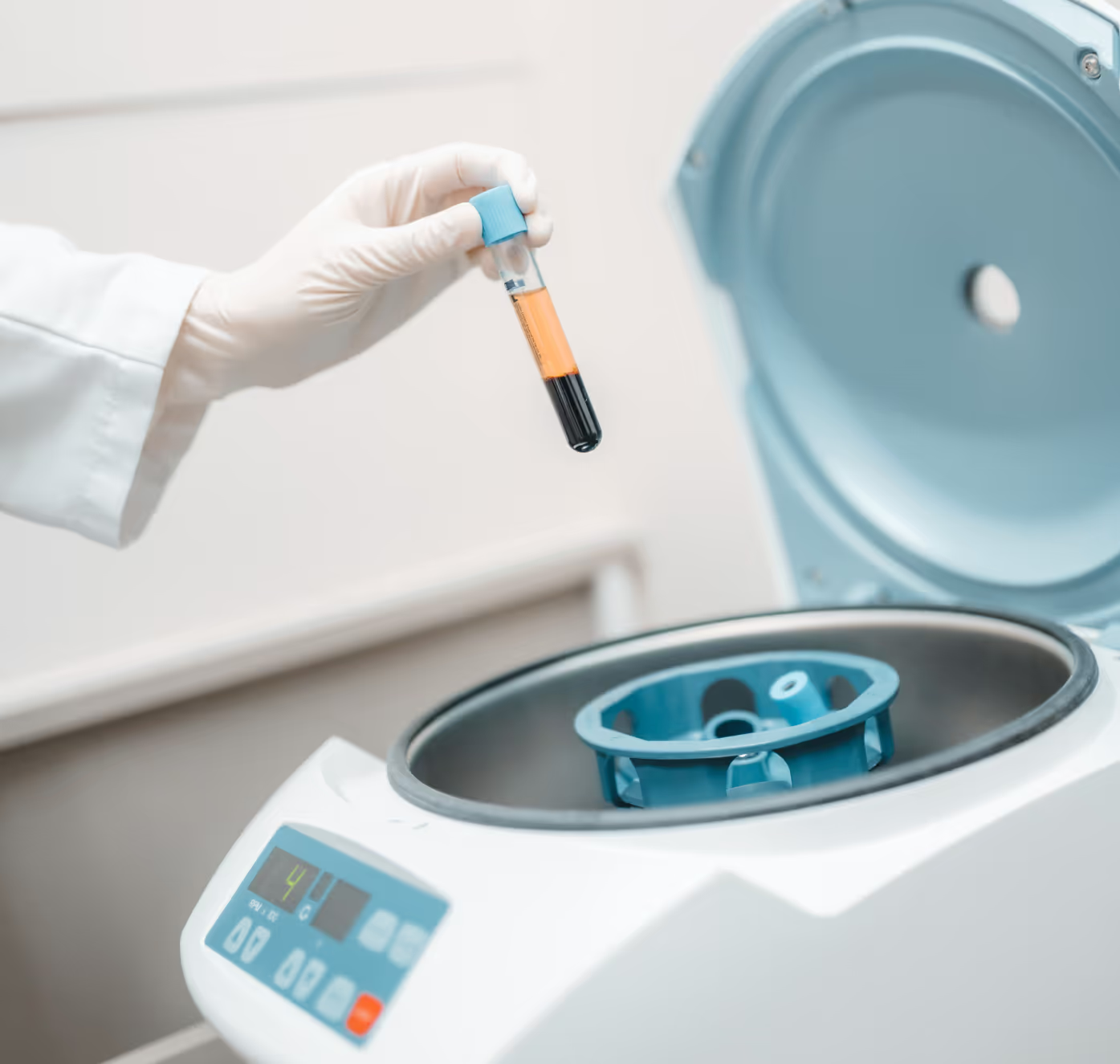
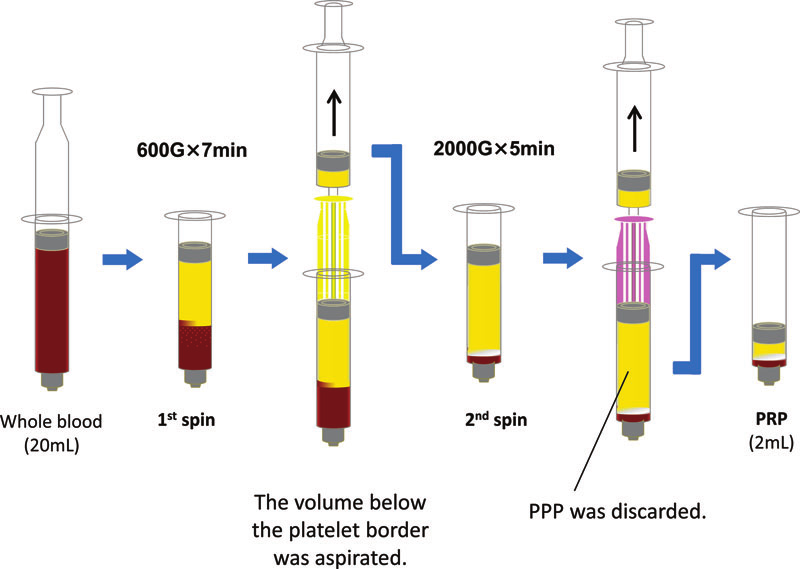
The process of a PRP treatment basically follows three steps. First, a small amount of blood is taken from the patient, similar to a regular blood draw. This blood is then processed in a centrifuge. Through centrifugal force, the blood components separate into layers based on their different specific weights. At the bottom, the heavier red blood cells (erythrocytes) collect; above them a thin layer of white blood cells (leukocytes) forms; and at the top is the plasma with the platelets.
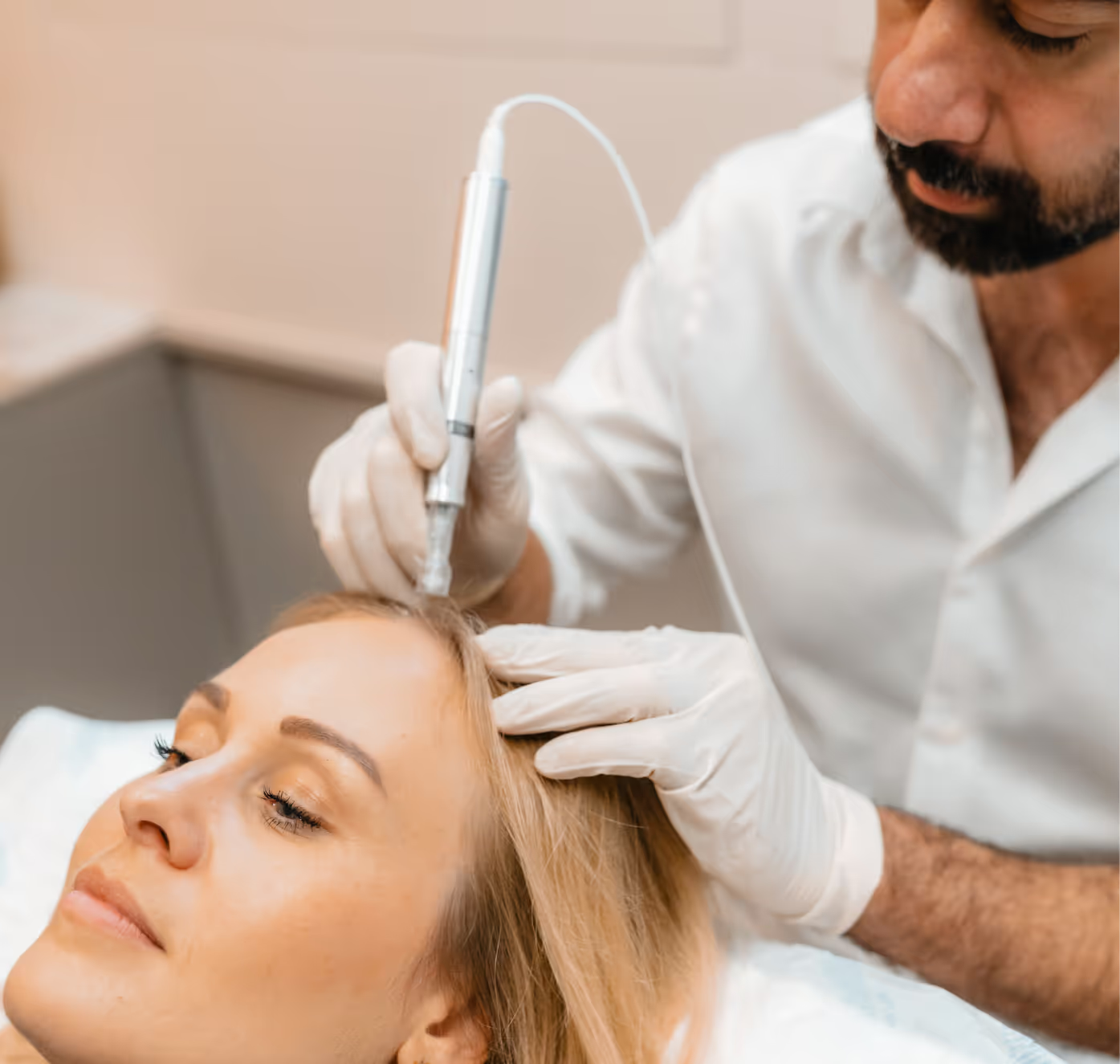
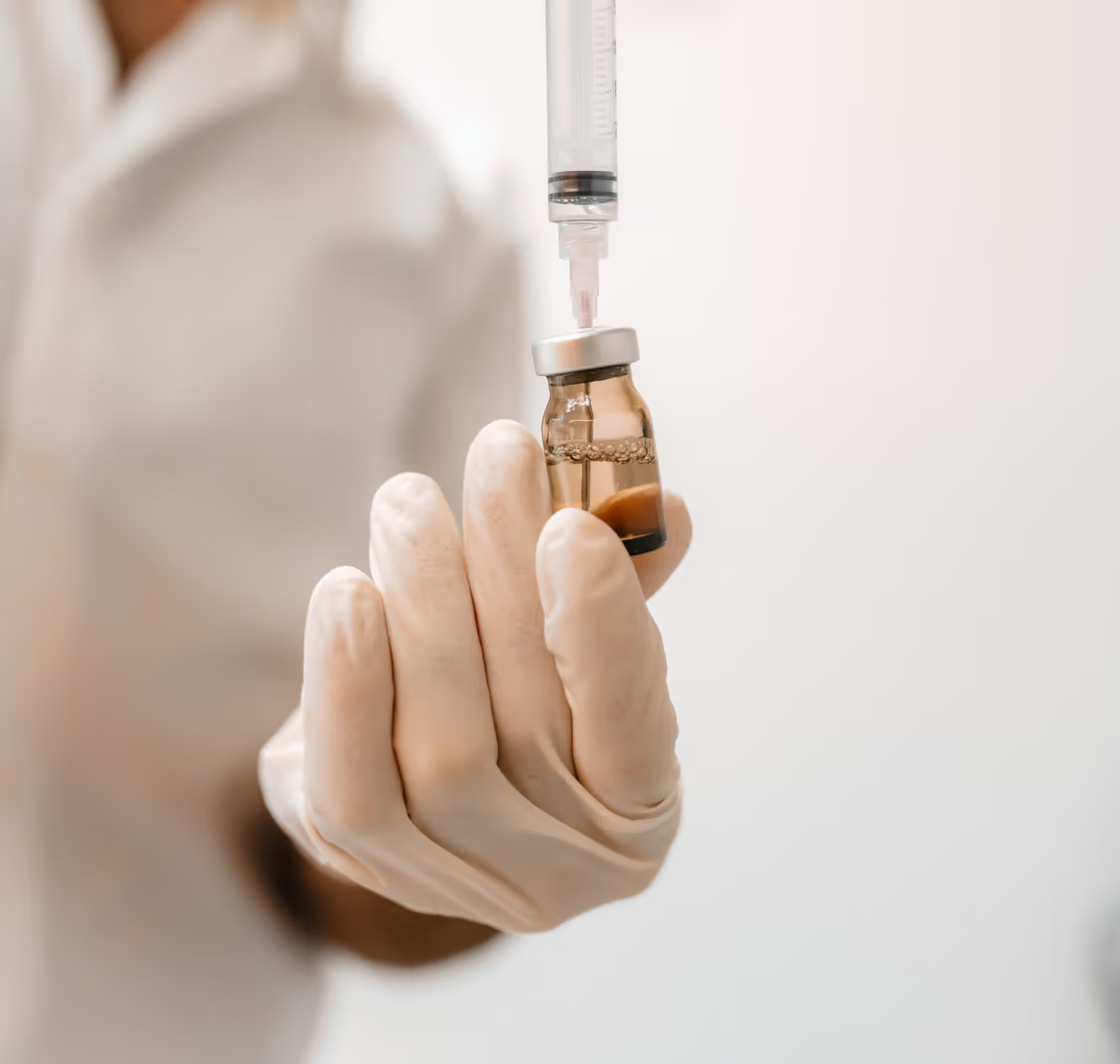
The platelet-rich plasma obtained this way contains a three- to fivefold higher concentration of platelets than normal blood. These platelets are true powerhouses: they contain over 300 different messengers and growth factors, including PDGF, VEGF-A, IGF-1, TGF-β, and FGF. In the final step, the processed PRP is injected with fine needles into the affected areas of the scalp.
The biological mode of action is fascinating: as soon as the platelets come into contact with connective tissue, they activate and release their growth factors. These factors act chemotactically as well as directly and indirectly for tissue regeneration. Mesenchymal stem cells and fibroblasts are stimulated to proliferate. The aim is better blood flow and activation of the hair follicles.
Because the material is the body’s own, the risk of intolerance or allergic reactions in PRP treatment for hair is minimal. The entire procedure takes about 30–60 minutes and can be performed on an outpatient basis.
Areas of use and success prospects for hair loss
In the fight against hair loss, PRP treatment shows impressive results. Autologous blood therapy is especially effective for various forms of hair loss. It is well suited for androgenetic alopecia in men and women, for diffuse hair loss, and for alopecia areata (patchy hair loss).
After a PRP treatment, patients notice first improvements after about 2 to 3 months. This shows as reduced hair loss, better hair quality, or first signs of new hair growth. For clearer results the body needs 4 to 6 months, while maximum results often only become visible after 6 to 12 months.
Scientific studies impressively support efficacy: an Italian study with 1,440 patients showed that 80% of all men and women responded positively to the treatment. In 93%, hair thickness, hair loss, itching, and scalp pain improved clearly. A meta-study from the University of Turku in Finland found that PRP increases hair count by an average of 18.79%, while hair diameter grows by 32.63% – amounting overall to an increase in hair density of up to 50%.
For optimal results, several sessions are required. Experts recommend 3 to 4 treatments at intervals of 1 to 4 months. Afterwards, refresh treatments can be carried out about every six months to maintain results.
Still, effectiveness depends on various factors. Above all, an early start of treatment is decisive. The earlier autologous blood therapy for hair loss begins, the better the success prospects. If hair loss is already far advanced and no hair roots remain, the method reaches its limits.
In addition, PRP treatment proves to be a valuable complement after a hair transplant. It improves scalp blood flow, supports the survival of transplanted hair follicles, and contributes to higher hair density.
Scientific assessment and risks
"The evidence base for PRP therapy is still limited, however, and the long-term efficacy of the treatment is not fully established." — Forschung-und-Wissen.de editorial team, medical editors specializing in scientific reporting
The scientific assessment of PRP treatment presents a contradictory picture. In fact, meta-analyses of studies find no clear efficacy. Edzard Ernst, emeritus professor of alternative medicine, stresses that there are hardly any independent clinical studies that would prove efficacy. From his perspective, the evidence is such that autologous blood therapy cannot be recommended as a routine method.
Other studies, however, do show positive results. An Italian investigation documented that 80% of all patients with androgenetic alopecia responded to the treatment. In 93%, hair thickness, hair loss, itching, and scalp pain improved. In a randomized, placebo-controlled study, hair density in PRP-treated regions increased by an average of 45.9 hairs per cm².
There are also critical voices. In a study by Paul Gressenberger (Graz), the number of hairs per cm² decreased by a median of 6.5 in the PRP group. In addition, standardized treatment protocols are lacking – methods can vary between clinics, which impairs the comparability of study results.
Another problem: because there is no uniform procedure for centrifuging blood, plasma concentrates have different compositions. This makes it difficult to compare their effects in studies. Long-term studies are also lacking, and previous studies involved only few subjects.
Regarding risks, PRP therapy is considered a gentle and low-risk procedure. Because no synthetic substances are used, the risk of allergic reactions is generally ruled out. After autologous blood therapy, however, redness, swelling, or mild bruising can occur. These are normally harmless and subside within a short time.
In Germany, PRP treatments may only be performed by licensed physicians. This includes specialists in dermatology, plastic surgery, orthopedics, sports medicine, and other medical disciplines. Under transfusion law, blood may only be drawn by a physician or by specialized staff under medical supervision.
Conclusion
PRP treatment for hair loss undoubtedly offers an interesting approach for people who suffer from hair loss. Although the scientific assessment is contradictory, numerous clinical experiences still show promising results. Especially in androgenetic alopecia and diffuse hair loss, patients can benefit from this method.
In fact, the greatest advantage of autologous blood therapy lies in its safety. Because exclusively the body’s own material is used, the risk of unwanted side effects remains minimal. Mild redness or swelling usually subsides quickly.
It must be stressed, however, that the timing of treatment start is decisive for success. The earlier therapy begins, the better the chances of positive results. Patients should therefore stay realistic – with already advanced hair loss and hardly any remaining hair roots, PRP therapy also reaches its limits.
Despite missing standardization and limited long-term studies, PRP treatment offers a promising alternative to conventional methods. While scientific consensus is still pending, individual results can be impressive.
Anyone considering PRP treatment should definitely seek advice from a specialized physician. They can assess the personal situation and convey realistic expectations. Patience is also advisable – maximum results often only appear after 6 to 12 months and require several treatment sessions.
Ultimately, PRP therapy represents a modern option in the fight against hair loss – not as a miracle cure, but as a science-based approach with individually different success prospects.