Understanding hair loss
The Right Doctor for Hair Loss: Your Path to the Right Diagnosis
The right doctor for hair loss: everything about first contacts, important examinations, and how you get the right diagnosis.
Do you lose up to 100 hairs a day? No worry — that is completely normal. When we lose significantly more hair over a longer period, however, we speak of pathological hair loss (alopecia). Seeing the right hair loss doctor is then the decisive first step.
In this article we explain which doctor is the right contact for hair loss. First you should know that a simple test can already give clues: if more than 5–10 hairs stick between your fingers, this could point to increased shedding. Especially when hair suddenly falls out "in clumps" or is accompanied by itching, a visit to the dermatologist is advisable. We show you the path to the right diagnosis and which specialists can support you with this problem.
When is hair loss a case for the doctor?

Normal vs. pathological shedding rate
First it is important to understand that a certain amount of hair loss is completely natural. In fact, shedding belongs to the normal hair growth cycle. Medicine only speaks of pathological hair loss when more than 100 hairs fall out daily.
The daily loss of about 70 to 100 hairs is therefore normal and no cause for concern. You do not have to count every shed hair, however — usually you notice yourself when suddenly far more hairs remain in the brush, in the shower drain, or on the pillow.
Warning signs: when you should act
A doctor visit for hair loss is especially advisable in the following situations:
- When more than 100 hairs fall out daily over a longer period
- When hair suddenly falls out "in clumps"
- With itching, pain, or open spots on the scalp
- With clearly demarcated bald patches on the head, in the beard, or the eyebrows
- When hair loss burdens you psychologically
In addition you should see a doctor if you have unintentionally lost a lot of weight in a short time, as this can point to a serious illness that also causes hair loss.
Psychological burden from hair loss
The psychological effects of hair loss are often underestimated. Hair loss can lead to considerable emotional strain and is by no means only a cosmetic problem. For many people the appearance of their hair is an essential part of their self-image.
Especially concerning: hair loss can lead to social phobias, depression, and ongoing anxiety. Those affected often show symptoms such as sleep problems, exhaustion, and mood swings. Many develop feelings of inferiority, poor self-confidence, and increasingly withdraw from society.
The interplay between psyche and hair loss is also scientifically documented. Psychological problems can lead to poorer scalp blood flow, so the hair follicles are no longer adequately supplied with nutrients — a vicious circle develops.
If you suffer from hair loss and it burdens you psychologically, a doctor visit is therefore not only medically but also psychologically sensible. A hair loss specialist can treat the physical causes and also open the way to psychological support when that appears necessary.
Hair loss: which doctor is responsible?
With hair loss the question arises which specialist is the right contact. Because different forms of hair loss exist and can have different causes, several specialists deal with this problem.
The GP as first contact
The family doctor should be your first contact for hair loss. They can distinguish the different forms of hair loss and refer you to the right specialist if needed. First they examine whether you have short-term diffuse hair loss or whether permanent bald patches are already forming. They can also check your blood for deficiencies and hormonal imbalances.
Dermatologist for hair loss: specialist for skin and hair
The dermatologist (skin doctor) is the most important specialist for hair loss, because it is linked to a disease or damage of the hair roots located in the scalp. They can determine whether healthy hair is growing or whether the hair is already being formed incorrectly in the skin. They also perform hair analyses and examine hair structure to detect changes.
Endocrinologist for hormonal causes
An endocrinologist is consulted when a hormonal cause for the hair loss is suspected. They can get to the bottom of the hair loss and find the causes. Especially important is distinguishing hair loss due to an overactive thyroid or as a consequence of an infection. Some blood tests are required for this.
Gynecologist for hair loss in women
Women can turn to their gynecologist for hair loss, especially if they are pregnant, have recently given birth, or take the pill. Hair loss in women is often hormonally caused and can be brought back under control by balancing the hormonal system. Normally the hormonal balance settles itself after a few months.
Nutritional medicine specialist for deficiencies
A nutritional medicine specialist can help when hair loss occurs due to a mineral or nutrient deficiency. They can perform corresponding examinations and determine whether poor nutrition could be the cause of the hair loss. Especially in vegetarians or after strict diets, deficiencies can lead to hair loss.
Diagnostic procedures at the doctor
When a hair loss doctor is consulted, a series of diagnostic steps begins to identify the causes of the shedding. Diagnosis is rarely based on only one procedure — rather, doctors use a systematic approach.
History: your medical background counts
First the hair loss doctor conducts a detailed conversation. They ask about the onset and course of the hair loss, family history, medication use, recent operations or infections. Equally important are questions about eating habits, stress, and hair damage from chemicals or heat. This information provides first important clues to possible causes.
Physical examination of the scalp
The dermatologist then examines the scalp and the distribution pattern of the hair. In the hair pull test (epilation test) they gently pull on a tuft of hair — if more than 4–6 hairs come out, this points to increased shedding. They also look for redness, scaling, or other skin changes.
Blood tests for deficiencies and hormones
When causes are unclear, the doctor orders blood tests. Standard checks include iron values (ferritin), thyroid hormones (TSH, T3, T4), and if hormonal causes are suspected also sex hormones. In addition, vitamin D, zinc, and folic acid levels can be determined to rule out deficiency states.
Trichogram and TrichoScan
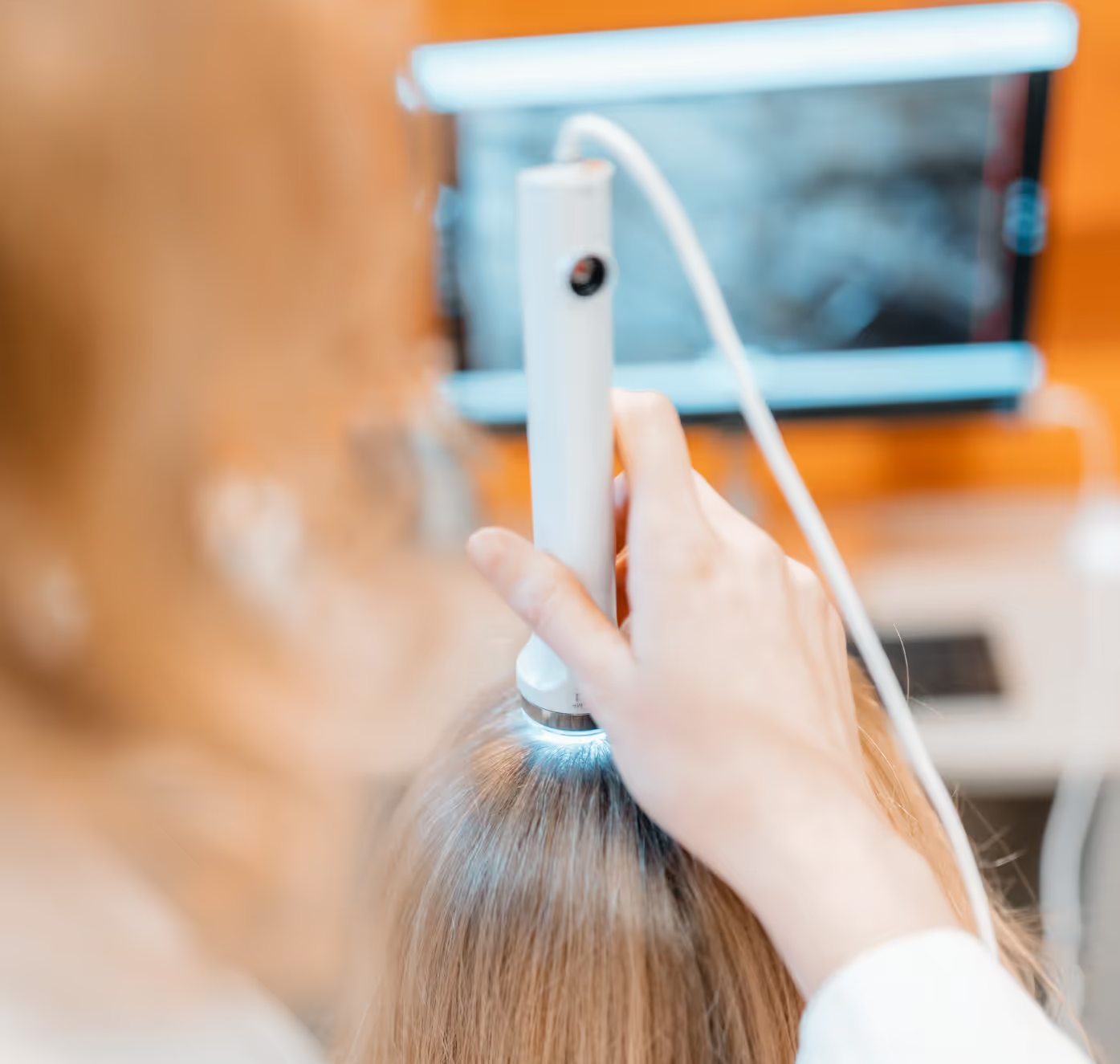
The trichogram is an important examination method: 50–100 hairs are plucked and analyzed under the microscope. This determines the share of hairs in the growth, transition, and resting phases. A more modern, pain-free alternative is the TrichoScan. A small area of the scalp is shaved, dyed after three days, and examined microscopically. Computer-assisted analysis delivers precise data on hair density and growth behavior.
Biopsy in unclear cases
In difficult cases the dermatologist takes a small tissue sample of the scalp under local anesthesia. This is then examined in the lab and enables distinction between scarring and non-scarring forms of hair loss. Biopsy is especially important when inflammatory processes or autoimmune diseases are suspected.
Hair diary as a complementary measure
Alongside medical diagnostics, a hair diary can be useful. Over two weeks you document daily the number of shed hairs, for example after combing or washing. Up to 100 hairs daily is considered normal; after washing even up to 250. This self-observation supports the doctor in assessing severity and course.
What happens after the diagnosis?
After the diagnosis the actual treatment path begins for those affected. Therapy is tailored individually to the identified cause of the hair loss.
Individual therapy depending on the cause
Treatment must match the specific form of hair loss. For hormonal causes different measures are taken than for deficiencies or autoimmune diseases.
Medication options
Two active ingredients stand at the forefront of medication therapy:
Finasteride inhibits the formation of DHT, the hormone that damages the hair roots in hereditary hair loss. It is used as a tablet or solution and requires a prescription. In about 10–20% of those treated a cosmetically acceptable result appears.
Minoxidil improves scalp blood flow and is available without prescription. For women lower concentrations (2%) suffice than for men (5%). The effect of both medications only lasts, however, as long as they are used.
PRP, mesotherapy, and hair transplant
PRP therapy uses platelet-rich plasma from one's own blood. Through centrifugation, growth factors are concentrated and injected into the scalp. First improvements show after 2–3 months; the best results after 6–12 months.
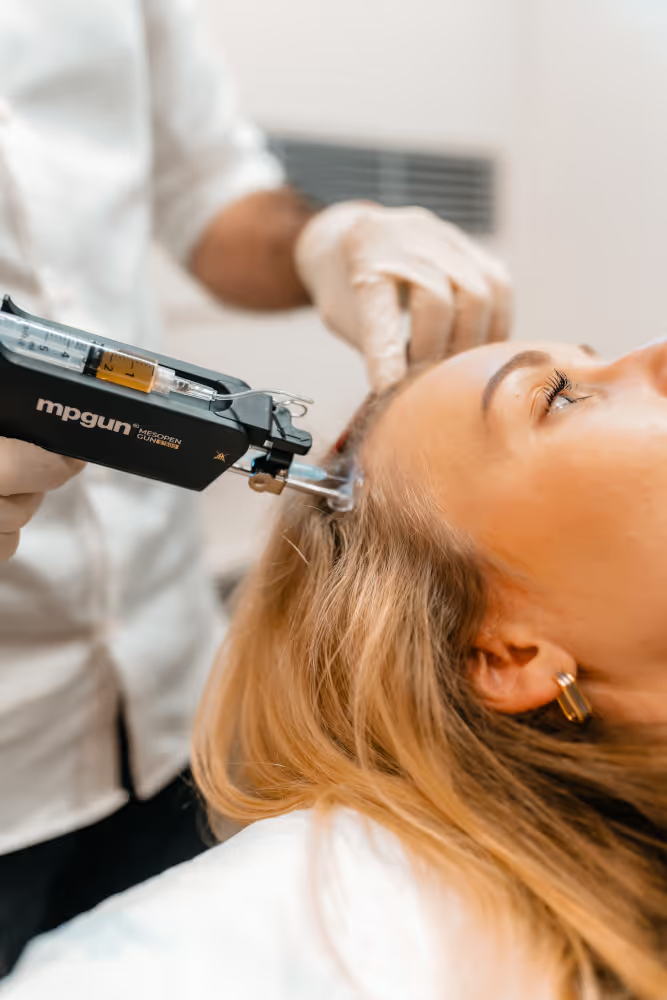
In mesotherapy, vitamins, minerals, and amino acids are introduced directly into the scalp. It ideally complements PRP treatment.
A hair transplant, by contrast, offers a lasting solution. Hair roots are taken from the back of the head and transplanted into bald areas.
When psychological support makes sense
Hair loss is not only a physical but also an emotional problem. Those affected often suffer from anxiety, insecurity, and self-worth issues. Psychological support can help cope with these burdens and develop new coping strategies. This is especially useful when hair loss leads to social withdrawal or depression.

Hair loss affects many people and represents a considerable emotional burden for many. Yet effective diagnostic and treatment options exist that offer hope. First you should understand that not every hair loss is a cause for concern — the daily loss of 70–100 hairs belongs to the normal cycle. Only when significantly more hairs fall out or bald patches form is medical help advisable.
The path to the right diagnosis usually begins with the family doctor, who refers you to a specialist if needed. The dermatologist as specialist for skin and hair plays the central role. Depending on the cause, however, endocrinologists, gynecologists, or nutritional medicine specialists can also be the right contacts. Especially important: early consultation with a specialist significantly increases the chances of successful treatment.
Modern medicine offers various diagnostic procedures such as the hair pull test, blood tests, trichogram, or TrichoScan to identify the exact cause of the hair loss. Then an individually tailored therapy can follow — whether through medication such as finasteride or minoxidil, through PRP treatments, or ultimately through a hair transplant.
Regardless of the physical treatment, you should also not underestimate the psychological aspects. Hair loss can significantly impair self-worth and lead to social withdrawal. In some cases psychological support can therefore make sense.
Ultimately, treatment options exist for almost every form of hair loss. With the right specialist at your side, a precise diagnosis, and an individual therapy plan, you can address the problem effectively. Do not hesitate to seek medical advice at the first signs of unusual hair loss — your well-being is worth it.