Understanding hair loss
Why Does Diffuse Hair Loss Happen? The Real Causes
Learn why diffuse hair loss happens — the real causes such as stress, hormones, nutrient deficiency, and illness explained simply.
Diffuse hair loss is the most common form of shedding, in which more than 100 hairs can fall out daily. While normally about 10 percent of all scalp hairs are in the resting phase, this value rises to up to 35 percent in diffuse hair loss. Especially concerning is that younger people and even children are increasingly affected.
In this article we share our findings on the most effective solutions for diffuse hair loss. Whether you are looking for experience reports, need specific help for diffuse hair loss in women, or want to understand the link between thinning hair and iron deficiency — we have the answers. The good news up front: diffuse hair loss is generally considered treatable, and in most cases hair growth normalizes again after a few months. It can take between six and twelve months, however, until the hair has visibly grown back. That is why it is important to understand the causes and take the right measures.
What is diffuse hair loss and how do you recognize it?

Typical symptoms in women and men
In both sexes the daily hair loss clearly exceeds the normal measure of 50–100 hairs. Women often notice diffuse hair loss through increased shedding when combing or washing, as well as through a noticeably reduced hair volume. Those affected also report a relatively sudden onset of increased shedding. Although men and women can be equally affected, more women actually develop this type of hair loss.
Difference from other forms of hair loss
Unlike androgenetic alopecia (hereditary hair loss), which begins with a receding hairline and follows a characteristic pattern, diffuse hair loss shows no such distribution. While circular hair loss creates individual bald patches, in diffuse hair loss the entire scalp is affected. It must also be distinguished from alopecia areata, which leads to clearly demarcated hairless areas.
Diffuse hair loss before and after: what do you see?
Normally diffuse hair loss begins two to three months after the triggering event. This is because many follicles are simultaneously in the same phase of the hair cycle. Hair grows at a speed of only about 1.25 cm per month, which slows recovery of hair fullness. From first noticing the shedding until visible improvement, six to twelve months can pass. In some people the shedding can even last four to six months or longer before improvement sets in.
Common causes of diffuse hair loss
The causes of diffuse hair loss are varied and often an interplay of several factors. To counteract effectively, it is decisive to understand the triggering mechanism.
Hormonal changes (e.g. pregnancy, menopause)
Hormones play a central role in hair growth. Almost half of all women report diffuse hair loss after pregnancy, because the falling estrogen level favors shedding. Stopping the pill and menopause can also lead to a hormonal shift. This physiological postpartum hair loss typically appears two to four months after delivery. During pregnancy many women enjoy especially healthy hair — which makes it all the harder when the hair then thins afterward.
Stress and psychological strain
A strongly elevated stress level can indeed lead to hair loss. Stress raises the concentration of messenger substances such as noradrenaline in the hair follicle, which triggers inflammation. Thereby the hair growth phase ends prematurely. Interestingly, the shedding often does not appear immediately but with a delay of two to three months after the stressful phase. If the stress state lasts a long time, the hair root can be lastingly damaged by the ongoing strain.
Thinning hair from iron deficiency and nutrient deficits
Iron deficiency is especially in women a common cause of diffuse hair loss. The ferritin level in serum informs about the body's iron stores — values under 40 ng/ml lead to telogen effluvium. Clear hair loss has also been observed even at values between 40 and 70 ng/ml. Only from a value over 70 ng/ml does hair growth normalize again. Women with heavy menstruation, pregnant women, vegetarians, and vegans are considered especially at risk.
Medications and illnesses as triggers
Numerous medications can cause diffuse hair loss: blood thinners, beta-blockers, lipid-lowering drugs, retinoids, and antithyroid drugs. Added to these are anticoagulants, ACE inhibitors, oral contraceptives with androgenic partial effect, as well as antidepressants, antiepileptics, and corticosteroids. Underlying conditions such as thyroid dysfunction, fungal infections of the scalp, or severe general illnesses can also trigger shedding.
Seasonal influences and environmental factors
Surprisingly there is also seasonally related hair loss. Some people lose more hair in autumn or spring than in the rest of the year. In summer more hair is produced to protect the scalp, while in autumn many of these hairs fall out. Lack of light in autumn also influences hormones and vitamin D production. In addition, environmental factors such as air pollution, UV radiation, and hard water can damage hair structure.
How is diffuse hair loss diagnosed?
When diffuse hair loss is suspected, thorough diagnostics are decisive. The path to the right diagnosis leads through several examination steps that together yield a complete picture.
History and medical conversation
Diagnosis begins with a detailed conversation. The doctor specifically asks about possible triggers such as:
- recently overcome illnesses with fever
- chronic illnesses (e.g. skin or liver diseases)
- regular medication use
- dietary changes or diets
- emotional stress
- hormonal changes (pregnancy, stopping the pill)
Because diffuse hair loss is hardly recognizable at first especially in people with naturally full hair, we recommend bringing before-and-after photos to the doctor appointment.
Blood tests and trichogram
For further clarification various lab values are determined. Especially important are:
- Thyroid hormones (TSH, T3, T4)
- Iron values (ferritin)
- Vitamin values (B12, biotin, folic acid, B6)
- Minerals (zinc, selenium)
When hormonally caused hair loss is suspected, testosterone, estrogen, and SHBG values are additionally examined.
Dermatologists also use the trichogram. About 50 hairs are plucked and the hair roots analyzed microscopically. A normal trichogram shows up to 80% anagen hairs (growth phase), up to 3% catagen hairs (transition phase), and a maximum of 20% telogen hairs (resting phase).
Ruling out other types of hair loss
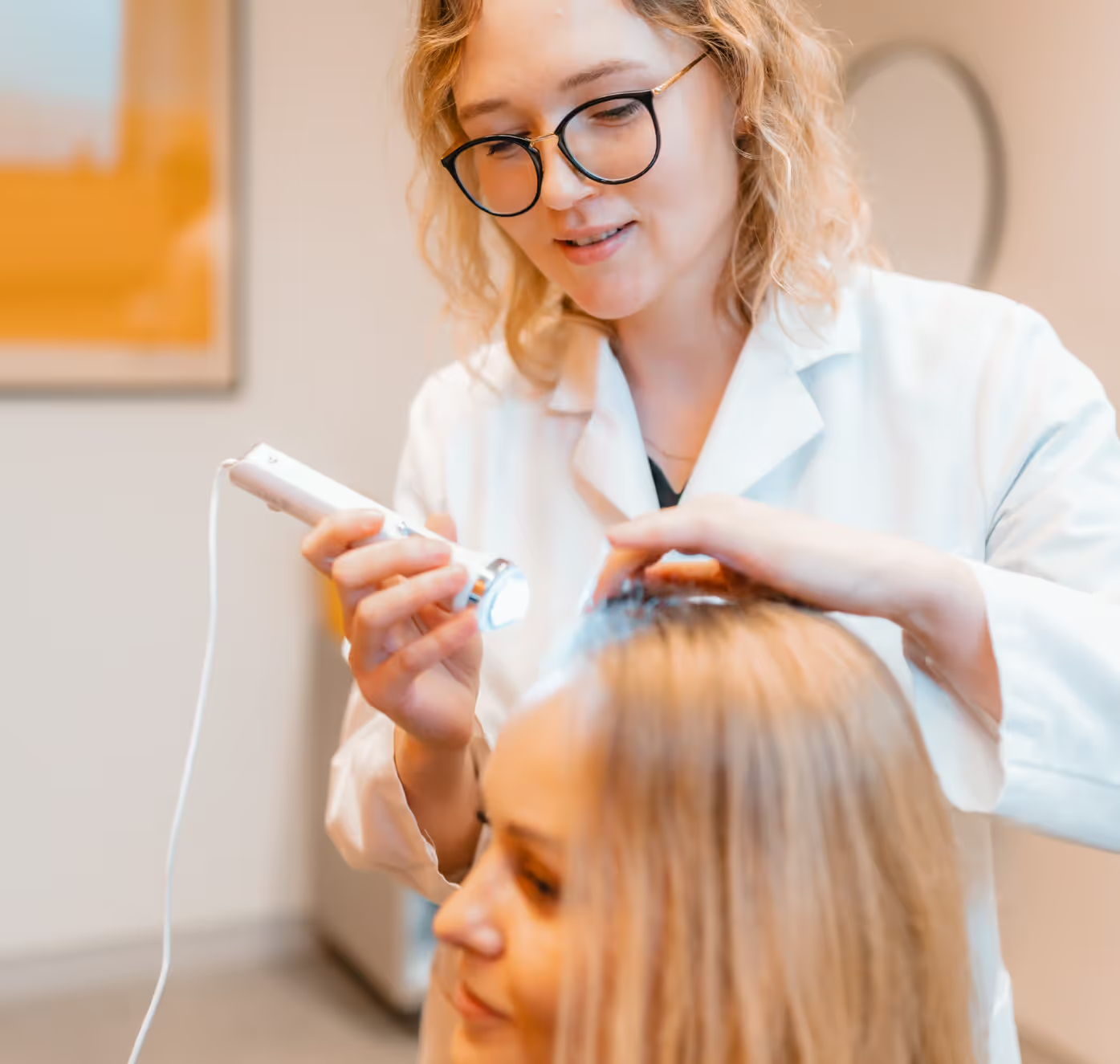
To rule out other forms of hair loss, a dermatoscope is often used. In unclear cases a tissue sample (biopsy) of the scalp may be necessary. The hair pull test additionally helps establish active shedding: if more than three to four hairs come loose with gentle pulling, this points to relevant hair loss.
What really helps against diffuse hair loss?
Treatment of diffuse hair loss is especially promising when it addresses the cause. After removing the trigger, hair growth resumes in many cases, though the full effect only becomes visible after several months.
Medication therapies (e.g. minoxidil)
Minoxidil is available without prescription as a solution or foam and is applied once or twice daily to the scalp. The active ingredient improves blood flow and shortens the resting phase of the hair cycle. First results typically show after two to four months. Important, however: if application is stopped, the effect is also lost. With hormonal disorders such as thyroid dysfunction, specific medications can help treat the underlying condition.
Nutrition and supplements
A balanced diet is fundamental for healthy hair growth. Especially valuable are:
- Iron (in red meat, legumes)
- Zinc (in cheese, eggs, poultry)
- Biotin (in nuts, eggs, oats)
- Vitamin D (in fatty fish, eggs)
- Omega-3 fatty acids (in fish, flaxseed)
With a confirmed deficiency, supplements can make sense, but should only be taken after consulting a doctor, because overdose (especially with iron) can be harmful.
Stress reduction and lifestyle change
Because stress is among the most common triggers, relaxation techniques such as yoga, meditation, or progressive muscle relaxation can be effective. Sufficient sleep (7–8 hours) supports the body's regeneration. Regular physical activity also improves scalp blood flow. Stress reduction can lower the release of harmful hormones that negatively influence the hair cycle.
Cosmetic solutions and hairstyle tips
A shorter haircut can create more volume. Especially suitable are pixie cuts for mild hair loss or bobs that can be blow-dried voluminously with a round brush. Bangs can also conceal bald spots at the forehead. Dry shampoo is excellent for creating temporary fullness. Avoid tightly pulled-back hairstyles that place additional pull on the hair roots.
When a hair transplant is not sensible
With diffuse hair loss a hair transplant is in most cases not recommended. Because all areas of the scalp are affected, healthy donor areas are lacking. A transplant also does not treat the underlying cause. Therapy of the triggering factors therefore always has priority. Only in special individual cases and after stabilization of the shedding can a limited transplant in the front of the head be considered.

Diffuse hair loss is a burdensome experience for those affected, yet in most cases it is a temporary problem. The good news: after successful treatment of the underlying cause, hair growth often recovers on its own. Patience is necessary, however, because visible results usually only show after several months.
Especially important is the right diagnosis to identify the individual triggers such as hormone fluctuations, nutrient deficiencies, or stress. Only then can tailored therapy follow. With sudden hair loss you should see a dermatologist rather than rely on unproven miracle cures.
We have seen that a balanced diet with enough iron, zinc, and vitamins, regular stress reduction, and the right hair care can contribute substantially to improvement. In addition, medication options such as minoxidil offer proven support in treatment.
Finally, unrealistic expectations should be avoided. Hair transplants are rarely suitable for diffuse hair loss, while clever hairstyles and cosmetic solutions can work wonders in the transition phase. With the right approach and expert advice you can address this problem effectively and return to healthy hair growth.